Chaos Cotrol Digizine

THE LATEST | ALL INTERVIEWS | NEWS BLOG | ABOUT CHAOS CONTROL | CONTACT

  1. Free album download from Mortiis

    October 10, 2010 by admin

    Mortiis has made a new album, “Perfectly Defect,” available as a free download. While the still in-progress “The Great Deceiver” is the ‘true’ follow-up to 2004’s “The Grudge,” this release serves as a bridge between the two.

    “When we were writing and working on ‘The Great Deceiver’, we were coming up with all sorts of inspired stuff, a really varied collection of music,” Mortiis explained in a press release. “Some of it was far too varied and experimental to be included in such an angry, dark album as ‘The Great Deceiver’ so we created a brand new album that is the introductory element to the more intricate world of ‘The Great Deceiver.’”

    “Perfectly Defect” can be downloaded from mortiis.com. For more info on Mortiis, check out our past interviews.


  2. Lords of Acid

    October 8, 2010 by admin

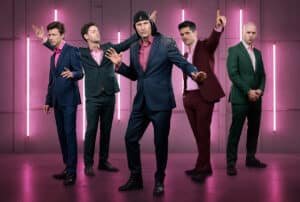
    When Lords of Acid toured America this past summer, it was with a line-up so new that founding member Praga Khan hadn’t even met his bandmates until the day of the first show. Having been away from the project for many years, he felt that the best way to get back into it would be to do a tour, and then create new material. The new incarnation of Lords of Acid is rounded out by Lacey Conner (“Rock of Love”, Nocturne) on vocals, former Ministry/RevCo guitarist Sin Quirin, bassist M3 (Powerman 5000) and drummer Kirk Salvador (ex-Society One). In this following phone interview, Praga Khan talks about how the group came together and the future of Lords of Acid.

    What made you decide to bring back Lords of Acid at this point in time?

    “Because I felt it was the right time to do it. The thing is that I cannot make music on command, so I always have to feel ready, you know…to write music, or do a tour, or whatever. I’d been doing experiments in Europe, working with the Royal Ballet, working with filmmakers, and doing all this crazy creative stuff. I had the feeling that I had to do it, from an artistic point of view. And now that’s over and finished, I felt like it was about time to do another Lords of Acid record. But the best way to do a new Lords of Acid album is to go out on tour in America with Lords of Acid and then start writing the album right after the tour. Because then you are really into the atmosphere and vibe. So that’s why I did the tour now. Right after the tour, I go into the studio and record album.”

    Will you be performing in other countries?

    “We’re only doing America right now. But it’s been a crazy adventure. The thing is that I arrived in Seattle and we had to do this concert in the evening. But in the afternoon, it was the first time that I met the other people in the band. It was great! [laughs]. I didn’t even really know what they looked like. The only thing I knew is that they received very good feedback from our American manager, because they were rehearsing in LA while I was still in Europe. So it was completely crazy. But I have this good feeling about it. Because what’s life without risks, you know? Sometimes you have to take risks. But I had a very good feeling; that’s why I wanted to do it like this. And it turned out really, really well. We have a great band now, and this singer, Lacy, is doing so much better than I expected.”

    How did you come to work with this line-up?

    “Our manager in the States asked me if I would be open to work with American musicians, and I told him yes, as I’m always open for experiments. I think it was a very good move, because it’s kind of a bit more raw now. Because the guy is from Powerman 5000 and the other one is from Ministry and all that. It sounds more raw, but it has the Lords of Acid feel. It’s a very good combination. If this all turns out well, and it looks like it will, then I am planning to record the album together with these guys.”

    How did you prepare to work with these musicians, since you weren’t with them?

    “The first thing I did was send them some material of things we did in the past, like DVDs and stuff, so they could see what it looks like. And I sent them the playlist that I was preparing, the songs we were going to do. And right after that I sent them backing tracks, but only the parts I was going to do, and a click track for the drummer. So that’s how we did it. They were rehearsing in LA and I was in Europe. They were sending files over the internet from the rehearsals so I could follow the progress.”

    Did they bring a lot of changes to the material?

    “Yeah, that was also one of the first questions that they asked me, ‘do we have to copy it?’ And I said ‘no, no, no, don’t do it.’ Because also the guy Sin, from Ministry, he asked me if he could play his own guitar lines on top of it and come up with something different. I said ‘whatever you want to do, do it.’ Because that’s what makes it special this time. It sounds different, and it also gives me a good feel for the new recordings. I can really get influenced by the band at this moment.”

    Did any of the other projects you worked on influence your current work with Lords of Acid?

    “The thing is that it’s not having a lot of impact on what we’re doing now, but it’s going to have a lot of impact on what we’re doing to do on the recordings. And it’s going to have a lot of impact on the next tour. Because we are also setting up a company in America, and in Europe, called Sonic Angel. I’ve spent a lot of time preparing this. So we’re doing this new Lords of Acid album, and then we’re going to do a new tour hopefully in February or March. We’ll be coming out with the new album then. And there you are going to see a lot of influence from what I’ve done over the last couple of years, musically as well as visually.”

    How have things changed since you last did a Lords of Acid project?

    “Now with the modern technology, it really makes it possible to cooperate over long distances. Like they’re doing their stuff in LA and I’m doing mine in Brussels but still we can work together very easily. Also, promo-wise it’s completely different, because you can use your Twitter and Facebook and all that stuff. Information gets around very quick. The word is really spreading, and you can see on Twitter that people are really talking about it. It makes it so much more easy than years and years ago. I’m really familiar with the technology, because we’ve always tried to be ahead of our time. Not only music-wise but also using the newest technology, and we’re taking advantage of it now instead of complaining about people downloading stuff.”

    What factors went into choosing the setlist for this tour?

    “I thought it would be a good idea to do a sort of ‘best of.’ That’s what we’re doing now, so when people come to the shows they hear all of their favorite songs. It’s nice to have these songs here now for this first tour in eight years. Because when we come back it’s going to be a lot of new material and we’ll experiment more.”

    What do you see as the balance between old and new fans at the shows?

    “It’s a very good mix, and I’ve been surprised at how many people turned up. There are a lot of young people in the crowds, because they heard a lot about Lords of Acid from their parents or whatever, and everyone seems to like it. It’s the right time to come back with a great new album. There are a lot of people who listen to the songs and say ‘hmm, it sounds very very up to date.’ And that’s because there are a lot of new bands and new artists, like Lady Gaga, who are using these raunchy sounds that we were using years ago. So it connects in the kids’ heads. They are very familiar with the sounds, but the music is new to them.”

    Is there anything else you’d like to add?

    “Just that I’m very, very happy with the new line-up. I’m very impressed by Lacy, as I know there were a lot of people who were saying ‘is she going to be able to replace Deborah?’ But she’s doing a great job, she’s a real rock and roll girl. She’s very sexy and knows how to perform. It’s perfect.”


  3. Front Line Assembly

    October 7, 2010 by admin

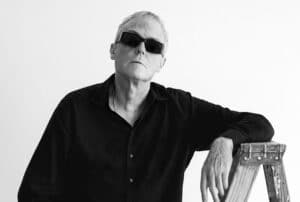
    Last summer, the ever-prolific and ever-changing Front Line Assembly released “IMPROVISED. ELECTRONIC. DEVICE.,” an album that brings heavy use of guitars back into their sound. At first listen, the guitars may bring to mind 1994′s “Millennium,” but the music also has intense, cold electronic edge reminiscent of earlier Front Line Assembly. In the following phone interview, founder Bill Leeb talks about the lengthy process of making the album, his thoughts on the current state of the music industry, songs he hates to play, and more.

    How did the process of making this album compare to past releases?

    “You know, it’s so bizarre. Every time you start a record you have just kind of no concept of where you’re going, and I think your life around you and everything else sort of comes out through the record. If I had to sort of put a finger on it I’d say this is probably a perfect assimilation of everything and anything Front Line Assembly has ever stood for, from day one to now. The sound has evolved, and I think we’ve taken all the best elements and still focused on songwriting. We took over two years to make this thing. We worked on it for 6 months, then put it away for a while, and I was going to get Rhys involved but he got busy. We ended up going down this road with the guys we did over 100 live shows with over the past three years. It ended up being quite a personal record because we toured a lot, going to places like Russia, and during the last tour went to Vienna where I met my dad. There was a lot of stuff to draw from. It just all sort of came together. Even with the mixing, for the first time in 25 years we stepped outside the Greg Reely domain and brought Ken Marshall in, who does all the Skinny Puppy stuff. He mixed half the record. Having Al Jourgensen on the record … it was this whole-encompassing thing that took on a life of its own. If I had to sort of stop music tomorrow, I would say that this would have been the record I would be more than happy to stop with on Front Line Assembly. To me, it’s a really positive note. I didn’t know it was going to take 25 years to get there! [laughs]”

    How did you come to work with Al? It seemed like you were one of very few people in the genre who hadn’t worked with him before.

    “We’d done festivals with them [Ministry], and Michel Balch, who used to be in our band, co-wrote that song ‘Jesus Build My Hotrod’ with Al. And Wax Trax! … we were there from the beginning. So there has always been six degrees of separation. It finally came to a head on this because Jeremy, who is in our band, also toured with another band who opened for Revco last year and he got to become good friends with Al. I guess it was just like the perfect storm and the story that wrote itself.

    “Jim Nash’s partner passed away this year, meaning the real defining end of Wax Trax! I guess Al was a very good friend of his, so in a way that song was sort of commemorative as well. We dedicated it to the whole Wax Trax! ensemble. We’re all dying off, right?”

    Having been involved with so many projects, was there ever a time when you felt that Front Line Assembly was over?

    “I really believe in the saying ‘never say never.’ Nothing is really ever over until you want it to really be over. I find that music itself is such an ambiguous target. Just when you think you might have something, all of a sudden things change and you can feel redundant. Or every time you start a song, you just sort of hope that this is the one that is going to redefine music. Doing these different projects, you kind of do something for a while and then lose your excitement for it in some ways, so you dabble in something else. But then a year or two later, I just feel the urge to just kick some ass again.

    “So this particular project just becomes important again. It’s kind of like being a [visual] artist. You try to use all the colors on your palette, sometimes you use more of this one than that one. But I think it all helps keep a good round psyche in your head. I think that most artists are like tortured souls, you know. You need all of it, and it all comes in at the right time and can save you on certain days, and other days it can destroy you. It’s part of the whole complex.”

    With such a diverse body of work, are there particular things that you’ve gone back and listened to that have surprised you?

    “If you put it in that kind of context, I just think that from day one, from Skinny Puppy to now, if you added up all the work that me and both Kevin’s from that band did, and Rhys, it’s quite overwhelming the body of work that we’ve done. Sure, maybe Trent Reznor and Marilyn Manson get bigger sales of some albums, but I think that overall in the genre, all the music, all the production work, that has been created around all of us … if you go to all of those people’s websites and know all the things that they have been involved in, we’ve probably been the four most productive guys in the genre for the past 20 years. It’s overwhelming how much work there is that we’ve been involved with in one way or another. Even the song “Silence” in ’03 was the biggest techno song in the world, and went to #1 in five countries. I don’t like to talk or think about things too much, but if one day we all sat down to write a book about of all it, it would probably be quite compelling, you know, what this group of us from Vancouver started.”

    Regarding the different musical styles, would you say you have a preference in terms of things like “Silence” vs. less commercial stuff?

    “I don’t really know the term ‘commercial music’ – I don’t really know how to make commercial or genre music. You just try to come up with your own ideas, and I think if anything, the singers, like on the Delerium tracks, can make it sound contemporary or mainstream. But as far as our songwriting goes, I’ve always had the rule that if I like it, whatever I’m doing at the time, then that’s what I’m going to work on. I’ve trusted my instincts with that. I think if I actually sat down and contemplated doing something that was going to be mainstream, I’d probably completely fail! [laughs] I think it’s just such a different realm, a world that is actually pretty scary.”

    With so many different projects over the years, fans are bound to have a particular that they would like to see revisited (for me it would be the style of the 3rd Intermix album). How do you feel about that?

    “I don’t feel any sort of real pressure. At the time, that particular thing to me was relevant and I was really interested in it, so it was something I wanted to put myself behind. But now music has changed, times have changed, and I just don’t think that type of thing would be relevant again. It’s just got to come to you, and I hope I have a few more ideas in my head for other things. And actually now more than ever, the fact that the whole music industry pretty much collapsed …. 65% or more people are stealing, downloading free music … it’s kind of pointless to do those projects because your sales will be so small. The amount of time you put into it, would be totally redundant unless you were really going to follow it up. And also, labels back in those days would give you twenty grand to do something because you’re Bill Leeb or you’re Kevin Crompton [Key] and you’d sell X amount. But now, it’s a struggle just to get money for your proven projects that you’ve sold hundreds of thousands of. All that has changed. I guess there’s the other thing where you can just make your own Myspace page for people to come by and download for free to see if they like it, and do some cheesy video for youTube. But it’s hard to sustain yourself like that so you’re going to need to have a full time job to have that kind of approach. It’s a different time now, completely different.”

    Having written songs about technological and cyperpunk themes over the years, what are your thoughts on the current online world?

    “Whether people are Twittering or texting, whatever the hell they’re doing … I don’t think the final chapter has been written on all of this. Where it all ends up, I don’t know. On the one hand you could say ‘well the old days were better in some aspects’ but I guess more people, more demand, as we all keep evolving to want more and need more and be more interactive. Like, speed dating is really popular. You’ve got five minutes with thirty people and you’re supposed to figure out if you’re compatible, whereas people used to take the time to date. I think that music and everything is the same way … when someone comes online, they want to buy one song, put it on their iPod. They have 2,000 other songs on there so they don’t have the time or patience to listen to your entire album. They just want the one track. I guess some artists are just putting three to five songs out there because they know kids with ADD don’t have the attention span to listen to an entire album. That is a by-product, too. It just changes everything. I don’t know, is that good or is it bad? Everyone is in a big rush, right?”

    Do you think this has shifted the emphasis to live shows, as a means of exposing audiences to your new music as well as making money?

    “It’s just a big myth. People say, ‘Well now if you want to be a band you have to tour.’ Most of the bands I know who are touring, in vans or small buses, are not making any money. They’re just breaking even, but I guess there is this hope that it’s going to happen with them. But most of the bands in Europe who play all the festivals, they all have jobs. Everybody has a job. They take two weeks off for their holiday and they’ll tour. Or they’ll pack up their van for the weekend and go play some big festival, get a few thousand euros for their slot, and go back home. That’s how 90% of the bands exist in Europe. So it’s a total myth. Jeremy is out with 16 Volt and Chem Lab right now, he’s making $15 a day on the per diems and they are kicking in towards the bus. So they’re technically losing money. So again, they’ll be happy at the end of the tour if they can pay all of the bills and the bus and break even. To me, that’s not really a money-making thing, and the amount of CDs they’re going to sell by doing this tour, it’s not really worth it. But if you’re really into it and you want to do it, then you’ve got to do it. It’s a major struggle. There’s that 5% of bands at the top who can actually make some money, but for the rest I think it’s a struggle. But most people don’t feel sorry for musicians, because this industry has been so glorified by people who have had such wild and crazy habits and are so rich and famous. So when people say, ‘Well, these guys are broke’ everyone just says, ‘Well, get a job!’ It is what it is, right?”

    What made you title the album “Improvised. Electronic. Device”?

    “The title to me, I came up with it and at first it would just be for one of the songs. And then I changed it from ‘explosive’ to ‘electronic.’ I thought it was a perfect phrase when you see what’s going on around the world, and that terminology IED. We’re kind of like that in the electronic world – we use our instruments in that aspect – to make things that are challenging and on the edge. I don’t think I could have coined a better phrase. Front Line Assembly has always been like that as well, the whole sort of war theme – on the edge, on the front line. So I just thought it was a perfect title for what we were doing.”

    Would you ever make an album like this again, with four members contributing?

    “I don’t know, nothing ever stays the way it is, everything seems to change and be different. Like I said, it really took a lot for us to do this record. For me, it was the hardest one we ever put together. I don’t know if I could do anything record that takes two years, it just took too much energy. And everybody in the band is doing other things to get by in life and survive. It’s a totally different vibe now. Who knows who is even going to be around a year or two from now? The future seems to be very uncertain to me in all aspects to what we’re doing.”

    Are you involved with any other projects right now?

    “We’ve been putting together a new Delerium album with Jeremy and we have a lot of tracks. But they are way more sort of underground-sounding, more ethereal but tweaky, and I would say even less commercial. I know Nettwerk wanted a new Delerium album for next spring, and I was maybe going to do a few tracks with Rhys as well, but I keep thinking I want to maybe do a Delerium album that is a little less commercial. It might be interesting for a change. I just feel in that kind of mood these days. So that is the other thing I am focusing on.”

    What are your touring plans with Front Line Assembly?

    “Well, we’re supposed to go to Europe for three and a half weeks starting July 15 [2010] to do a bunch of the big festivals, then I think they want us to do a three to four week tour in America, and then in October an entire month in Europe, going to all these places like Greece and Bulgaria and Germany and Czech Republic, that type of thing. That’s what the plan is right now.”

    Will you be focusing on the new album?

    Personally, I just want to play the new stuff. I don’t really like any of the old stuff anymore. I don’t know if that’s me, but it’s how I feel. I know what other bands go through and when they start playing all their new stuff and people say, ‘They didn’t play the hits!’ We don’t have any hits, though [laughs]!”

    Are there any old songs you REALLY don’t like to play anymore?

    I don’t want to play ‘Mindphaser’ anymore. But like I said, I don’t really like the old stuff anymore so we might just piss everyone off and just play the new album [laughs].”


  4. Rasputina

    by admin

    Melora Creager talks about the new Rasputina album, “Sister Kinderhook”

    Like all of your albums, “Sister Kinderhook” doesn’t sound quite like any of its predecessors. What would you say inspired or influenced you in making it?

    “I had an intention to make something beautiful and elegant, kind of earthy and natural. I’ve been living in the Hudson Valley almost five years now so I’m pretty interested in and involved with nature. That had an influence on what I’m thinking about, and maybe how I wanted it to sound. Earlier in my career, I had pressure to always try to get onto the radio and it’s taken me years to get that out of my brain and just write what I like. Not trying to be catchy, or have a chorus, or this or that.”

    In making an album, do you ever come up with musical ideas that get scrapped because they don’t fit in with the rest of the material?

    “Not really. I might have whole avenues of ideas that I want to happen that don’t happen. Like ‘Oh I want to use recurring themes and melodies that come in an out.’ An idea like that might not survive or get made. On past records, I’ve had an intention like, ‘Here’s the heavy metal song, here’s the ballad.’ I seem to have all these different kinds of songs, doing that on purpose. I didn’t have that intention on this one. This was more – I don’t think ‘cohesive’ is the right word because the other records were cohesive as well – but I didn’t have this intention of ‘here are these different genres of song all expressed with the cello.”

    What was the line-up for this album?

    “Daniel DeJesus is playing cello and singing with me. He is really delightful to work with and he and I have a lot of chemistry together. We communicate really well, and I love singing with him, I love to hear his voice. Catie D’Amica, who did the percussion, was a totally inexperienced, unprofessional young girl. But the good attitude and excitement from both of them just by being so young kind of just makes things fun. Because I’ve gotten older, and just the way the industry has changed … it used to be more mercenary / ‘what’s in it for me’ attitude from other people. But these guys are really innocent and excited, and I get the energy too.”

    How did you come to work with them?

    “Daniel heard a rumor that I needed a cellist and emailed me, never thinking that I would consider a guy. And I would have said that I wouldn’t, but he is just so talented and into the ideas. He’s a great visual artists, and well-suited to this. And Katie I worked with at a jewelry manufacturing place. She’s just a neat girl.”

    Does Daniel have his own project as well?

    “He does his own music. His band has been called the Dejesus. He’s out of Philadelphia. It’s a rock band, and he’s the front person playing the cello and writing the songs.”

    What are the pros and cons to having a regularly changing line-up?

    “The negative part of that has been that it looks bad, it looks like I’m hard to work with. But actually in twenty years of doing this, I think it’s only natural that people would come and go. It [the story behind it] is not that interesting. People get tired of doing it, touring is really hard, and most people have their own musical projects that they are actually focused on. If their own projects get attention, that is the first priority. And the worst part about it is that people usually quit right before a big show or a big project for Rasputina. So then it’s rush to find somebody, and a really stressful thing. But musically, it doesn’t affect me too much and maybe that’s part of why people don’t stay too long.”

    How does it affect the performance of older material?

    “That’s something that does change in a good way depending on who I’m playing with. Something that I played to the ground with this line-up …. now there are different people and it’s going to sound different and be fresh. There is so much material that I haven’t gotten tired of anything. I’m always curious about what people want to hear. Older songs can sound brand new to me. For the ‘Pregnant Concert,’ we learned ‘Old Headboard’ and ‘Dig Ophelia’ which are songs that people wanted to hear. They were fresh to me. It’s stressful more than anything, realizing that they are hard songs that I don’t remember!”

    Do you think that rock music has become more open to the use of cello over the years that you’ve been doing this?

    “I think so, and I think Nirvana had a big part of that. I had a connection with that (they had another cellist too), but I think that was a big thing in exposing cello to rock. Yeah, I think it’s totally normal and acceptable and not surprising now, and I like to think I had a hand in it. I’ve always heard from people who were inspired [by Rasputina] to pick up the instrument.”

    How is it going with your own label?

    “I wouldn’t call it a vanity label, but certainly not mogul looking for anybody else. I can barely get my own work done! I’ve always had good distribution with these records. I’ve never had to worry about that. It’s been a funny career in that we started on a major label and over the years have gotten smaller. But it’s gotten more fun and rewarding and lucrative as we got smaller. The major label just sort of sucks up a lot of money, or the artist doesn’t see much money out of the whole endeavor. But it’s the only experience I’ve had, and I like it. Columbia gave us a big push at the start and gave us a big tour bus and lots of exposure. That was a good start.”

    With the new baby, are you able you tour to support “Sister Kinderhook”?

    “We did some test shows out of town in April to see, ‘Can the baby handle this? Can the baby’s dad be the tour manager AND the dad? Is it possible?’ And it was a very successful experiment, since she is a pretty laid back baby, a relaxed baby. So we’ve got a pretty extensive tour booked for the summer around the country. We’re headlining and Larkin Grimm is opening for us on all the dates. She is a very interesting woman, so we’re glad to have her.”

    Are you only looking to headline these days, or would you consider hooking up with a larger band to get exposure with new audiences?

    “That was so beneficial to us as we started, we opened for all kinds of people. We had a blast opening for Siouxsie. But it’s a weird business proposition because you’re really just doing it for the exposure and the honor, and it’s really hard to fund it since you’re not making much money. I don’t really have the luxury of exposing myself at a loss.”

    You’ve done quite a few limited edition releases. What is the motivation behind that?

    “It’s really fun. I really enjoy it, and I think the audience does too. Some of them were really hand made, like making each cover individually. With those releases, I did get steadily smaller, again. First we had 1000 in a manufactured special package. Then 50 of a hand made one. It’s kind of all the same to me. I prefer the little releases. My hands are really on it. It’s direct.”

    Are you concerned about upsetting fans who miss them?

    “Yeah, but that’s part of the fun. It’s something so exclusive and you really have to pay attention to know. It really is limited edition, and I’m not going to do it again. I think that’s part of the fun.”

    Do you think that might lead to people pirating them? Do you care?

    “I do care about that. It’s a reality I’m not involved with. I don’t download stuff. I don’t appreciate it. People think that if they’ve heard of you and you’re famous that you have money and are fine. But I’m just a weird little woman out here making my stuff, and that’s all I have. To make this stuff, and to sell it to people.”


  5. The Happy Hollows

    by admin

    If you don’t think you know The Happy Hollows, chances are you HAVE heard their song “High Wire” (see below for a live video of it). The Negahdariland, CA – based band was featured performing the song in a Samsung phone commercial that aired extensively in late 2009 and into 2010. Personally, I don’t think I’d ever been swayed into checking out a band because they had a song in a commercial, but with “High Wire” I finally felt compelled to do a Google search and find out who they were. Impressed by their “Spells” album, I contacted them and did the following email interview with members Sarah and Charlie.

    I was introduced to the band through hearing “High Wire” in that Samsung ad, though I think that I initially resisted admitting to myself that I liked it BECAUSE it was in cellphone commercial that always seemed to be on! I hope this doesn’t come across as being snobbish, but I’m wondering if it’s something you considered; that some potential fans might be turned off to music when it seems to be forced upon them in often-aired commercials?

    Yes, of course we were worried that having our song in a commercial would cause some backlash. That being said, when we did that commercial we were unsigned (we still are although we have licensed our album Spells to Autumn Tone Records) and, pragmatically, we really had to do the commercial. The money we earned enables us to tour, pay rent for our practice space, buy and repair gear, and will help us make the next album. The business model of the music industry has changed drastically in the past few years, and even well-known bands like Arcade Fire (NFL commercial), Grizzly Bear (Toyota or some such car manufacturer), and Wavves (Mountain Dew) are making a living by licensing their songs to commercials. I’m not saying that licensing songs to multinational companies is an ideal way for artists to make a living, but record sales certainly aren’t paying the bills for even relatively “famous” bands. So, if an unsigned band like us licenses a song to Samsung, it just doesn’t seem like that big a deal anymore. We aren’t using the money to buy a Lexus. We’re using it to buy amps and then make records because labels can no longer pay to do even those basic things.

    How did the commercial come about? Was “High Wire” specifically chosen initially, or were other Happy Hollows songs considered?

    The rumor is that a big band like Weezer or The White Stripes dropped out and then Samsung had to find a band in two or three weeks. They picked us out of over a thousand bands because they watched some interview we did on YouTube and liked us. They were trying to decide between “High Wire” and “Faces” and I think they went with “High Wire” because it had a synth.

    I read that you got the name “Happy Hollows” from a petting zoo, but it really seems to fit your sound in that the music can have a somewhat dark / mysterious edge but also a happy feel to it. Was that a factor in picking the name?

    I think being sort of contradictory and difficult to pin down has always been an aesthetic for the band, so the name fits I suppose.

    Did you think about how people searching for the band online are likely to come across the zoo if they accidentally leave the ‘s’ off your name?

    What I am most worried about is people calling us “Happy HAllows” with an “A”. It seems like once a week we get called the Happy HAllows. It just happened on Stereogum this past week. Sometimes it feels like that episode of The Simpsons where Mr. Burns can’t remember Homer’s name�..

    The zoo has actually contacted us and wants us to play a show there sometime. I think we are going to do that. In addition, we also played a show at the L.A. Zoo this summer. I think we might just start playing the zoo circuit instead of clubs.

    Could you briefly explain how the band came together? Had the members been involved with other groups / musical projects previously?

    Chris and I are from Washington, DC and we knew each other there. We both happened to move out to L.A. at the same time and started to form a band. We put an ad up on Craigslist that Sarah answered and the rest is history.

    As the band came together, was it obvious that you wanted to be a trio? Or was that just the way things turned out?

    In the studio we certainly aren’t a “trio.” Conceptually, our songs have a lot of guitar and vocal layers and I think that the amount of layering we do in the studio is only going to expand on the next album. I think one of the main reasons we are a trio is that it just makes life simpler. We tour in a tiny minivan. It is so cramped in there that if one of our members gained just 5 pounds the doors of the minivan would explode.

    Each additional member that a band adds will inexorably add a whole host of complications, both social and musical, to the equation, inevitably making it more complex. So, basically, we like to keep it simple “live” but not in the studio.

    “Spells” had originally been self-released before Autumn Tone put it out, correct? What exactly were you looking for a label to be able to do for the band (that you couldn’t do completely on your own)?

    Well, ideally we’d like a label to give us a million dollars to do with as we please. But since those days are long gone we were happy that Autumn Tone had distribution that got Spells into indie record stores around the country. They also paid for physical production of the album and helped out with promotion. In addition, Justin Gage (owner) is just a really nice and genuine person, so that made the decision easy.

    When you were dealing with Nettwerk, was the album complete and ready to go? If so, were any changes made before it was ultimately released?

    I think the album was about 75% done when all the Nettwerk stuff happened.

    What happened with the Nettwerk deal anyway?

    Well, I don’t know if they were bullshitting us or not but they said that they were no longer working on artist “development” and had decided to focus, on the label side, on larger artists. They also said they were running out of money (on the label side). In addition, judging from their artist roster, I think basically they decided they did not want to be a part of the “indie phenomenon” and that they also decided to focus on artist management more so than on being a label. We were signed with them for about a month. I don’t think they ever really listened to the album. This was around the time when the U.S. economy was in total freefall and the imminent apocalypse was looming. I think they just spazzed and dropped a whole bunch of bands off their roster. Since we were the latest band they signed, we were the first to go.

    The growth of the Internet has had a big impact in how bands promote and distribute their music, but I’m wondering if there is anything you actually miss about the pre-internet days?

    There was a time when the internet didn’t exist? That has apparently been erased from my memory.

    Are there any directions you’d like to take The Happy Hollows in the future (music used in different mediums, styles you’d like to experiment with, etc)?

    I think we will be incorporating more synth on the next recording as well as a lot more effects and layering of the vocals. Also, we’ll probably focus a bit more on melody and less on non-linear song structure on the next album.

    Have you done much writing/recording since “Spells”? Will you be performing any newer material at the upcoming live shows?

    We are writing new songs and have started playing some of them on our recent tour.

    What are you currently listening to? Are there any new or lesser-known bands that you think people should be on the lookout for?

    Dios, Pity Party, Rare Grooves, Traps ps, Dirt Dress, One Trick Pony, Tera Melos, Signals, and Japandroids.

    What is in the future for the band after these summer tour dates?

    We are getting ready to record a new album. We are also recording Sarah’s solo “art-folk” album in the near future. Hopefully both will be released in 2011.


  6. Front Line Assembly cancel U.S. tour

    October 5, 2010 by admin

    fla_tour

    Front Line Assembly have canceled their planned U.S. tour, which was to have started on October 31.

    “We have had too many problems putting the tour together, and the bottom line is if we can’t put on a good show for you the fans, then it’s just not worth it. We apologise to all of you,” said founding member Bill Leeb in a press release.

    The group is looking to instead hit the road in 2011. For more information on Front Line Assembly and their recent “Improvised. Electronic. Device.” album, be sure to check out our interview with Leeb.