Chaos Cotrol Digizine

THE LATEST | ALL INTERVIEWS | NEWS BLOG | ABOUT CHAOS CONTROL | CONTACT

  1. Ror-Shak

    November 7, 2007 by admin

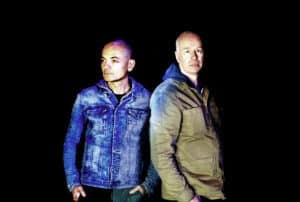
    Ror-Shak began as an experiment by DJ DB and DJ/producer Stakka (Shaun Morris), two veterans of the electronic dance music scene who decided to create a track of their own together. Though it was DB’s first experience working in the studio on original music, the collaboration proved a success, resulting in the highly acclaimed single “Groupies” (Breakbeat Science). The duo continued to work together and has now released a full album, “Deep”.

    “It’s really anything goes,” says Stakka on the collaborative process. “We’ve both got different backgrounds and listen to a widely varied sort of music. So the influences come in just playing around in the studio. Drum & Bass has been part of both our backgrounds for the past 10 years, so we normally start with drum & bass or something that is down-tempo and then go from there”

    Ror-Shak enlisted a variety of guest musicians and vocalists for “Deep,” many of whom they knew or had contact with before. Singer Julie Cruise is an interesting case.

    “We actually started out by sampling her,” explains Stakka. “Through finding out who it was and and getting permission to use it, she ended up appearing on four of the tracks on the album.”

    We did a phone interview with Ror-Shak, but unfortunately equipment problems made the tape very difficult to transcript. Stakka was kind enough to answer some follow-up questions by email, and here they are:

    1. You’d mentioned that the collaboration with Julie Cruise came about after you’d sampled her voice – could you elaborate a bit more on how that happened??

    Stakka: Fate or faith came about after we started working on a track that had a rather naughty sample in from a Grammy winning record (I cant tell you which one) but it was intended as a track just for playing out in the club. I also had an accepalla of a great vocal that seemed to fit over the top of with what we had done, we didn’t know who it was or where it was from, but that didn’t really matter as this started out as just a club track for when we are djing. Anyway the track turned out great and we decided to pursue it further and make it all legal / legit, obviously we couldn’t clear the Grammy winning sample so we went a different direction with the music and took out that sample but as for the vocal we could get permission to use it and in doing so we found out it was from Julee Cruise. We made contact with Julee, go on great and she asked to hear other material we were working on. We played her some very rough sketches from the deep album that we had on hand, she loved them and that was the start of her getting involved with ror-shak and the Deep album. Fate or Faith was also the first ror-shak track that started the idea for the album

    2. Many Chaos Control readers are also electronic musicians (or at least have an interest in the technology side of things). Could you describe your studio set-up? What would you say your most-used pieces of gear are? Software? (I’d asked this on the phone, but the connection was kind of bad at some points, and I had trouble making out everything from the recording)?

    Stakka: We used Logic on some tracks and then I switched to Cubase and use SX3 so the later tracks were created using that. I use some outboard but for the processing and manipulation of sounds I generally use plugins, some of my favourite are the UAD-1s various vintage emulator plugins, Waves particularly the SSL bundle, Various Voxengo, TC Power VSS3 for reverb and many many more

    3. In terms of the vocal-driven tracks on “Deep,” are there any songs where you’d say the end result was particularly influenced by the vocals? In other words, songs where you had a strong idea of how you thought the end results would be, but were then taken in a new direction due to either the choice of singer, or ideas that they brought into it??

    Stakka: There are songs that were very influenced by the vocal but for a slightly different reason. On some album track we actually had two different vocalist working with the same beat. It turned out that we liked both of the outcomes, although they were vastly different. So in this instance we wrote a completely new track in the same key starting with the vocal. This is kind of a strange way to go about it but who’s to say what right or wrong, if you get the desired end result.

    4. DB talked about the choice to cover The Cure’s “A Forest,” but I’m curious as to if you had a particular approach in mind when you did the track. For example, were there particular elements/parts of the track that stood out as stepping stones in creating your own take on the song? Anything about the original version that you felt needed changing? Or did you just go into the studio and start playing with the song to see where it would take you??

    Stakka: The process was pretty much to start by getting a barebones version of the track down at the bpm we work at. This involved all of the musical elements from the original over a new, ror-shak-a-fied beat. Then we gave that to Chantal who we sung the vocal, recorded at DBs friends studio. After we had got all of the parts in it was time to experiment with the tracks and try to give it our own signature.

    5. Is there any further news on the possibility of touring to support “Deep”?

    Stakka: No news to release yet, we have been rehearsing with some singers and working out the live format, but keep your eye on www.myspace.com/r0rshak for news on the album tour


  2. Purity

    by admin

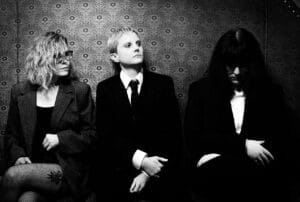
    Fusing together various styles of dance music, Purity manages to create a slick, high-energy electronic sound that also has the raw intensity of rock music. Their sound represents what pop music SHOULD be like: ultra-catchy, yet with a strong edge to it. The group originally signed to Tommy Boy Records in 1997 and opened for Depeche Mode on their 1998 European tour. After being away from the project for many years, Jill Stark and Florence Briggs are BACK with new Purity music. They have a single out, “Liberation (so alive)/Driving Me Insane,” as well as an album’s worth of material written. In an email interview, Jill tells us more about the return of Purity.

    How did Purity come together initially? Had the members been involved in other musical projects previously?

    “The original line up of purity were 3 people. We had all been in other bands previously to this. I wrote and produced the tracks at the time and was with Icy in a previous line up. We advertised for a 3rd member and that is when I met Florence … the cliched advert in a music press publication and then meeting in a bar playing tracks with headphones on. This time round it is just Florence and myself, and now Florence is writing and producing as well.”

    I’ve read that you got signed to Tommyboy after being heard through your website. In what year would that have been? What are your thoughts on the way the web has evolved since then, both in general and as a promotional tool for musicians?

    “Now you are asking – it was 97…the whole web thing was really fresh then. We were ahead of things in the respect of having our music on our own web site and being heard. US record labels were wise to looking for new bands on line but the UK companies were way behind at that stage. When we got out touring and had releases out, we had huge amounts of feedback from people on emails, which was a very new thing at the time and we were aware some people were unable to buy our records in certain countries where there was meant to be distribution in place, so to an extent it gave a power shift to the band being more “in the know” of what was going on.”

    What made you decide to reform and put out new Purity material now? What have the members been up to in recent years?

    “I have dabbled around in various bits and pieces – writing music for photographic exhibitions and art installations but I was dying to write more energetic tracks again. Florence was really up for writing something as well so we decided to give it a go. Also, electronic/dance music is giving signs of being really exciting again. Pendulum really hit a spot for me.”

    Can you describe your studio set-up? Are there particular pieces of equipment or software that you feel are key to your sound and/or creative process?

    “I use Reason with Pro Tools and a lot of outboard fx with a Mackie 32/8 desk, I changed over from a massive amount of physical synths and samplers to having all the soft version in the computer. So from a room full of equipment to a laptop and mixing desk. It’s just how it works best for me….a sort of a mixture of physical units combined with soft synths. Florence uses Logic in its entirety…the fact we don’t use the same set up can cause a few problems though transferring files and sounds etc.”

    What made you choose then name Purity?

    “When we chose the name, there was a real snobbery in dance music where you had to be heard using the correct sounding snare or kick sound at the time which became very boring … brought about by the purists in dance music. We broke all the rules on that, so it was a 2 fingers in the air type of thing. We believe in using whatever sounds works for what you want to achieve…..”

    I’ve heard bands with single word names complain about it making them more difficult for audiences to find in web searches. Do you feel that this is an issue at all?

    “We haven’t experienced any problems….”

    What’s in the immediate future for Purity? Are you working on a new full-length release? Any touring plans?

    “We actually have around 17 songs written, so we have more than an albums worth. We will probably put it out in the future. No touring plans at the moment but we are open to offers!!! We will probably do a few gigs in London.”

    What music are you currently listening to?

    “I still love full on drum n bass like Pendulum so their new single, a bit of NIN, Muse and I’m really looking forward to the Chemical Brothers new single. Florence has been listening to Hot Chip, Bloc Party and Smashing Pumpkins amongst others.”

    To hear Purity’s single go to http://www.myspace.com/purityuk Tracks – Liberation (so alive) and driving me insane. Soon to be available on itunes.


  3. Goon Moon

    by admin

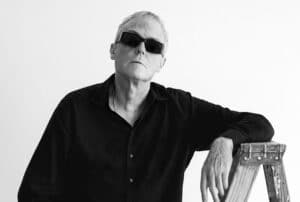
    Goon Moon is a collaboration between Jeordie White (current Nine Inch Nails touring member, formerly ‘Twiggy Ramirez’ of Marilyn Manson) and Chris Goss (Masters Of Reality, producer for such bands as Kyuss and Queens of the Stone Age). Rounded out by drummer Zach Hill, the group had it’s first release, “Got a Brand New Egg Layin” in 2005. After going back to spend time with their various other project, Goon Moon found the time to re-group put together a sophmore release, “Licker’s Last Leg.” The following the transcription of a phone interview we did with Jeordie.

    I read that some of the material on the new CD dates back to before the release of “I Got a Brand New Egg Layin’ Machine” – was this the case?

    Jeordie : “Some of it was done at the same time as the first release, some of the same sessions. We pulled from those sessions, and added new material. So yeah, some of it was recorded prior to the first release.”

    How did you chose what tracks would be used for that first release?

    Jeordie : “On the first record, we wanted to showcase Zack’s drumming a little more. The stuff we had from him wasn’t structured like a normal song, it was more like little freak-out jams that we did. And we wanted to also put out something that would confuse people, that didn’t sound like either of our bands. We just wanted to do something different, and have fun with it.’

    What made you decide that the time was right to put out a follow-up? Was it just a matter of when your schedules opened up?

    Jeordie : “Yeah, it was just a timing issue. We didn’t want to put it out close to the first one, as we wanted to let that sit. Chris went off and did the Queens Of The Stone Age tour, and I did the Nine Inch Nails thing, so it was just when we had an open window to finish it up and put it out.”

    How much of an influence do your other projects have on the music of Goon Moon?

    Jeordie : “You pull influences from everywhere, but I don’t think anything in Goon Moon is inspired by Nine Inch Nails, or Marilyn Manson, or Perfect Circle. But I had something to do with it [so there is a connection]. We tried to think out of the box, not writing to anyone’s expectations but our own.”

    What is the creative process like within the band? Would you say that you have particular rolls in terms of how you write?

    Jeordie : “It’s different on every song. Some I’d bring to the table, some Chris would, and some we’d do at the same time. It’s all a definite collaboration. For each song, we’d just think of something different. In a traditional band, you’re committed to how a certain drummer plays, or how a bassist plays, and you’re committed to a sound and what people expect from you. You don’t want to disappoint your audience, so you kind of put out the same music to cater to them in order to have a career. But with Goon Moon, there are no real rules, and no boundaries. Just whatever we are into at that moment.”

    How did you and Chris initially come to start working together?

    Jeordie : “When I stopped working with Marilyn Manson, Chris and I were introduced to each other. We just started hanging out, listening to music and playing together, and then recording some songs. Both our schedules are pretty full, so whenever we had the opportunity we’d make music. We just did it for fun, not as a job or with any thought of going on tour or anything like that. We just wanted to make music, and Goon Moon came out of that. Now it’s turned into something that is generating some interest in order for us to go on tour and play some shows. That’s we’re at right now.”

    Are you thinking about/working on Goon Moon music while you’re involved with other projects? Or is it something you only do when you have blocks of time you can dedicate to it?

    Jeordie : “It’s whenever we have the opportunity to make music, we just go for it. If I feel like working on it when I’m on tour, I will. It’s mostly just a studio thing.”

    Do you plan on doing any touring as Goon Moon?

    Jeordie : “We hope to. We’re just waiting for some time. Probably in the fall we’ll do some shows. We’re trying to do the right thing to get it set up correctly and be prepared for it. I’d say in October, maybe.”

    What are your thoughts on the way the Internet as evolved, both as a promotional tool and a means to distribute music?

    Jeordie : “I think it makes more music available to more people. More people can find out about bands. I still go to record stores and buy vinyl, that’s still part of my life. But there’s a whole generation of people that it’s not, they just go on the Internet and download it, whether they pay for it or not. Its definitely brings music to more people, and the whole point is for your music to be heard. For that, the Internet is a great tool. You can either fight it, or be a part of it. Anyone who argues with it is just stuck in the past, and shooting themselves in the foot. Again, you can use it to your advantage, or whine about it, and I prefer to use it.”

    Do you think that online music distribution is pushing the focus away from albums, and back to singles?

    Jeordie : “I think that if you put out a record that is worth listening to AS a record, then people will. But people are making records based on singles, trying to get their song into the new ‘Fantastic Four’ or ‘Spiderman’ movie. It’s not that you have to make a ‘concept record.’ It doesn’t have to be “The Wall,” but something that you listen to from beginning to end, like “Dark Side Of The Moon.” If people present their music like that, instead of just a collection of singles, then people would look at it as a whole and buy the whole record. But it seems like we’re almost back in the 50′s and 60′s with 45s, which people were buying until the Beatles came along and made the album an ALBUM. I think it will all turn around. As computer processors get bigger and faster, and the music is able to sound better and not be so compressed as mp3, I think people will get back into hifi. Instead of listening on an iPod or crappy computer speakers, they will go back to listening on a nice stereo. Hopefully, because that is what I like.”

    As a musician, how have you been affected/benefited by advances musical technology, such as affordable digital multitrack recording?

    Jeordie : “That’s what it boils down to. If people aren’t buying records, then you need to make them for cheaper. The big record executives with the huge expense accounts have got to disappear. Because that’s where all the money that people are spending is going anyway, to the record companies. There’s no reason why someone in an office should be making all the money from an artist’s intellectual property. And then again, you don’t need to spend that much money on an album anymore. People who own the studios and are charging a thousand dollars a day or more to use their studio, that’s got to disappear. So what’s going to happen is the people who make the money are going to be the people actually making the records. The engineers, who are slaving in the studios, need to be paid, and the artists who are coming up with the music need to get paid. Those are the people who should be benefiting from the album, not all the middlemen.

    “There’s going to be a lot of bedroom bands, like this Goon Moon record was made in bedrooms, not studios. And it sounds, to me, just as good as any other records that people spend tons of money on. I like the way cheap records sound, too. The White Stripes records sound better than the Linkin Park records, and the White Strips probably paid $20,000 for their new album while Linkin Park spent probably close to a million. The end result is product, and one is shitty, one is good. That’s why bands you grow up with, usually their first few records are better than their later ones. It’s because they get bloated budgets and they spend too much money on dinners and ridiculous studio budgets. When they were limited to a confined budget and space to work with, they used it to their advantage. Even early Beatles records, when they only had four tracks to work with. You just make it work.”

    Would you say that technology like Pro Tools has had any effect on your actual creative process?

    Jeordie : “Using Pro Tools, it’s easier to make a records in your bedroom, as opposed to using tape in a studio, which is harder to edit. There’s a way to use it and a way to abuse it. We never fix out of tune vocals, for example, because that’s not what Goon Moon is about, it’s supposed to sound raw and real. But we might say ‘let’s not sing that chorus again’ and copy it. And the fact that there’s only three of us playing at a time; there’s a lot of overdubs. But that’s not Pro-Tools. On The Goon Moon records, there’s nothing that we do with Pro Tools that you couldn’t do with tape.”

    Do you see yourself continuing to do things like tour with Nine Inch Nails, or would you like to focus on your own music in the future?

    Jeordie : “I’m happy to make music and pay the bills, basically. I definitely would like to do more Goon Moon music. I’m getting to the point now where I’m putting it out for free on You Tube, rather than waiting. Though I do like there to be a product. I’m thinking that eventually I’d like to only put out vinyl, and then have a coupon included for a digital download. With records you have something to look at, and that’s the only thing I miss with the digital downloads – not having a product to hold onto.”


  4. Freezepop

    by admin

    Fully embracing synth pop but giving it a modern edge, Freezepop creates some of the most addictively catchy electronic music out there. Their music has a strong sense of fun, with cleverly humorous lyrics and bouncy synth lines. While their sound is bound to appeal to New Wave fans, it must be noted that Freezepop is NOT a retro band. They are influenced by music that came out in the 80s, but are very much building upon the past rather than attempting to recreate it.

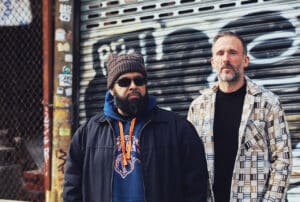
    Hailing from Boston, MA, the group is comprised of Liz Enthusiasm (vocalist), the Duke of Pannekoeken (producer/vocalist/programmer), and Sean Drinkwater (synthesizers/programmer/vocalist). Freezepop’s music has been featured in several video games, including ‘FreQuency’, ‘Dance Dance Revolution ULTRAMIX 3′ and ‘Guitar Hero’ 1 & 2. Having self-released for many years, they’ve just put out their first CD on a label, “Future Future Future Perfect” (Cordless). In an email interview, Liz and The Duke discussed their creative process, their decision to go with a record label, and more.

    When I first started hearing about Freezepop I’d read that you were using the Yamaha QY70 as your primary instrument. Are there any particular ways you’d say that device influenced your sound? Are you still using it main sequencer and/or source of sounds, and if not what made you move on to other pieces of equipment or software?

    The Duke: The QY70 was incredibly important to the sound of Freezepop for those first few albums. It only had a small amount of synthetic sounds that i had to use for both the instruments and drums. They’re really kind of thin bleeps and bloops which really gave kind of a light and delicate quality to our songs. The other limitation that the device imposed on the songwriting was that because i composed everything in pattern mode, there were only 8 possible sounds at once, and only 6 total patterns.

    That means that you would never hear more than 8 sounds, and that’s including the drum kits (each kit would be 1 sound). This, coupled with only having 6 unique sections per song, really kept things simple and straightforward, which is pretty much what pop music dictates. So really, that box’s limitations really guided the complexity of both the songwriting and sound of the band. After 2 full length albums and an EP of songs, I really basically used up everything that box could give me. I started to record all the sounds individually so i could post-process them all later to make them sound better and more unique. By the time FX3P had been started, I decided that i’d had enough of those sounds and limitations and wanted to open the songwriting up to all the gear that i had in my studio that i’d been using for other musical projects over the years. I’ve always used Digital Performer from MOTU as my digital recording app, but now it plays a more central role as i do a lot of midi sequencing in it as well it still being the way i mix Freezepop’s song. I also have been using Reason 3 as the place where i do most of the drum programming and samples that make up the songs.

    As for synths and drums, we use a Moog Voyager, Alesis Andromeda, Nord synths, Linn and MachineDrum, as well as borrowing a sid-station for a few songs (Thought Balloon and Afterparty).

    In terms of lyrics, are you thinking about the balance between being humorous and possibly coming across as parodying synth pop music? Or is that not a concern?

    Liz: I wouldn’t say we’re parodying anything, exactly. I am balancing several things, trying to keep it humorous/lighthearted without being too jokey/novelty, and maybe even inserting little bits of Actual Sincerity in there as well.

    The music of Freezepop has appeared in many video games. Do you have a sense of how large a segment of your fanbase might have discovered Freezepop that way?

    Liz: It’s a pretty large percentage of our fans. At first, we were self-releasing our CDs, everything was pretty much DIY. All the exposure we got was through word-of-mouth, or just people who actively sought out this kind of music. Once the first video games (Frequency, Amplitude) came out, we definitely noticed an upturn in our fanbase, but even these games were pretty niche-y in terms of appealing to more serious gamers. The Guitar Hero thing really moved beyond that, and just exposed us to tons of people who wouldn’t have heard of us otherwise.

    Are there any particular other types of games that you might like to see Freezepop music included in the future? (Perhaps not specifically music-related games?)

    The Duke: Hm, that’s an interesting question. I could see being a part of quiz or brain type games since we do have a nerdy bent to us. I’d love to include some of our more aggressive and high energy tracks getting into racing games, maybe something futuristic and scifi. Also, anything wacky and japanese i’d love to get into, like katamari or locoroco.

    How did you come to release the new CD on Cordless? Was signing to a label a goal of the band all along?

    Liz: No, in fact, we were verrrry skeptical about signing to a label. We were in a pretty good position, with being able to self-release our CDs, and getting our exposure from the video games. But we were impressed by Cordless’s focus on artist development, and the fact that they wanted us to remain pretty independent, and we saw this as an experiment to see what a label could accomplish for us that we couldn’t do for ourselves. Over the summer, Cordless got absorbed into Rykodisc, so now we have an even bigger pool of resources to work with. We’re pretty happy with the situation so far, and it’s definitely a big plus that people are able to buy our CDs in stores now.

    What is the creative process like within the band, and has it changed/evolved much over the course of Freezepop’s career?

    Liz: I write most of the lyrics. The Duke has written most of the music, although on the new album there are several Sean songs, and things have generally gotten more collaborative between us over time.

    Are there any particular things about prior synthpop music that you are trying to stay away from with Freezepop?

    The Duke: When starting up freezepop years ago, it was really important to me to have the songs be fun and energetic with an element of absurdity thrown in. A lot of synthpop music is so serious and dark that going this route really set us apart from a lot of other bands that were really just regurgitating Depeche Mode. I also have always been interested in trying to find sounds and production techniques that are more cutting edge, like what you’re hearing in a lot of the European electro that’s been coming out the last few years. I think just in general, not taking our selves too seriously has been pretty key.

    What are you thoughts on the growth & evolution of the Internet, as it relates to being used by bands/musicians (as a promotional and/or collaboration tool)? How does the current state of the Internet compare to where you thought it might be heading, back when you first started using it?

    Liz: I’m a designer, so we’ve always had a pretty strong web presence. It’s easier to get yourself out there now, any band can set up a myspace page in no time at all, but it’s still a challenge to get yourself noticed, since there are 5 million other bands setting up their own myspace pages. But it’s really important that you have this opportunity you wouldn’t have otherwise. It’s great for kids today because they have so much to choose from, they can search out stuff they like instead of having to rely on what radio/MTV was forcing on people back in the day. Plus they can download it illegally for free instead of having to really pick and choose what they spend their hard-earned babysitting money on. (Going back to question 5, that’s the downside of being on a label: people feel a lot less guilty about stealing your album. Hey folks! We’re not rich yet! We’re not even making a living from this yet! If you’re going to steal our music, at least buy a t-shirt, okay?)

    Are there particular areas of the country/world that you’ve found to be particularly receptive to Freezepop’s music? (and if so, do you have any thoughts as to why?)

    Liz: On the whole, Europe is a lot more pop-friendly than the U.S. Scandinavia especially loves their synthpop. Here people are much more likely to dismiss us (or at least label us as “80s”) because we don’t have guitars or real drums. We do well in big cities like Seattle, SF, Chicago, LA. And we have weird pockets of fans elsewhere like Florida, Texas, Arizona… I really have no idea why that is though.

    What music have you been listening to lately?

    The Duke: Siriusmo, ModeSelektor, Nusrat Fateh Ali Khan, Darkel, Snake River Conspiracy.

    Liz: Um… not a lot, unfortunately. Junior Senior. The new Cornelius album. And I can’t wait for the new Duran Duran (how predictable is that?)


  5. Brian Reitzell

    by admin

    “I like to do very emotional things, and fear is such an intense emotion,” says film composer Brian Reitzell (“Lost In Translation”, “Friday Night Lights”) on his desire to do a horror movie. After considering numerous projects, he decided to take on “30 Days of Night” as his first film in that genre. To capture the mood of an Alaskan town terrorized by vampires, Reitzell chose to downplay traditional instrumentation in favor of such sound sources as a custom-made instrument built from a pottery wheel. In the following telephone interview, Reitzell discusses the soundtrack, why he turned to film work (after being a member of rock band Redd Kross) and more.

    How did you get involved with “30 Days of Night”? Had you been aware of the comic?

    “I actually didn’t know about the comic book. I had just finished my last film for Sony, ‘Stranger Than Fiction.’ The head of music at Sony said ‘Brian, what are you going to do next?’ And I said that I wanted to go to Iceland in the winter, and rent like a town hall about an hour outside of Reykjavik, bring a bunch of my weird music friends with me, and a bunch of gear, and score a horror movie. And she asked what the movie was, and I said, ‘Well, I don’t have a movie in mind, I’ve got to find one.’ This is what I wanted to do, I wanted to go out and create this stuff and bring it back. And then she said ‘Well, I’ve got the movie for you’ and told me about ’30 Days Of Night.’ Then I met with the director, and we really hit it off, so I signed up to do it.”

    What effect did the environment you were in have on the resulting score?

    “Environment is a big thing for me. I didn’t go to Iceland in the end to do it. I did it here in my studio in Los Angeles. But when I work on a movie, I always try to do whatever I can to put myself in that environment. So it was very cold in here the whole time. It was pitch black. So I sort of did have my own little dark, cold universe to create it in.”

    Can you describe some of the instrumentation used?

    “I did a lot of research, thinking about what sort of instruments to use. Through my experimenting with different sounds, I found I needed to create sounds that were very unfamiliar. I sort of felt like … I had never been through a horrific experience like someone trying to kill me with an axe. If they were coming at me, the sound that I would hear in my head was not going to be familiar. It was going to be very intense and unfamiliar, it wasn’t going to be an orchestra necessarily. So I started inventing things.”

    “I had a lot of things made for me. I had some bronze disks and other types of things made for me by a guy in Florida. Bronze is just an incredibly complex tonal creature. I would bow these pieces of bronze and process the sounds. I got a pottery wheel because I am obsessed with Doppler, things spinning around your head. I like Leslie Organ speakers and I wanted to try the real thing so I bought a pottery wheel, which sat in the corner of my studio for a couple of months until one day I thought ‘Ah, I got it!’”

    “I took this black tube that I got at Home Depot and I affixed it around the pottery wheel. The pottery wheel looks like a turntable, it spins. This particular one cost me $800 so I was a little worried that I wasn’t going to be able to get it to work. But you can put 150 lbs of pressure on it and it can extend from 0 to 280 rpms, and you can control it with a foot pedal. So I suspended the tube with bungee cables affixed to cymbal stands, sort of around the circumference of the platter. And then I affixed a felt palette in the center of the pottery wheel using some rigging gear that cinematographers or grips use on film. The mallet would sort of rest on top of the tube, and the tube has ridges on it so when the mallet was spinning around, it would rub on those ridges and create this very eerie sound. The faster I would spin it, the higher the pitch would be. I shock mounted microphones onto either side inside the tube, and lo and behold, I had the perfect doppler. So stuff like that. I did use things like cello and guitars and drums, you know, more conventional things. But pretty for much everything, I tried to make all of the sounds unfamiliar and weird.”

    How extensively did you use electronic processing on the sounds you came up with?

    “I tend to veer towards very organic sounds, but I processed things to death. I mostly processed with analog gear, using the computer mainly for editing. I don’t use the computer that much for the actual ‘in the box’ processing. It’s way more about my collection of weird old rack effects.”

    When it came time to actually assemble everything into a movie score, what tools did you use?

    “Well, I use Pro Tools. It’s great work for working with films. I’ve been doing this now for about 10 years, starting off with a VCR, a turntable, and a tape recorder. It’s kind of amazing how far the computer technology has come. It’s great, and I don’t know how they are going to improve it. I don’t use much MIDI. I don’t really believe in things being tempo mapped. I like things to push and pull, and to breathe. I’ve got great microphones; I’ve got my own studio. I have a wonderful live room that just sounds huge, even though it’s not. So yeah, Pro Tools. I do have a Trident Fleximix console that has got great EQ in it. I’ve got a lot of good, solid old gear.”

    At what point in production was “30 Days Of Night” when you started work?

    “For this particular film, when I signed up to do it, they were shooting. I tend to start early, sometimes when the film is being written. But with this movie, they had started shooting and that’s when I started experimenting with sounds. I got bits and pieces of a rough assembly, I think around late February, and that’s when I started writing and recording, right away. The whole thing changed quite a bit. I was being way more orchestral in the beginning, but it just seemed too generic and in a weird way too musical to use that approach.”

    Was there anything particular about that film that you’d say provided the initial spark of inspiration for what you wanted to do with the score?

    “I always latch onto environments, so for me, one of my biggest roles is to help people be in that place. My job is partially to do sound design, in essence. So I really latched on the icy-ness of this town in Alaska and onto the darkness. For me, it was mostly about the place.”

    What things do you tend to look for in a movie when deciding whether or not you want to work on it?

    “Well for me, it’s all about the director. I always insist that I sit down and talk to the director before I would agree to a movie. There are a lot of things that go into the decision and I am very picky about the jobs that I would do, because I put everything that I have into them. So with this film, I wanted to do a horror movie and I got sent loads of scripts. I met with several directors, and David Slade was honestly the only one who was making a movie that I thought was interesting. I’m not huge fan of the new horror films, but I’m a big fan of movies like ‘The Shining,’ the classics. There are some good, weird Asian horror movies. But I wasn’t interested in doing, you know, a MIDI electronic score to some gratuitous horror movie. David he had made ‘Hard Candy,’ which was a very disturbing movie, and I knew that he was going to make something intense. Part of the reason why I wanted to do a horror movie was because I like to do very emotional things, and fear is such an intense emotion. I really wanted to have an opportunity to see what I could do with it. David’s previous film ‘Hard Candy’ only had 6 or 7 minutes of music in the entire movie, and I was told that this movie was going to need about 20. In the end, I ended up doing 70 minutes of music because once we took out these sort of dark atmospheres, these sounds we were creating, it releases you from the tension. That was David’s reason for keeping the music OUT of ‘Hard Candy.’ So it all really evolved, and becomes something different than what we thought we were going to do.”

    Having been involved with bands, what made you decide to move on to focusing on film work?

    “Well, I played with Red Kross for about 8 years, and I quit. I quit because I was honestly tired of re-creating the same stuff every night. Touring is probably what killed it for me. But also, I was tired of 4/4. There are a lot of restrictions with a band that is a democracy, and I wanted to collaborate with other people. With each film, I can collaborate with whomever seems appropriate for that project. For this film, I had to do it myself because I couldn’t find anyone who I thought was appropriate.”

    What are you working on now?

    “Now, I’m in the midst of experimenting again, and trying to conjure up new ways of making some music. And I’ve just set up a whole bizarre electronic drum machine. It’s probably the world’s most bizarre drum machine; I have about 20 drum machines that are all linked together. They are of various ages, and some are quite old so to get them to talk to each other was a challenge. But now they all do, and the computer clocks them. Each machine is going through one of the faders on the Trident console, so I can have them all running together and then essentially pull the fader to bring up one of the machines. I’m trying to find a way to write music in this way, and it’s working really well. So my next project will be a film score. I work a lot with the band Air, and I’m going to do a score with them starting in January.”

    What film would this be for?

    “We haven’t found the film yet! Sometimes the films come to me, and sometimes I start doing my research and then find something that seems appropriate. So hopefully we’ll find something, and if not we’ll just make a record.”

    This goes back a while, but can you talk a bit about the ‘Logan’s Sanctuary’ CD?

    “Well with ‘Logan’s Sanctuary,’ I had just done my first film, ‘The Virgin Suicides,’ and I did that through a now defunct record label called Emperor Norton. The head of Emperor Norton asked me specifically to do that. It was his idea. He wanted me to do a real score to a fake movie. And that movie was to be the sequel to ‘Logan’s Run.’ To do that, I enlisted my friend Roger Manning, who I’ve known for years. He played with Jellyfish, and was playing with Beck at the time. Roger and I set out to do this, but to do it I had to write a plot. So I sat down and wrote a storyline with the help of a friend, and then we started scoring scene by scene. Originally, we weren’t going to use our real names, it was going to be a hoax. But then when we turned it in, the record label was so happy with it that they wanted to exploit it.”


  6. REPO! The Genetic Opera

    November 5, 2007 by admin

    A trailer has been put online for “REPO! The Genetic Opera,” a new movie musical featuring Nivek Ogre of Skinny Puppy. Based on a play of the same name, the film has a very unusual cast, also including Anthony Head (“Buffy The Vampire Slayer”), Sarah Brightman (“Cats,” “The Phantom Of The Opera”) and Paris Hilton. Watch the video below (warning – the music is very catchy!) and check out the official website at http://www.repoopera.com/.