Chaos Cotrol Digizine

THE LATEST | ALL INTERVIEWS | NEWS BLOG | ABOUT CHAOS CONTROL | CONTACT

  1. Blip Festival 2007 hits New York

    November 28, 2007 by admin

    bubblyfish.jpg

    Tomorrow (11/28) marks the beginning of Blip Festival 2007, a 4 day event spotlighting music and art created on old video game and computer equipment. Held at Eyebeam in NYC (540 w 21st St), the festival will feature 40 musicians and visual artists from around the world, as well as workshops, screenings, an “8 Bit Open Mic,” and more. Among the performers will be Bit Shifter, who we interviewed last year ( click here to read ). Admission to the event is $10 a night, or $35 for a festival pass. For more info, check out the Blip Festival 2007 website.

    Visit the Blip Festival 2007 website


  2. Rasputina make UK debut

    by admin

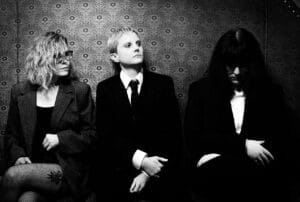
    Rasputina will soon be doing their first-ever show in the UK, performing in London at Queen Elizabeth Hall on January 29th. The band is looking to possibly do another show while in the country; interested clubs or venues should email their manager John Hall at John<@>virtuallabel.biz. “Oh Perilous World,” the latest Rasputina CD, comes out in the UK on January 21st.


  3. Franz Treichler of The Young Gods

    November 7, 2007 by admin

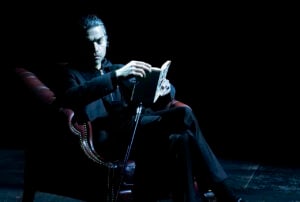
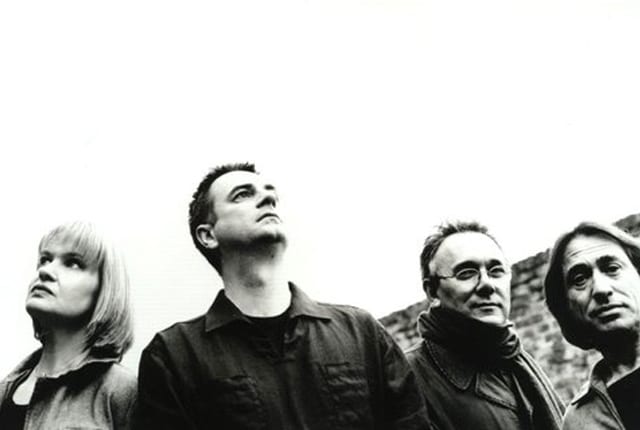
    The Young Gods have returned with a new cd, “Super Ready/Fragmente” and on May 4, 2007 did a special acoustic show at the Swiss Institute in New York. Since sampling and sound manipulation have been such a big part of the Young Gods style, the idea of them performing on acoustic instruments may seem surprising. But it really does come across well. Prior to the performance, I spoke frontman Franz Treichler about performing acoustically, the evolution of the band, and more.

    Chaos Control : I was initially surprised to hear about Young Gods doing acoustic shows. What made you decide to perform in this format?

    Franz Treichler: “Basically, we only do a few. We started doing these last November, for very special occasions. Like when a book came out about the Young Gods, for the release of that we did an acoustic show for the very first time. It turned out really well, so we thought we’d keep on doing a few of those shows. We did only Switzerland, not that many shows, maybe 20 or so. Once in a while, people ask us to do something a bit different than the in-your-face wall of electric guitars and samples. It’s something that we discovered we appreciate while doing it, so that’s also why we’re going to carry on doing it when possible. We’re probably going to do a recording of this, either live or in the studio. It made us aware that some of the Young Gods music can be interpreted very differently, and it works. ‘If You Stay Tonight,’ as your probably noticed, it’s the same music, just a different approach, a different angle and perspective. It’s great. And as a singer, it’s great because it leaves me more room.”

    Chaos Control : Was it difficult figuring out which songs were most appropriate for acoustic performance?

    Franz Treichler: “Well it was very fast. Some songs obviously didn’t work, and we didn’t try too long. For this project we have a fourth member, Vincent Haenni, so we have three guitars and percussion. I don’t have to play too much myself while singing.”

    Chaos Control : Do you think the experience will have an effect on future Young Gods material and recordings?

    Franz Treichler: “Yes. I used to be a guitar player before starting the Young Gods and using samples. So was Al. We had to kind of go back to the instrument and work a bit, because we lost a lot during those 20 years of sampling madness. And it was a good thing, because we really enjoyed it and are probably going to include it on the next record. We’re going to probably use guitars again. I don’t know exactly how we’re going to do it, but it definitely gives inspiration.”

    Chaos Control : Young Gods have been pioneering in their use of sampling. What was it like working with the limited technology when you started? How has the evolution of it affected they way you work?

    Franz Treichler: “Well of course the technology has evolved very much in the last 20 years. It’s just more flexible and more organic. But the restriction of the technology when we started was also a source of inspiration. You had to be more minimal, which was also a good thing. We adapt as much as the technology evolves, because we are very interested by what it becomes and what it is about to become. I think when we did ‘Second Nature’ in the year 2000, we approached it with more electronic synthesizers, plug-ins and computers because we wanted to do more than just using samples like we always did before. For this record that just came out, it’s a mixture of what we learned with the electronics, with laptops and things, and the samples. I’m amazed when we look at the past. I still think that our first record is one of the best, you know. There was this energy .. it was a revolution, I think, when affordable samplers came onto the market. It was really, really different. You could compose purely with sound, and didn’t have to worry about tonalities or tuning guitars. It was really something.

    “Most of the time anyway, the idea was not to quote the band you were sampling. It was more like the quality of the sound was such that it was triggering another idea, was triggering a beat or something. I would say that some of the material has grown a bit old, but some not at all. There’s so much stuff that is done with samplers nowadays, you don’t do it in the same manner. I still believe that what is interesting about sampling is getting close to the sound and manipulating it.”

    Chaos Control : Did you ever think that the band would still be around over 20 years later?

    Franz Treichler: “I’m kind of glad and surprised that we still have this energy!”

    Chaos Control : At what point did you realize that this was a long-term project?

    Franz Treichler: “When we started to put together the 20-year compilation in 2005. I was kind of afraid at first to do a compilation. I was thinking why try to dig in the past and put that stuff together? I was more interested in doing new things. But then a close friend convinced us, and I think it was a really good idea. When we started working on it, everybody made their list of their top 20. I was somehow proud that we kept on going, through whatever label we were on, trouble with the industry, or changes in the band. I’m really glad we kept on going.”

    Chaos Control : Do you have any plans for more performances in America after this one-off acoustic show?

    Franz Treichler: “We’re talking about doing a tour with the Melvins in September or October. That would be interesting, definitely.”

    Chaos Control : How did you come to sign with Ipecac?

    Franz Treichler: “Mike Patton approached us in the very first days of Ipecac. It wasn’t that easy because we were already on a world contract. But as soon as we could, he released ‘Second Nature.’ That was in 2000.”

    Chaos Control : What was the experience like being on a major US label (Interscope) for the “Only Heaven” album?

    Franz Treichler: “They were really fair, and I have nothing else to say but ‘thank you.’ After ‘TV Sky’ we had like five propositions from the States, all the major companies basically. Geffen, Sony, Mercury, BMG, and Interscope. They were the most down to earth kind of people. What happened was that when we delivered the tapes, they were telling us that it was too European, and we didn’t really know what that meant at the time. For us, it was a logical follow-up to ‘TV Sky.’ But they said fine, and that they’d work it. And we toured for quite a lot time, we did 2 American tours. When you get a company like this behind you, if you want to make it big in the States I think you need to stay here and tour, tour, tour. It’s the only way to make people know you exist. We didn’t want to do that. We still wanted to divide our time between the States and Europe. When we stopped that tour, our former drummer wanted to stop music. For us, it was some kind of a sign. We’d been doing this pace of things for 11 or 12 years non-stop, we wanted to take it easy for about 6,7 or 8 months. So we took the equipment back to Switzerland.

    “But Interscope was still interested. We delivered the ambient record, ‘Heaven Deconstruction,’ in ’97. They were really fair. They said ‘we don’t know how to work this kind of music, why don’t you do this one-off on an indie label, and come back when you have more rock-oriented material?’ And we said fine. Shortly after that, they got bought and I think top management decided to get rid of all the bands who were not selling more that 300,000 or something. And that was it. So, it was a very nice adventure. After that, and with problems with our former European label Play It Again Sam, we stated to freak out over major labels. We wanted to go with small labels. Of course you lose a lot of attention, a lot of people think you don’t exist anymore. But what we’ve given up, creatively it catches up. We like the new record very much; we’ve done lots of projects. We’ve diversified with a lot of crazy projects that we’re going to present in the next couple of years.”


  4. Underworld

    by admin

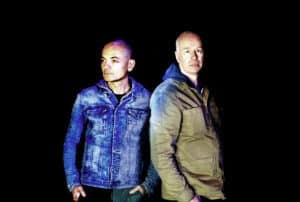
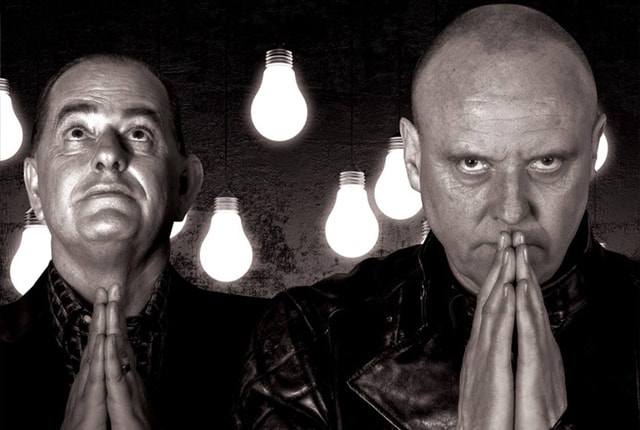
    Coming out on October 16, 2007, ” Oblivion With Bells ” marks the first regular Underworld CD release since 2002′s “A Hundred Days Off.” But it isn’t that the band went on a five year hiatus, as they have been extremely busy with internet and film projects. We were able to get member Karl Hyde on the phone for a short interview, where he talked about the online releases, film scoring, and more.

    What was the time frame of making “Oblivion With Bells”?

    “Well, this is our fifth album since the release of ‘A Hundred Days Off.’ The first 3 were download only from underworldlive.com and the forth was the ‘Breaking and Entering’ soundtrack. This constitutes the fifth in that series, what we call the ‘Riverrun’ series. Rick and I started compiling a body of new material in about 2003. We put together just short of 200 pieces and from that we started to make choices about what tracks would go on the downloads, what would become 12 inches, and what would become physical releases.”

    What inspired you to do the download only releases?

    “We wanted to explore new ways of publishing our work. We were becoming quite frustrated with only releasing material in the traditional way. After a couple of decades of doing that, and coming to the end of our contract with V2, we thought it was time we struck out on our own for a while. We wanted to explore new ways of putting out the material, with a shorter time between finishing a piece of music and releasing it. So we were releasing material as downloads, and it was very successful for us. That department was paying for itself. But also in terms of our web radio casts and televisions casts through Apple Quicktime. These were all kind of part of the ‘Riverrun’ series where we were experimenting with different ways of publishing work and of communicating with live audiences, both from on the road and wherever we wanted to be, whenever we wanted to do it.”

    How has online distribution been working out for you?

    “Well, it’s very empowering to have immediate interaction with our audience. We’ve been publishing new pieces on the internet everyday since 2000 when we released the “Everything Everything” DVD and put a diary, photos, and links to other artists online every day. Within hours of the first post to that diary, we were getting responses. It was an incredibly empowering moment when we realized that there is more than the traditional ways of communicating. We like to go out and play live, and that plays a very important part in the way we get our directive and energy, and in the way that we write material, as we write a lot of material on stage. But it meant that we didn’t always have to get the lorries and the crews and the airplanes out to communicate our ideas and get instant feedback. Through the live webcasts, the radio shows, we were able to not only play other people’s material, but also jam out live ideas, give away works in progress, get feedback through our chat rooms, and communicate through web cameras. So there was a really multi-stranded method of working starting to appear to us. It felt more natural than always having to work the traditional way, which can be very cumbersome, and very constraining when you always have to put music out as a physical and scheduled product, with all the questions that come about, and have to go out live with the crew and the trucks and all that entails. As much as we feel like those ways are very important to us, it’s really empowered us to be able to publish material as we desire. And to get that instant feedback through the internet.”

    What would you say the balances is between long-time Underworld fans continuing to follow you through the website, and new fans who have been introduced to you through the web?

    “I couldn’t really say. The internet has certainly given us an enormous reach to not only connect with people who have been following us for years, but also just to be around. Through cross talk, through people to referring us through mySpace or through underworld.com. It’s something that we always believed in. Robert Fripp wrote something back in the 70′s about small mobile specialist groups of people that would be communicating with each other and exchanging ideas and information. That’s something that we’ve held as kind of core to our beliefs, and it has been since the beginning of the 80′s. When the internet came along, it was sort of the conduit by which we’d always believed we could communicate. Not only to turn people on to the things we’re doing, but also other people’s things that we are excited by.”

    Can you talk a bit about the film soundtrack work Underworld has been doing?

    “We first got into film soundtracks in about ’86, I think it was, when we scored a movie called ‘Underworld.’ Which is where we got our name, really! And from then on Rick and I were working on things for music television over here in Europe. When Tomato starting making TV commercials, we started to make music for those as well, and thoroughly enjoyed it. It’s where part of our hearts lay, really. And of course some of our music started to get picked up for films. Then we worked with Danny Boyle. About 18 months ago, Anthony Minghella approached us to score his film “Breaking and Entering” and to collaborate with Gabriel Yared. Now that came up at time when Rick and I had deliberately decided to open up the doors to new collaborations with people. Until then we’d been pretty much a closed shop. We wanted to start having other people be involved with Underworld. So when Anthony Minghella asked us to collaborate with Gabriel, that was just perfect. That formed a partnership, kind of a trio of improvising, which moved on to working with an orchestra, recording at Abby Road studios. The three of us were playing the instruments that we’d kind of grown up with and formed an improvising trio that will go on to make more music. That was very inspirational. Gabriel Yared inspired us to play our traditional instruments with him, and we also progressed our jamming over the internet. As we were finishing that, which was a very fantastic experience, Danny asked us if we would score what would be the fifth film we’ve worked on with him ['Sunshine']. Again, he wanted us to collaborate with another person, a guy name John Murphy, who is living over there in the States. An English guy he’d worked with on “28 Days Later.” With John scoring the orchestra, Danny encouraged us to do basically whatever we wanted to do. We pretty much scored almost all the movie, all the way down to some of the sound effects. We had an absolutely fantastic time. We handed the music over to John Murphy, and he replaced some of the parts that he and Danny thought we more suited to orchestra. Really from that we were again empowered and encouraged to follow our passion for film music, which has always been prevalent in our records, When it came to finishing this particular record.”

    So it was the movie Underworld that made you take on that name for the band?

    It was. The movie was based on a Clive Barker story, and the title was changed for a while to ‘Transmutations’ and then sometime in the 90′s I think it was changed back to ‘Underworld’ again. It has a fantastic cast and some great people working on the team. But it just bombed, it didn’t do well at all. But it was really the beginning of a long road of writing for pictures. Writing for pictures differs greatly from writing an album, as the moving images really tell you what they want. Particularly when you’re working with a director such as Anthony Minghella or Danny Boyle, who have a love of music and encourage and inspire musicians. And also they have a very clear idea of how they want scenes to feel. Your job as a musician is to support the images and not dominate, and to enhance the mood of the film. It’s great, it becomes very intuitive when you see a scene and it tells you what music it needs, or doesn’t need. Of course when all that stops, you’re left with a blank canvas again. There was a short period of time when we were coming to look at the short list [of songs] for this record. Rick and I said ‘well maybe ask our film maker friends if they’ve got bits of film lying around?’ There certainly was a time when we thought that maybe we should have a bit of film that we could play along to, to help us finish this album! [laughs] But we managed to get over that one.

    We’re almost out of time, so is there anything else you’d like to add?

    I think that the major influences for us on this record were the web radio shows that we do, listening to all the music from the independent labels and artists that get send to us and that we play on the radio. That has been an enormous inspiration. And also listening to and being inspired by the club music that is being played in Germany at the moment. The German electronic club scene, for us, has slightly slower beats and a deeper sound. That, and the film scores, would be what contributed to this album. The website, underworldlive.com, will become the center of where we publish not only music but also book, art works, films, and we’re continuing to collaborate with Apple Quicktime on content for web-based television. Which is something we’d wanted to do, in one incarnation or another, since the early 80′s. Finally, the technology is here to enable us to explore that one.


  5. Stereo Total

    by admin

    A new album from Stereo Total is always a breath of fresh air, as the Berlin-based duo are masters at crafting catchy pop songs that are also very unusual sounding. French chanson, low-fi rock, weird electronic noises, multi-lingual lyrics, and odd song structures are just a few things one might hear in a Stereo Total track. It’s the type of thing that in lesser hands could come across as pretentious and/or unlistenable, but for Stereo Total the various styles and sounds seem to meld together naturally. The quirky band is back with a new CD, “Paris<>Berlin” (currently released in Europe, out in America August 20) and member Brezel Göring recently answered some questions for us by email.

    Are there any general factors that determine what language a particular lyric will be in? For example, do you see the language choice as a factor in crafting the mood/feel of a track? Does it depend on subject matter?

    “There is always a ‘strong line’ in every song like ‘mehr Licht’ (= more light), ‘Ich liebe Liebe zu dritt’ (= I love to make love with three people at the same time), ‘Wir tanzen im 4-eck’ (= we are dancing in a square) or ‘Let’s go to a holiday INNN’. This line determines in what language the song will be (french, german, english or italian).

    “In some songs there are two different languages used (‘ma radio’ is a french song, but the computer voice is talking in german.) It is all about frontiers to dissapear: linguistical frontiers, stilistic frontiers and of course political/geographical frontiers.”

    Musical technology has evolved quite a bit since Stereo Total began, especially with computer-based recording, software synths and sound manipulation. Has this had much of an effect on your creative process and the way you record/perform?

    “I don’t think, that technology is important. If they would have spent one year on one single song, they could have done every thing computers do these days with tape splicing in the fifites. Then there was this Weinberg-method, wich was basically a acoustic way to produce the typical moog sounds, which were of course electronic. So I think, it is only the idea that counts, not the technology, in which it is realized. But sometimes machines give you ideas. With Stereo Total we use more or less the same equipment in the last 14 years, since 3 years there is also a computer, but is only one tool among others.”

    You’ve always had strong album/cd cover art … are you bothered by the fact that digital music distribution/playback is taking the emphasis away from the physical product?

    “I am very much into vinyl, the rest – cd, download or mini discs – just doesn’t belong to my world. It is good to know that is there – but not for me. The most important thing is the music – I am not bothered if people don’t care about the package.”

    Did you think Stereo Total was a project you’d still be doing over a decade later? If not, at what point did you realize that it was a long-term project?

    “No, we never had plans that went further than 3 months. It was a surprise, that someone wanted to release our first record, but I never thought of doing this band for such a long time span or to make a living out of it. It was the project I started with my girlfriend, it was more personal.”

    How influenced are you by audience/fan feedback? For example, in terms of songs people want to hear at shows, or their feelings on new material. What kind of impact has the rise of the Internet had on this?

    “It was a very good experience for me, to see that people from different countries from various parts of the world, like our music. Music is non-verbal utopistic, a possbility, how things could be. So it is not that people want to hear a certain song, but the fact, that they heard any song and that they liked it, which is important to me. Some were writing that they enjoy the music, Labels were contacting us who wanted to release 7′ or wanted to use songs for their web site or what ever: i really enjoy this kind of feedback… Also the fact, that our music is available for free in file sharing is very pleasent. I really like this aspect of the internet.”

    What are your thoughts on the use of your music in commercials? Do you see it as a promotional tool for the band, or just a different outlet to earn money from the music? Are there products you DON’T want to see you music used in commercials for?

    “There were some requests for commercials, that we turned down, because we did not like the product. But in the last years some commercials used our music. We were always on independent labels, we made never any decisions for money reasons, but I am not ashamed to earn money this way – as long as I stay independent and don’t have to make any compromises. We are aware of the fact, that we are somehow part of the whole music industrie, but we stay out of the way as much as possible: there is no business like business.”

    I read that Brezel’s solo releases came out of music too far out for Stereo Total. Have you ever created music that was just too NORMAL to be used?

    “Sometimes my musical ideas sometimes do not inspire Françoise, so I release them on solo albums. Besides of this we have no restrictions of what is ‘too normal’ or ‘too crazy’, as long as it pleases us both.”

    What can we expect from the upcoming tour?

    “The new songs are really good for playing them life, it is all about energy, crazy sounds… Sometimes things tend to become very complicated, but on this tour I have the impression, that the music is going to be very easy, seductive and simple, but realy strange at the same time. In the upcoming shows we are going to do everything, that we never did because we thougt it is going to be too complicated. But the complications give us new ideas…”

    What music have you been listening to lately?

    “Besides of a lot of old music that I am discovering all the time, I like the new german band Robotron very much (lofi punk and devo, theremin and happy hardcore), the los angeles band Barr, Hawney Troof, Miss Pain from Brighton/England, I like the band von Südenfed (which is Mouse on Mars with Mark E. Smith), Black Devil Disco Club, Thieves like us….”


  6. Rasputina

    by admin

    For “Oh Perilous World,” her new album with chamber-rock band Rasputina, cellist/singer Melora Creager found inspiration by obsessively reading daily news on the Internet. She compiled a notebook of words, phrases and stories and then used it to cull material for lyrics. Keeping with her strong sense of storytelling and interest in history, Melora gave it an “overall narrative of Mary Todd Lincoln as Queen of Florida, with her blimp armies having attacked Pitcairn Island, where Fletcher Christian’s son Thursday emerges as a resistance icon.”

    In an email interview, Melora told us a bit about the album.

    For this album, what initially sparked the idea of looking to current events and the Internet for lyrical inspiration?

    “All at once, my eyes got opened to the reality of the war in Iraq, climate change, the messed-up U.S. government, etc, etc, etc. I didn’t know how to deal with it, but I’m an artist, so I gradually made something. I got into dissecting how news is written.”

    Some people feel that the internet/online music distribution is shifting interest back to the single, and away from the album. Did this have anything at all to do with the decision to have a unifying concept running through “Oh Perilous World”?

    “I don’t pay much attention to what’s going on in the music business and I don’t feel a part of it. I did realize that from years of being in the business, I’ve had it drilled into me to try to get on the radio. To erase that intention from my brain was freeing in songwriting.”

    Rasputina’s songs have always contained a lot of historical references. With your lyrics, have you been making a conscious effort to make people think more/be curious about history?

    “A lot of my intention is to share with people things that excite or intrigue me. I want people to think in lots of ways, not just about history. To have a curiosity about the world, past & present. I like history because it helps us understand the present and how we remain the same.”

    On the upcoming tour, will you be dedicating a continuous block of the show to “Oh Perilous World”? (As opposed to mixing the material in?)

    “We tend to do the Perilous World stuff all together toward the end. Then it’s like our history of song, concluding in the present.”

    The album is referred to as “selected excerpts from the Finest Show that NEVER Was” – do you think there could ever be an actual full Rasputina musical? (A cello rock opera?)

    “I can get a lot of projects out of this material I collected. But I don’t get everything done I’d like to because I’m a single mother.I’m ok with that though, because I’m doing a good job on both fronts.”