Chaos Cotrol Digizine

THE LATEST | ALL INTERVIEWS | NEWS BLOG | ABOUT CHAOS CONTROL | CONTACT

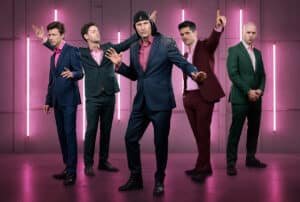
  1. Subthunk

    November 7, 2003 by admin

    Subthunk are a California-based band who fuse electronica with elements of jazz, funk, and a variety of other styles. Improvisation is a key element, and at their live shows they firmly establish that a laptop computer can be considered a musical instrument. According to DEVO’s Mark Mothersbaugh, “The masses are asses who need subthunk glasses.” We recently spoke to Subthunk member Anthony Neely about the new CD (“Just A Few Notes Before You Go”), musical technology, and more.

    Since you use computers and live instruments, I’m wondering which you do initial song writing on?

    “It’s kind of a combination. With some of the tracks I’ll just hear a drum loop or something and that will give me a rhythm foundation to build from. And on some, I sit down with the guitar and come up with a melody or chord progression. I’ll have that in my mind but then re-create it on the computer, using my keyboards or whatever to program that in. It’s always written on the computer, but it might have been conceived on another instrument.”

    Does using the computer like that pose any difficulty when it comes to working out live versions of the songs?

    “When we build the tracks, I kind of do 2 simultaneous things. I have the version that I know is going to be on the recording, and we also set up the basic arrangements so we can put them onto our live laptops. It’s not too bad. It takes a little bit of fiddling around, because the laptops use software samplers and stuff like that. So we have to make sure the right sounds are playing. The conversion process is time consuming, but it’s not that tricky. Then of course the fun thing is when we get that in place, and then we get together in the studio and we�ll play over it and try different feels and ideas. The songs are definitely shaped when we add the live instruments to it.”

    What kind of live set-up do you use?

    “Live, we use Cubase and Vsamp, which is a virtual sampler. And we also have sound modules running from the computer. The way we’ve set it up, we try to make it as interactive as possible. We improvise. There are areas in the song where the computer will continuously cycle over and over, it might be a drum loop, or it might just be a click. We can control how long that will last for, we can turn it off, we’ll see what people are coming up with, what direction it’s going in, and when we get to a point where we think ‘it’s time to move on’ we hit a foot switch to turn it off. And we have tracks that are muted on the computer, and some nights we’ll turn them off, some nights we won’t. Our goal is to make it as an organic experience as possible, and approach things differently each time we play them.”

    Do you find yourself limited at all by the current musical technology? Is there anything you’d like the gear to be able to do that it’s not capable of now?

    “Little things like being able to control EVERYTHING from external gear would be great. Just silly things like opening files, we have to physically go to the machine and open the up. Obviously, that takes 15 or 20 seconds. So between each track, we use another device to play ambient music or something to tie it in. If we could have everything automated, like opening files and changing volumes…. if we could have a foot pedal to pan the speakers left to right live. Anything that would give us more control. At the moment, there just isn’t the software out there that has all of the capabilities we want. Other than that, there are a million of things I’d like to do. I’d like to have a Pro-Tools rig on stage, so I can play bits of guitar and as the song is progressing actually edit those bits with headphones and play them back. Basically, to spontaneously compose. There are a million things I’d like the technology to be able to do, and it will! It will catch up. The things that are coming out now are amazing!”

    Has the computer ever crashed during a performance?

    “Yea, and it’s really scary! We have a system where there are 2 computers; a back-up for if one goes down. And if all else fails, we’ve got an iPod that can play the tracks. Obviously, with that they’re a set length and not interactive, but we can get through a gig. One channel is the click, one is audio. And we’re all good musicians, so if it came to worst case scenario, we’ll play a song without the machines. We’ve never actually had to do that. The only thing we’ve had to do is occasionally switch out a Mac. We had it go down once during a show in San Diego, so we had to just try to cover it up and change it as quickly as we could.”

    For those you haven’t seen you play live yet … how would you compare your live sets to your recorded music?

    “Basically, we play the same tracks, we’ve got the same sound. On the CD, we had a bass player, but live we use synth bass. It sounds as it does on the record until we get to these primarily middle sections where we launch into the parts where one of us will come up with an idea and we’ll see where we go with that. But the rest of it, [what you hear on the cd] is pretty much what you’re going to get.”

    I know you’re pushing to get your music used in soundtracks. Has anything happened with that yet?

    “We’ve had music stolen, actually. He had something stolen for The History Channel. We’ve got stuff that Mark Mothersbaugh is trying to get into film at the moment. I’ve written for small independent films, but nothing particularly of note at the moment. But Mark is a really nice guy who really likes us, and he’s trying to help us out. So that’s good. We’ve got stuff floating around with a lot of other people. It’s a goal that we really need to pursue.”

    Ideally, where would you like to see your music used?

    “Oddly enough ….. I hate commercials, but I love car commercials. Especially non-American makes of cars. Ford or Mustang commercials tend to use rock tunes, whereas with a lot of European ones you have a drum ‘n bass thing going. Or Japanese manufactures. It seems that with non-American cars, you can use more electronica-based stuff. I really like a lot of that stuff, and I’d love to get stuff used in them. It sounds silly, but I’d love to do that. Film-wise, we’re definitely interested in stuff that has some sort of artistic weight. Morally we’ve got a lot of things we just don’t want to support, but a good well-written project … we’d love to be involved. Especially something that would involve a lot of different moods.”


  2. Society 1

    by admin

    Matt Zane may have first made a name for himself in the adult film industry, but these days he’s focusing on a musical career. His industrial-metal band, Society 1, recently returned with a new album, “Exit Through Fear.” Several years in the making, the disc was actually completely re-recorded in order to include a revamped line-up and truly capture Zane’s vision for the project. The result is a great rock record that transcends categorization. We got Zane on the phone to talk about the making of the album, the “Nothing” video (“the first real suspension ever done by a singer in a music video!” according to their bio) and other topics.

    I noticed that the CD has a pretty short running time, even though it has 10 tracks. Where you intentionally making all the songs short?

    Matt: “Well, we had some longer tracks that were supposed to be on the record. But to tell you the truth, there’s not really a reason behind it. We had 14 tracks for the record and before we signed to Earache we were funding it ourselves. We ran out of money, and couldn’t finish a couple of the tunes. We actually had a song called “Mother Father” that was longer, more of an epic piece. But we just didn’t have the funding, because it was the second time we were recording it. So we only wound up with ten tunes, and that’s that. At the time it was done and we shopped it, we said ‘here it is, do you want us to do more?’ and they said ‘no, no, it’s good enough.”

    Since you re-recorded the album – how would you compare the original version to the one we hear?

    Matt: “That record compared this one…. the version that’s actually been released is far better, probably at least 5 to 10 times better. I just think that we had a lot of time to progress in our writing skills. I’m very happy with the end result. I guess the only thing I’d have liked to happen differently would be to have a few more tunes on it.”

    Are there particular songs that you think improved more than others?

    Matt: “I think all of them improved dramatically. I haven’t listened to the original version in a while, so I can’t think of any in particular. We’d been recording this version for 2 years. I think all of it just got a lot better.”

    What made you decide to go with a label this time, as opposed to self-releasing?

    Matt: “I didn’t understand how difficult it is to release your own record, to get it in the stores. My reasoning was, ‘I’m on VH-1, I’m on MTV, I can tour around the country, I’m in Spin, Rolling Stone…. It’s going to be easy to sell my record.’ So I started my label, and started trying to sell it. But I didn’t really understand that a lot of it depends on how strong your distribution is. I didn’t matter how many times I was on television, or how many tours I did across North America; I just wasn’t going to get it in the stores. And I ended up losing a lot of money on it. Really I don’t care so much about that; it was just frustrating because I felt it could have reached a lot more people than it did. So when we finished the second record, we had the idea that if no one wanted it, we could release it ourselves.

    How we got introduced to Earache was that I’d been talking to Al [US president of Earache] for a couple of years because I helped a band on my label called December get signed to them. And then I did a video for one of Earache’s bands, December Wolves ‘Porn Again Christian.’ When I started to shop it to labels and the offers started to come back, I’d call Al for advice. And then eventually I thought ‘these guys seem really cool’ and just said ‘hey Al, I’ve got a crazy idea, what do you think if we do this together?’ So I sent him the record, and he liked it, and everything went from there.”

    How did you come to work with Paul Raven from Killing Joke?

    Matt: “Paul Raven was in the band for a while. He decided to join when he heard the demo version of the album. So he got in the band, and we actually played a half a dozen shows with him, and he played on the record. But between the time of mixing it and getting signed, he became a little anxious… he’s basically a legend….. and decided to go off and play with Godflesh. We had to get someone to fill in while he was gone, and when Godflesh ended up dismembering, we had already gotten somebody. He just said ‘ok, good luck’ and is off doing other things now. But it was a great honor to play with him, and have him on the record. It was very cool.”

    How do you tend to divide up your time between music and the porno industry?

    Matt: “Before, I would go to work and do all my porno stuff in the morning and then do music for the rest of the day and night. As far as the shooting, I’d just have to allow the days for that. But now I’m taking a break from actually directing anything, because now I’m on a label and they’re helping out with touring and press and so forth. I focus on music, and that’s the way it will be until it can no longer be like this.”

    What other projects have you been involved with?

    Matt: “I had a spoken word record entitled “Words As Carriers.” I was doing an independent film called “Contrasting Views Of People Living An Artistic Life Style” which was also released and reviewed and so forth. Previous to that I did the first Society 1 record. And in between all that I did a bunch of music videos.”

    Who would you say inspired or influenced you to get into music?

    Matt: “Well I think some of the first people that I was influenced by were The Doors, Zeppelin, Hendrix, Pink Floyd, and Zappa. People of that nature.”

    What was the inspiration behind the “Nothing” video, and the suspension sequence?

    Matt: “The way that I look at it these days is that most videos are nothing more than glorified commercials. And I didn’t want to do that. I wanted to do something that would actually return the video to an art form and inspire people. Rather than just be something they would be compelled to go buy because it was pushed into their brain as a commercial. I wanted to create something that had a little more substance and meaning rather than just be a bunch of dudes jumping around in a room. So I guess that was my initial inspiration for the video. And also, it was another opportunity for me to push myself and push my physical limits. I feel that anything that pushes boundaries, especially physical boundaries, is beneficial to creativity and expanding the mind. It worked really nicely with this ritual that I wanted to perform.”

    For those who have the CD but haven’t seen you live yet, how would you compare the disc to your performances?

    Matt: “The CD is one thing. It’s put together really well. But if you want to hear exactly what the cd sounds like, you might as well stay home. Because that’s not what we do live. It’s got a rawer edge to it, and we don’t have anything on tape or anything along those lines. Plus, we have a certain crowd involvement to the show. There are 2 live shows that take place; there’s the show that contains the music, and the show that contains the audience participation. Which can range from anything like a near riot to mild violence to people having ecstatic pleasure and bliss from the experience.”

    Are you the main songwriter in the band?

    Matt: “Well, I have been in the past. On the most recent album, I wrote a lot of the material. My guitar player, Sin, who is the main other writer in the band, wrote some of the material and played all the guitars. But from this point on, it’s going to be a collaboration between all of the members and me.”

    Have you started writing new material?

    Matt: “Yeah, we had 2 months after the last tour, which ended around New Year’s. We took that time to write some material and just get a catalog of new stuff ready to go whenever the time comes to do another record. And we’ve been writing equally and all together and spontaneously. It’s been working out great. I’m really excited.”


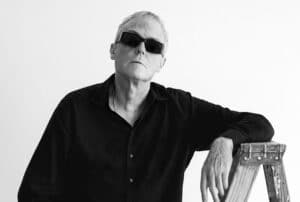
  3. Perry Blake

    by admin

    Though hailing from Ireland, Perry Blake initially found his major success in France and elsewhere around mainland Europe. Now, he’s finally poised to break into America with his first US release, “California.” It’s a spectacular collection of seemingly flawless, often melancholic pop songs. Balancing simplicity and sophistication, the music of Perry Blake really sounds like nothing else out there. In an email interview, Blake told us about his career and the new disc.

    Your debut was on Polydor and you moved to Naive… did the shift have any impact on the process of making an album? (for example … in terms of label influence on musical direction, or recording budgets?)

    Perry: Not really, I’ve been fortunate to have full artistic control on all of my albums – however, the first took 14 months to record at an enormous cost. Subsequent releases have taken less time and smaller budgets. Both Polydor and Naive were/are supportive of my way of working.

    Are there any particular factors you can attribute your success in France to?

    Perry: I think generally the French like more melancholic music – Jacques Brel is still on radio often and, the perhaps, semi classical nature of some of my work seems to have struck a chord, so to speak. But mainland Europe has always been quick to champion less mainstream artforms than, perhaps, the UK.

    How do you feel about your music initially catching on more outside of your own country?

    Perry: Flattered! I’ve never belonged to the Irish music scene – I spent a third of my life living in London and some time in Germany. Most Irish bands/songwriters seem to treat me as some kind of outsider who doesn’t play by their rather insular rules. To be popular in Ireland first is usually a sign that one is doing something wrong. There are exceptions, of course, Damien Rice being one.

    Have you been working with many of the same musicians over the years? Are there any particular ways that maybe your sound has been influenced by people you have worked with?

    Perry: Recently, I’ve been working with different musicians. In what is perhaps a Vampiristic way I like to push people – it’s always worth it, even if they feel like strangling you during the process.A lot of people who’ve worked with me have become successful in their own right. Everyone I work with can influence me in some way – the good stuff goes on record.

    With the film “Presque Rien” did you write music for the score, or just contribute songs to the soundtrack? How did you come to get involved with film work? Have you done any since then?

    Perry: The director Sebastien Lifshitz called me, asked me to work on a score for “Presque Rien”. I read the script, liked it, went on set and then record two and a half hours worth of material which I was very happy with, but soon realized that the film needed very little music, as did Sebastien. SO I feel in some respects I failed to capitalize on the silence needed – but it was a valuable learning experience and I’m now preparing for an, as yet untitled, Irish/American film project.

    For those who haven’t seen you live, how would you compare your current live show to the CDs?

    Perry: There is no current live show! I’ve toured Europe many times but feel uncomfortable with being on stage, so I’m afraid, I’ve decided, for now at least, to focus on studio work only. Some of the live shows were special intimate events – others were fuller, bigger festival concerts and somehow less terrifying.

    Who would you say your major influences are? Both in terms of having an impact on your music, and simply making you realize that you wanted to create music yourself & be a performer.

    Perry: Leonard Cohen, Scott Walker, Kate Bush – I try to do my own thing with their musical legacies looking over my shoulder – this is the only job I’ve ever had. Never wanted a “real one”.

    When you’re writing songs, how clear of an idea do you have as to how you want the final recording to turn out, in terms of arrangement, instrumentation, and production?

    Perry: Usually, a very clear early picture – recently I’ve been writing with acoustic guitar along with Glenn Garrett, an Irish bass player/composer – but whilst the structures of the songs may differ from Piano based tracks, there’s usually a clear idea of the end results. Of course then, in production things always change but I try to keep early vocal takes etc. – to get the essence of the moment.

    California is your first US release, correct? How does it feel to be launching your music in America?

    Perry: It’s good to be releasing “California” in America. I’ve only been once, to New York, which I liked alot. For obvious reasons, America is a country never far from Irish consciousness and somehow, in musical (ie. my style of music) terms, less obsessed with image and pitch than elsewhere. If it’s good music, and people get to hear it, they buy it. A simple, honest transaction – I like that.

    What are your thoughts on the Internet? What are the pros (and cons?) of having a website, and of people discussing your music online? And what is your stance on the issue of ‘sharing’ mp3 music files?

    Perry: The internet is a very useful tool and a an incredible revolution in communication. I like the fact that fans can discuss the music in a way that they wouldn’t normally. The only problem I see with the ability to download MP3′s is the fact that record companies are making sure that they are protected but there doesn’t seem to be any protection for the source of creativity, the artist.

    What’s in the immediate future for you?

    Perry: I’m currently mixing the follow up to “California” in Northern Italy – it’s quite different and exciting for me – not sure when it will see the light of day though, seeing as “California” seems to be getting alot of attention at the moment.


  4. New Model Army

    by admin

    Throughout their 20 year history, New Model Army have never really fallen into a clearly defined musical genre. That’s one of the reasons why nothing on “Great Expectations,” their new singles collection, sounds the least bit dated. Existing just outside the mainstream, the group has consistently put out fantastic, emotionally charged rock music with highly intelligent lyrics and a slightly dark edge. “Great Expectations” is really just a small sampling of what New Model Army are about, but it serves as a great introduction to the band. The group recently embarked on their first US tour in a decade (performing with a scaled-down line-up consisting of Justin Sullivan on guitar/vocals and Dean White on guitar/keyboards/vocals). Shortly before the tour began, we got Justin on the phone for an interview.

    How does it feel to be touring the US for the first time in a decade?

    Justin :“Good. We’re very much looking forward to it.”

    Why has it been so long?

    Justin :“It’s a mixture of things. It’s partly to do with money, and partly because if you don’t have sort of obvious industry presence in America, it is actually quite hard to get in, legally.”

    What effect will the scaled down line-up have on the sound?

    Justin :“Well, obviously it doesn’t always sound like the records. But we have actually made records as a two and three piece. It’s just as emotionally intense. We can’t make as much noise with two people. If anything, I find it to be a really interesting creative challenge to make just 2 instruments, 2 people, sonically interesting for an hour and a half.”

    Are there songs that you’d like to do that don’t work in this format?

    Justin :“Yeah, there’s certainly some. There are about 150 songs released by New Model Army. I would say that we do versions of maybe 50 of them. Obviously, there’s certain songs that wouldn’t work, but we do know an awful lot that we can do in this format. We’ll vary it as we go along.”

    Will you be focusing on material from the new singles collection, or mixing things up?

    Justin :“It will completely mixed up, from very old stuff to very new stuff that isn’t even widely available in the States. To be honest, we don’t really think about that [the singles collection.] We just put together shows that we think are really musically interesting and intense. We don’t worry too much about whether people know a great deal of the songs. We certainly won’t be focusing on the singles collection.”

    Are you doing any unreleased stuff?

    Justin :“Yeah, there’s certain songs that have never even been recorded that we play a lot in this format. And with New Model Army, our B-sides have historically been better than our A-sides. The songs that we haven’t put on any of our albums at all are probably best in the lot.”

    Did you have any idea that New Model Army would still be going after 20 years?

    Justin :“Oh god, no. I thought it would be one show.”

    At what point did you realize that it would be a long-term project?

    Justin :“Last week? I guess it sort of turns into a life, and I’m not sure about at what point that happened. We literally started the band to play one show at a pub in Bradford and we never had any sort of great ambitions. It was always just for the joy of playing. One thing led to another and another, and here we are.”

    Will there be a new New Model Army album in the near future?

    Justin :“Yeah, we’ve started work on one that will be released next year. It’s been a while …. there’s been live ones and compilations of lost songs and stuff like that. But the last actual studio album was 3 years ago, so it’s time for a new one.”

    What can we expect from the new disc?

    Justin :“It’s always a difficult one, that question. You write songs, but until they’re actually recorded … songs have a life of their own and our influences at all times are very wide. We all listen to very different kinds of music; we’re all into very different things all the time. Which is probably why our music sounds like lots of things, but not quite like anything else. And each album has been different from the previous one. In the middle of the 90′s we did an album where we were locked in the studio for 4 years and sort of recorded millions and millions of songs and bits of music. I think every band does an album like that. That album, called ‘Strange Brotherhood,’ came out in 1998. The following album, ‘Eight,’ which came out in 2000, was deliberately a reaction against that. It was written and recorded really fast and not done in a really produced way. So I think that this album we’re working on now might be a reaction against that, it might go back to being more produced.”

    Do you have your own studio set-up? What are your thoughts on digital recording technology?

    Justin :“We now have our own set-up, we have for about the last 4 of 5 years. With computers, you can fix any mistake and make anything happen. There’s a great art in learning not to do that, and we’re learning that, I think. All musicians … when you learn to play, you’re trying to play the right notes and not make mistakes. There’s all this technology now to fix any mistake, so it’s very easy to get very involved with that. But I think most musicians turn around at the end of it and say ‘oh no, it sounds so boring.’ So we know when to leave all that technology alone.”

    What do you think of the internet as a promotional and marketing tool?

    Justin :“I think the internet is great for bands like us, if you want to exist outside of the industry and the media. We never were a media band …. we weren’t on MTV, we weren’t on the radio very much, partly because no one has been able to define us. We don’t fit into a genre; we’re not a rock band exactly, we’re not a metal band. What happens is that people hear a song and they think ‘I love that’ and then they want to find out what it is, who the bands is, and so one. The internet makes that possible on a worldwide basis. And that’s been great for a band like us.”

    Based on the feedback you’ve been getting, do you think it’s mostly long-time fans visiting your site, or are you getting a lot of people who’ve recently discovered the band?

    Justin :“It’s a mixture. I think all of us who love music are constantly looking out for new bands and inspirations who we haven’t heard before. And that might come from someone brand new, but it equally could come from someone who’s been around for 15 years that you’ve never actually come across. Like I discovered Queens of the Stoneage on the second album, not the first.”

    Getting back to not easily fitting into a genre, was there ever any pressure from labels to try to change that?

    Justin :“Coming out of punk, we were very cynical about the business from the beginning. People would come to us and say ‘why don’t you try doing that? You’ll be more successful.’ And we always kind of shrugged and went ‘yeah, whatever’ and ignored them on principle. Because success for its own sake was never our primary goal anyway. We were always just trying to do stuff that sounded right for us. I think we’ve made probably every mistake a band could make over the years, and I’m kind proud of that. I’m glad we made our own mistakes. Maybe we should have taken advice when given, but generally speaking we never trusted outsiders and always followed our own star.”

    Can you give an example of something you’ve learned due to making your own mistakes?

    Justin :“It took us a few years to learn that speed isn’t exactly the same thing as power. The faster you play doesn’t actually make it better. I think generally the thing that musicians learn eventually is that less is more. And to be honest, I think that music has changed quite a lot. Everything is dynamics now, and I think part of that is the massive influence of hip hop across all styles of music. Space and dynamics. When we started, it was everything full-on all the time for a kind of really intense experience. I think the best thing is change … we never really found a sound and stuck to it. We found a sound and did it for one album, and then when everyone said ‘oh, THAT’S what they sound like!’ on the next album we’d do something completely different. And that keeps you creatively fresh and interested.”

    Do you ever scrap material because it sounds too much like what you’ve already done?

    Justin :“Yeah, we do sometimes. I’ve very conscious about that as a songwriter. I’m very proud of the fact that I’ve never written the same song twice.”

    What’s next, after this US tour?

    Justin :“A few days after that, we’re going a short full band tour of Britain, Germany, and Holland. And then it’s pretty much getting the next record finished, and then a full tour maybe in the summer or fall.”


  5. Mettle Music

    by admin

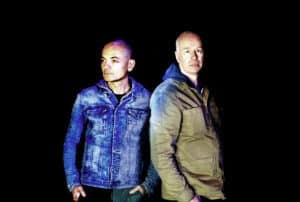
    Comprised of Nic Conef & Mark Wadsworth, Mettle Music blend house with a variety of musical styles. Using samples as well as live instrumentation, they have an extremely organic sound. And most importantly, the duo has strong songwriting skills to match the skilled production. Their new CD “Moodswings” contains no bad tracks, though the standout has to be the haunting vocal-driven song “Capture.” Nic was one of many people who first became immersed in house music during the ‘summer of love’ in 1988, and this comes as no surprise. Mettle Music possesses the energy and innovation that brought so many people into the scene at the time. And now they are successfully bringing it into the new millennium.

    The following is an email interview with Mark.

    What musical projects were you both involved with before Mettle Music?

    I’d been involved with a project called Yennah with sax/flute player Sam Kynaston . We were signed to Jimpsters Freerange label in 97. We released 3 singles and an album called ‘Red Noise’. It was a mixture of down tempo electronica, Nu Jazz and broken beats. I’d also been playing in various bands in and around the Manchester area as a session drummer and keyboard player for years. Nic has always been a DJ and we met when he came down to my studio to work on some deep house tracks in about 96. We’ve been working together on and off since then.

    What type of studio set-up do you use? What do you think the most indispensable piece of gear is?

    The studio we use is very basic. A G4 Mac running Logic, a Yamaha O1v Mixing desk, a decent amp and Dynaudio BM5 monitors a little bit of outboard and a hand-full of analogue and vintage synths. Initially everything was done on a trusty Atari running Cubase and all sounds came out of an S3000 sampler. The only thing that’s indispensable is the Mac. It’s opened the door to plug ins, larger sample times and being able to do proper recordings of full performances, sound manipulation and editing is much easier, and the quality of the recordings is top notch. I think the real test is whether you actually notice the technology or not. If it’s getting in the way you need to look at what you’re using it for and why.

    Do you try to stay up to date with the latest musical equipment & software?

    Not really to be honest. I keep one eye on what’s happening, but by and large there’s nothing I can’t do using my simple set up. I’d say 90% of the producers I know who are in the industry regard gear as a means to an end… I’m always a little weary of people who can reel of lists and names of equipment and say train spottery things like “I find the SM 58 a little brittle around 1K”

    With this type of music, it’s often difficult to know what’s coming from live instruments and what is sample-based, especially since the technology allows artists to record live parts and then extensively manipulate them. So …. can you describe your general approach to creating tracks?

    On Moodswings we used a mixture of real performances (sax, flute, guitar, bass, strings, percussion and fender Rhodes) and samples. We tend to start building tracks from the bottom up. Drums, bass, chords, melodies and hooks. Then It’s thinking about the type of instrumentation that’s required, booking in the session guys and then do a load of takes. We tend to make sure we record a mass of stuff whilst we’ve got the musicians in, that way we can sit through all the performances and choose the killer lines. We keep an eye on ensuring that the bits that we chop up and stick together actually playable live! However depending on the track we’re working on we might really fuck with sounds, say if we’re doing a dub or a more techy sounding track. For my Square One tracks I use loads of sounds from old vinyl so pretty much everything needs a little tarting up.

    When working with vocals, do you tend to have songs fairly complete (musically) when they are recorded? Or do you tend to build things around vocal parts?

    A bit of both. On the Moodswings album Capture was a full song when we started on it. However we only had the recorded vocal which we’d had knocking about from an old studio session from about 8 years ago. It was just a matter of reworking all the instrumentation and producing the track around the guide vocal, then we got Virginia in to re record the vocals and to redo all the guitar. However, El mar was completely the other way round. The track was written but we felt it would benefit from a vocal so we handed it over to Susannah Montero from Malena who wrote the Spanish vocals for the track.

    What’s the reason for having a part 1 & part 2 of “Capture” the new CD?

    It was originally a folky type of track which we’d done a remix of. We felt it would work well in it’s ‘original’ format and as a dubbed up remix.

    Do you ever perform (or want to perform) with a full band? The DJ sets w/live instruments sound interesting … can you describe that a bit?

    We play live quite a bit. We’ve gigged all over Europe and throughout the UK. The set up is pretty flexible (It really depends on the budget the club, bar or festival has) The best performances have been the full band though. Nic plays stripped down backing tracks (from Numark CD decks) which are mixed into each other to create a DJ style flow to the performance. Then the rest of us play our lines over the top. We usually use Guitar, sax, flute, percussion and a Keyboard player. Sometimes we have vocalists (Virginia for Capture or Susannah Montero from Malena) I play extra samples, keyboards and extra percussion parts on the more Latin sounding stuff.

    You both seem to have a lot of different projects … do you tend to keep them all separate? Or do you find yourself coming up with musical ideas and then deciding where they will be used?

    Sometimes that happens yes. Mainly we tend to write in blocks. For Instance the Moodswings album was written over the space of about 6 months. During that time we pretty much only worked on that (maybe we did the odd M trax thing as well) Now that the album’s done I’m working on my second Square One album for Freerange records whilst Nic concentrates on the Label and his DJ gigs. It was quite weird trying to switch from Mettle Music mode to Square One mode… It took me about 6 weeks until I was happy with anything I’d done – I found it quite hard switching off from the Mettle music influence. Fortunately I’ve got it out of my system now so I can start to write Square One stuff without it sounding like Mettle Music.

    What’s in the immediate future for you?

    I’m currently in the process of having my Cellars converted into a proper studio which will be a bit of a novelty after years of using spare bedrooms and lounges!! In the mean time I’m working on my Square One project which is released on Freerange records (www.freerangerecords.co.uk). I’m half way through writing my 2nd album and there’ll be a couple of 12s out as well. I’m also working with Joel Nally on some down tempo tracks and with Dave Tracy (part of the Mettle Music collective) on some of his housier productions. Also I tend to do a lot of one off jobs, production work for DJ’s and mastering for various house and Nu Jazz labels.

    Nic’s just set up the new M Trax label. The first release will be out in mid November. It’s a Latin vocal disco track by Malena called “Vida Mia” which features Susannah Montero who sang on El mar on our Moodswings album. It also contains a Faze Action remix, a dub and a Mettle Trax remix. Nic’s also out and about DJing in Europe and the UK.


  6. Meat Beat Manifesto

    by admin

    Nearly 15 years after its original release, Meat Beat Manifesto’s classic “Storm The Studio” album has been given the full remix treatment. “Storm the Studio R.M.X.S” features mixes from such artists as Scanner, DJ Spooky, Merzbow, and M.B.M vs. D.H.S (a collaboration between Meat Beat’s Jack Dangers and his Tino Corp. Records partner Ben Stokes.) We recently got Jack on the phone to talk about the remix disc, an upcoming DVD release, and other topics.

    Were the “Storm The Studio” remixes done specifically for this release, or are they mixes that have been done over the years?

    It’s remixes which were done specifically for this release, over a period of about a year. We knew we were going to re-issue the original album, which is 15 years old. That was the main reason for doing it now. Otherwise we’d have to wait another 5 years!

    Did you approach the remixers, or did they come to you?

    It was bit of both. Some were people who I’ve met along the way. Some of them were mixes from people who just did them off their own back, like the 8 Frozen Modules mix.

    Were any particularly surprising in terms of the way they turned out?

    Yea, actually that one – the 8 Frozen Modules mix. That took me by surprise. It was one of my favorites.

    In what ways did that surprise you?

    Just the way he was tweaking things. I actually got in touch with him, to ask what he was doing! Because it sounded like something I’d never done before. I was just interested in what programs he was using, because I knew he had a very minimal laptop set-up. What he managed to get out of that was pretty impressive.

    Can you tell me about the upcoming release based on “RUOK”?

    It’s a dub record that will be out in January. It’s in surround sound, 5.1; it’s a DVD with 12 tracks and 12 videos. There’s a couple of tracks from the last album [RUOK]. It was going to be a complete reworking of the last record, but I went down different avenues and it’s more or less a new record with a couple tracks from the last album in new dub versions. Whenever I start out doing something, it usually ends up being something completely different.

    Since there’s been many Meat Beat Manifesto remixes, and you’re a remixer yourself – does the concept of the remix have any impact on the initial creation of a track? Since the recording/release of a song does not mean it has to be completely finished with?

    Not really. I’m working on a song at the moment , actually for a film about Moog. So I’ve got my mini moog out and I’ve been doing track after track of different lines. And then sort of going back to see which ones work together, but finding out that none of them work because they’re all in different tunings. Because there’s all different tracks lying around, I could definitely see them being formed into something else later. But as far as is this going, I’m muting all of those and just starting all over again in an old school way of playing a bass line and then adding something else to it and then something else. Because I’ve done that, and other ways of working like muting tracks purposely just to un-mute them later to see how the sound clash is going to be. There’s always the possibility of a track from something I’m working on to end up being used later on, just because there’s so many bits and pieces laying around.

    What are your thoughts on software-based musical tools?

    It’s made certain things a lot easier, because there’s a market for it. Like something that will chop up a beat and put it into little sections so that you can change the tempo didn’t exist until like ’94 with Recycle. I was always waiting for that. So it’s sort of come up to date. I think things are becoming more minimal, smaller. I think people want to have a studio and a bank of synths and samplers all on one laptop. But I think with that you’re cutting too many corners, especially with the hands on aspect of it. So there’s pros and cons … it’s made things slightly easier, but that’s made it easier for other people [laughs].

    You said that you’d been waiting for something like Recycle. Is there anything you’d like to see that doesn’t exist yet?

    Hmm �. Yea there’s always something that can make things easier or more smooth. Or more difficult! But I can’t think of anything off the top of my head. I’ve got the tools I need. I’m not feeling like I’m missing something.

    What I don’t like about it that some of these programs are so easy to get � you can download cracked versions of them, and not even buy them. You’ve back to that free mentality with the internet. I don’t think it’s very original when everyone is using the same programs. That’s why I feel that a lot of the stuff around is the moment sounds very similar, even if it’s ‘intelligent dance music’ or whatever you want to call it. ‘Glitch core.’ It’s like there’s one idea, and then it all sounds the same until the next idea. You’ve got to look beyond all that, and sd what’s basically in your soul. Just let it go.”

    What made you start up Tinocorp? How has it been going?

    I would have loved to have had my own label right at the beginning. But I didn’t know anything about the music industry in that way. So it’s all about artistic control. With labels, because they’re running a business, they’re salesmen. They have to sell these units or else they don’t get paid and the rent and the mortgage don’t get paid. So if you can step out of that and have a label, it’s a completely different ball game. It’s a very grassroots thing. We do everything.

    Since you have your own label, why are some of the releases on Lakeshore Records?

    Just for practical reasons, like distribution. We could have licensed the remixes to them as well, but we’re trying to build up our own label as well. It’s pretty hard at the moment, the music industry is pretty tough right now. It’s suffering.

    What are you thoughts on file sharing?

    I can actually tell you that I’ve never downloaded one mp3 off the internet at all. 0. Numero zero. It’s a difficult one … the more people who do it, the less people will be making music. Because they won’t be able to make a living from it. For business, the music industry would just be in an even worse state. You’d get even more trash run down your throught in the commercial way. It’s bad, if that’s how you make your living. You can’t give it away for free. It’s even hurting me, at my level. It’s not a good state of affairs. If it goes on much longer, I’ll have to pack in a get a job [laughs]. It sucks! But Cds are too expensive anyway … something needs to be addressed.

    What do you think of the legal sale of songs as files?

    To me, if you just want 1000 songs on a iPod, its very anonymous. I prefer to have the actual thing in my hand. But the way it’s going, in the commercial way that the market and industry revolves around, I’m sure they’ll just be doing mp3′s in 5 years and not even bothering with Cds anymore. But for someone like me, I don’t think it’s going to change straight away.

    I think it’s a good idea, but I don’t know who would actually be artistically satisfied. It’s a cheapening; very anonymous and the people who make a living doing graphic design and artwork for record covers are out of a job. I don’t know … I’m sure it exists and is a great model for distribution, but I’m sure you’re always going to have the physical thing with the artworks that you can go out and buy. It’s like a book … have a book or just printing the pages out on your printer.

    Have you been working on any other project s recently?

    Well, the DVD took a lot of time. It’s like doing 3 albums. You have to do the stereo version, and the surround version, and the stereo CD version. It was a lot of work, and is the main thing I’ve been doing since the last CD came out.

    There aren’t many people doing things like that right now.

    No, but they will. It’s pretty obvious. You’ve got 6 speakers to chose from, rather than your normal 2. Even with stereo … it came out in 48 but it really wasn’t until the mid 60′s that it was often used. These formats always come out of the film industry or the television industry and filter down. It takes a few years. But if you can just pop in a DVD and have a surround mix of something, especially a dub record … I think it’s screaming for it. Other people will be doing for, for sure. The my knowledge, there’s only been one release so far. It’s a music release in surround sound; there’s no visuals. That’s “Dark Side Of The Moon,” which has the audio in 96k but no visuals. We didn’t want that � we wanted visuals.

    What are the visuals like?

    The guy who’s my partner in Tinocorp, Ben Stokes did them. He’s done a lot of videos for people, like Public Enemy and Meat Beat, everyone. He’s a video director. We teamed up 5 years ago to start the label. There’s always been a very heavy visual element with the shows we do. We use a lot of video sampling. We wanted to incorporate that into a visual extravaganza. We like to think that it’s just as much visually based as it is audio. The videos vary from complicated on some tracks to simple. You can either have them on or not.