Chaos Cotrol Digizine

THE LATEST | ALL INTERVIEWS | NEWS BLOG | ABOUT CHAOS CONTROL | CONTACT

  1. Sarah McLachlan

    November 7, 1998 by admin

    During the 1998 Lilith Fair tour, we asked Sarah McLachlan and her backup singer Camille Henderson about their work on Delerium’s “Karma” CD. Here’s what they had to say:

    What was the process like working with Delerium?

    Sarah: “It was a completed track, I was merely to sing over it. It was a bit of a challenge,because it’s very, very different from the type of music that I normally do. Because I write solely for my own stuff usually, I start with chords and melody. So this is very much going from the opposite direction. But I listened to it a lot, and tried to come up with a bunch of different melodies. I went into the studio and sang a bunch of stuff for Bill and he sort of went ‘oh yeah, that sounds great.’ After three or four hours in the studio it came together. Actually, I think I wrote most of the lyrics in the studio, come to think about it now. I sort of got there and wasn’t prepared.”

    Were you just given a track to do, or did you have a choice?

    Sarah:“I was given a choice of tracks, months and months before, and I was like I can’t do it, I have no time. And then they came back to me months and months later and I actually had time to sit down and listen to one and I quite liked it. Actually, I liked a lot of them but the ones they were going to have vocals on had already been chosen. So they gave me ‘Silence’ and I really like some of the melodies and the choral stuff.”

    Were you a fan of Delerium?

    Sarah:“I am attracted to that style of music. It’s very trance like, and it certainly evokes certain moods for me.”

    How did you get involved with Delerium?

    Camille: Basically, Mark Jowett from Nettwerk approached me and asked me if I’d be interested. He told me that there were a whole bunch of artists attempting to write for the record and I jumped at the opportunity. I thought it would be great.

    What was the process like? Were you given a finished track to add vocals to?

    Camille: Actually, the tracks that they gave me were really close to finished. At the time, I didn’t realize how close they were to being finished. When I heard the record, I realized that almost nothing was different. I knew it was a demo, but it was very similar to the finished product. So it was a really interesting process, working from that angle of taking pretty much a finished track and somehow making it my own.

    Were you able to choose which track to sing on?

    Camille:“They gave a lot of tracks to a lot of different singers and just chose favorites from what was submitted. So I wrote for three songs, and they chose that one.”

    Since the music of Delerium is quite a bit different then Sarah’s and your solo material, was it difficult at all coming up with the vocal parts?

    Camille:“I actually wrote them on the beach. It was during the summer and I went down to the beach every day with my Walkman and these tracks and basically did stream of consciousness until something was forming, until it was obvious that my impression of the song was a certain kind of flavor, a certain kind of emotion that kept coming out of all kinds of adjectives. That kind of thing. And then I formed a concept for it. So, it wasn’t difficult. In some ways, the genre that they work in was a bit more liberating than a lot of this stuff that I do on my own. I tend to be a little more concise, my style is a little bit more like the 3 1/2 minute song with a clear verse/chorus and a flow of lyrics that makes a story for people. Where as the Delerium genre seems to, in the past at least, have been more of a creative abstraction. It was really great for me to work that lyrically.”

    Do you generally like electronic music?

    Camille:“Yeah, I really enjoy it. I would really love to do more of that kind of thing. I’d love to work with programmers and set down tracks. I really enjoyed.”

    If Delerium were to play live and you could fit it into your schedule, would you be interested in taking part?

    Camille:“Of course, it would be really interesting to see how we’d pull that off.”


  2. Rob Halford

    by admin

    While his former bandmates continue the Judas Priest legacy with a new vocalist, Rob Halford has chosen to expand his musical horizons. After releasing two albums with Fight, his first post-Priest band, Rob has unleashed a much more experimental project – Two. Originally started up as a collaboration with guitarist John Lowery, a chance meeting with Trent Reznor took the project in a strange new direction. Reznor, along with Dave “Rave” Ogilvie, deconstructed Two’s sound and added an electronic edge. The material that would become Two’s debut album (“Voyeurs”) was extremely varied to begin with, so the end result is unlike anything heard before. The following is a 1998 interview with Halford.

    Why did you chose to form a new band, rather than record as Rob Halford?

    Rob: “That’s just not the way I work. My background is one of working with other great talent. I could never do anything by myself, I need to be led, and directed, and produced along with other good musicians. So that was never an idea in my head. I think that’s a very kind of pompus thing to do, or it would have been for me.

    What was it like collaborating with a smaller group of people after so many years with Judas Priest?

    Rob: “I really didn’t stray that far away from where I was before, because when I was in Priest I wrote with two other people. And as it happened with Two, I wrote with 2 other people. So it was not much of a difference. The main difference was the way that Bob and John create their musical ideas. It was a lot less stressful, it was more openminded. So on that level it was just a much more enjoyable creative session that we would go through in making the songs happen.”

    As an artist, how does being in Two differ from your previous projects?

    Rob: “I think it’s simply because there wasn’t a repetative muscial tone happening, which is where most of my musical career comes from. Most of it has been based on a specific tone, a specific level of music repetition. With Two, we’re going all over the place. One minute it’s a real pop-oriented song like ‘Deep In The Ground’ to something very emotional and very moody like ‘Bed Of Rust’ to something electronic, a song like ‘If’ then to a guitar-themed song like ‘Leave Me Alone’. The fact that we were popping around all over the place musically was surprise after surprise, and one that felt great. One that I didn’t really have a problem with, I never felt like ‘we can’t go here, maybe we shouldn’t do this’. I was just ‘hey, that’s great, it feels good, let’s do it’”

    Had you been wanting to experiment more with electronic sounds?

    Rob: “Yeah, I think that you take advantage as a musician of all the technological inventions that come along, things that are available in the studio today were not available five years ago. So you just use them as tools, really, in the creative process. It’s like a painter finding more colors. You try this shade, that shade. You just constantly experiment in using the advantages of modern technology and incorporate it into your work.”

    Is there a regular group of musicians who round out the Two line-up live?

    Rob: “We have a full band. The way the music kind of re-developed when Reznor came on board was that we brought in a lot of programmers and sequencers, guys that sit at the keyboard, take CD Rom samples, reconstruct and filter them, adjust the parameters. So basically all that kind of binary factor of the music is going to be re-created live. It’s a five piece band, and one that can really take the cd/cassette presentation and just fulfill it in the live environment. But the cool thing is that it takes a much stronger, more energized, powerful, forceful attitude when it’s created live. Which was a big surprise for me, because I couldn’t quite fathom how some of the intricacies and the delicate balances were going to be transferred to the live world. They were, and what we were left with is just a very, very strong experience.”

    At what point did Trent get involved with Two?

    Rob: Trent came in pretty much when the whole first sessions of the songs had been completed. They were well past the demo stage. We had practically mixed it down to where we felt we had something we were almost ready to release. What Trent did was basically strip it all down and re-build it. Essentially the songs are all there intact, but in terms of every aspect of the sound, drums, bass, guitars, vocals. All of that was totally re-developed. All the accessories, all the electronic sounds, samples, all of those came from Reznor and Reznor’s people. To compare the two, they’re light years away in terms of engineering and production, mixing, but the core of the material is pretty much the same ”

    Were you ever forced to go back and make changes to songs based on what Trent and Rave had done?

    Rob: “Yeah, there were moments where because something happened there was a hole that needed to be filled it, or a space. When you strip it back down, you tend to look and listen to it in a different way. So you just keep an open mind as the process goes forth. It’s exciting when something presents itself that lends a possibility of improvement and change. So it was cool and unusual to be in the room hearing another person’s take, idea, suddenly taking shape out of the speakers.”

    So how did you meet Trent?

    Rob: “I met him in New Orleans, a little over two years ago. I was in New Orleans at Mardi Gras, where I go every year, and was partying with some friends and they pointed out where Trent’s studio was. One of my friends said ‘why don’t you go knock on the door and say hi?’ I never do that kind of thing. For whatever reason, I got out of the car and walked across the street and banged on the door. Rave Ogilvie opened the door and welcomed me in. We’d never met before, but he was just a really nice cool guy and he showed me around the studio. A little while later Trent showed up and we’d never met before either. We just sat there and talked about this that and the other. He knew I had some demos with me and asked to listen to the music.He listened to it and asked me if I’d leave the cassette, which I did, and that was that really. We hung out together for a couple of more days, because he was in some of the parades and so forth. But then I just went back to Phoenix and didn’t hear anything from him for the longest time. Suddenly he calls me up and first of all offers me a record deal, which was great because I was looking for one. And then secondly, he gave me then his vision, his ideas of where he could see this music going. Trent started in New Orleans, working on NIN and other projects, and then I went up to Vancouver with Rave Ogilvie and his people and things were just sent back and forth.”

    Did you have any idea how it would turn out?

    Rob: “I didn’t have a clue what he was going to do, I was just so excited that he was even involved with it. I didn’t really understand what was going to happen, or understand things as they were happening. But I just accepted that these were really talented individuals, with a tremendous capacity to grasp a vision and look into the future. Because I was working with such new personalities .. even if I’d stepped up and said ‘that doesn’t seem right’ that may have been the wrong thing to have said and done. It was just a case of hands off, let these people make their musical statements. And as it progressed then I started to understand it a little more. So by the time we were half way through the record, I was so thrilled. Such great things were starting to happen.

    How fully-developed was the material when they got involved?

    Rob: “As far as I was concerned, it was complete. It was all set to go. If I’d listen to the music now, those original ideas, it just wouldn’t have flown anywhere. Great songs, but the extra things that it needed to have were just not there. The re-creations that Reznor brought, along with Ogilvie and the other people, made it into something very, very special. It just took off on its own merits. A much more important pieces of work.”

    What’s your opinion of Nothing Records?

    Rob: “I wasn’t completely aware of the Nothing roster and the philosophy of Nothing Records. But as I began the relationship and looked around, and found out what it was setting out to do, I was just thrilled to be a part of it. It’s a label that works very much on artistic purity, it’s not one that takes and steers the artists in various ways of making the hit record. They just look at you for what your worth is in terms of the music that you present to them. They seem to become involved based on what they hear coming out of the speakers, not what you look like, what you’re image is. It’s just what’s coming out of the speakers. If they can relate to that, then you can be a part of the Nothing organization. It’s a very respective and eclectic bunch of people that Trent has put together. He’s the man responsible for the signing on his label.”

    How much material did you write for the album?

    Rob: “I forget how many pieces we ended up with, maybe 16 or 18. But then we fine-tuned it down to 11. We feel that the 11 that made it only ‘Voyeurs’ is a complete representation of what we want people to listen to.”

    Do you think you went out of your way to make it so varied?

    Rob: “Some of those tracks by definition, if you pull them out one at a time it is by no way a representation of the rest of the material. The variety is something that we were drawn to as we were composing. We were constantly excited by this direction. That direction. All of it was a real … just a good feeling. It wasn’t us thinking ‘oh, we’ve already been down this road,’it was all new and fresh as we went from place to place.”

    How would you describe the Two live experience?

    Rob:“It’s exciting, because there’s nothing worse than going to see a band and feeling something is missing. Holes here or there. What we have in the live format is something very strong and powerful. Something with a lot of edge, a heavy emotional experience. The live experience has to be a dramatic, impressive thing. So we’re able to do that. It sounds great.”

    Can you describe the “I Am a Pig’ video?

    Rob: “We worked with Chi Chi La Rue, who is a gay drag porno director from LA. One of the leading people in his genre, has all these awards. Some friends of mine were in one of his videos a few months back, and we were at a bar in San Diego celebrating New Year’s Eve and one of my friends said ‘wouldn’t it bee cool if Chi Chi directed a music video?’ And immediately my mind starts to work. This could be really, really cool, instead of the usual Cliched rock and roll video director, bring in this person that’s more known for erotic, pornographic video work. And so I called Chi Chi, it turns out that Chi Chi’s a big rock and roll metal, hard rock freak, and we met in LA a few days later. I really enjoyed meeting him, discussing the possibilities. When it was presented to Nothing Records and Interscope, they just exploded and thought it was the greatest thing to consider doing. So with their support, we went ahead and made it. It’s a very, very powerful pieces of work. Some adult starts are in it, gay straight, all different background. We just created a video piece that supports the title ‘I Am A Pig,’ which pretty much says what it is. The song itself lyrically contains the idea that what we see as we are now is something different from the potential to be. Like whatever skeletons you have in the closet or whatever. We all carry 2 sides to our personaliity, one where we’re in the public domain, a really different person from what we are in private. So that’s the element of what the song is about. The video is just taking sexuality, physical sexuality, and using that as a metaphor to describe the feelings of the song. So we have all these different scenes going on in the video, of different people doing different things with each other. And collectively it comes up as the boundary lying between being a pig and being a voyeur

    When you first joined Priest, did you ever think music would still be your career over 20 years later?

    Rob: “I just go from moment to moment. I’m a strong believer in synchronicity, that if you think about something long enough, hard enough, dream about something long enough, hard enough, it flows through different people and to different areas. You bring things into your life by wanting something strongly. So, I guess I just want to do this so bad I’ve never lost the pasion and the excitement and the enthusiasm for creating music and recording music and performing music live. All of those areas have never diminished. So,I Wouldn’t have dreamed that at this point in my career I’d be venturing out on a new label operated by Trent Reznor, one the great visionaries of music and making a new record with new musicians, about to embark on another trek around the planet showing off a whole new situation.”


  3. Morcheeba

    by admin

    An interview with Ross Godfry of Morcheeba, conducted shortly after their stint on the 1998 Lilith Fair tour.

    How did Lilith Fair go?

    Ross: “It went ok, i think, as well as it could, me being a man on a woman’s tour. It’s a bit bizarre.”

    Being on the second stage, you had a fairly short set. How did you decide what to play?

    Ross: “We flipped a dice. We stuck to the same set, we’re not one to really take the time to move sets around. Basically we do it when we get really bored with the sets. It was only five gigs, so it didn’t get that tedious.”

    How does something like Lilith Fair compare to the big music festivals in Europe?

    Ross: “It was more like just a normal gig, with popcorn and hot dogs. We’ve just done a string of about 25 festivals in Europe. For example, in Glastenbury in England it was knee deep in mud with 7 outdoor stages and nearly half a million people. We played on the jazz stage and there was between 10 and 15 thousand people there to see us and it was pouring down rain the whole time. So that was pretty wild. We’ve played festivals in France and Belgium and Italy, and they were pretty cold. We played the Montreux Jazz Festival, and that was pretty bizarre. Festivals aren’t really my scene, unless I go as one of the audience and get really out of my mind! That’s the best way to enjoy festivals, and when you play there’s always a thing in the back of your mind that you can’t get too drunk.”

    How would you say your music has changed since the first album?

    Ross: “The songs got more complex, because we’d been listening to a lot of Cat Stevens and Nick Drake and people like that. We were trying to evolve from just having one chord strung all the way through with lyrics written over it to having choruses and middle eighths and things like that. We were trying to arrange in a more dynamic way. It’s still pretty linear, but we’re getting there slowly.”

    What’s the creative process like within the band?

    Ross: “I write all the music, my brother Paul writes the lyrics and the concepts for the subject matter on songs. We get together and just sort of bash things out and then we give Skye the lyrics and a tape of the music and she does the melody. Sometimes Skye comes up with ideas for the string arrangement and stuff like that. Mainly it’s just me and Paul getting really drunk. We wrote most of Big Calm in one night.”

    Since you write so quickly, do you find yourself with more ideas than you know what to do with?

    Ross: “I always have too many ideas that I don’t know what to do with, but generally we just go on the road and get drunk every night and the ideas fade after a while [laughs]. It took us two months to make Big Calm and we’d just come off the road from the first album. We recorded it in two months and went on the road again. It’s just frustrating because it takes so long, to go around the world, to go from being a band that no one knows to a band that people buy records from. It’s a very big jump to make.”

    Do you work out the material with a full band before entering the studio?

    Ross: “When we record. I play all the instruments. So it’s kind of in my head, really. When we play live I just tell the people what to play and they kind of do their own interpretation of it. If I like it, I carry on doing it, and if I don’t like it I tell them to stop. We play songs like “The Sea” and “Blindfold” live before we recorded them, we’d written them and wanted to see how they sounded. We were already on the road and there was no way to get into the studio to record it. Which was frustrating, because we own our own recording studio and usually when we write stuff we record it straight away.”

    Are they any songs that don’t adapt to the live setting?

    Ross: “Yeah, we never play “Shoulder Holster” live because there’s samples and we don’t take any technology on the road. We’re a live rock and roll band with a scratch DJ. I think maybe next year we’re going to have to get some MIDI pads for the drums to beef up the drum sounds. “Shoulder Holster” has too many synthesizers squelching all the way through it. It’s hard to do with a guitar and a Fender Rhodes piano.”

    Do you enjoy touring?

    Ross: “I love playing, the time that you spend on stage is fantastic. It’s just the time you spend hanging around dressing rooms all day, every day. I remember reading this thing on the Rolling Stones, Charlie Watts about being in Rock and Roll for 25 years. He said, well it’s been about 5 years of Rock and Roll and 20 years of hanging around.”

    You worked with David Byrne – how did that come about?

    Ross: “We’d just finished our first record and we weren’t sure if anyone was going to like it or not. We got a phone call from David Byrne in New York, saying he loved the record and could we produce his album. Which was very bizarre, since we’d only just produced our own record and never anyone else. And David Byrne was one of our all-time favorite musical heros, one of the best in the world, and he was asking us to work with him. It was very, very strange at the time. He came over and met us, to see our studio and stuff, just to check that we weren’t completely mad drug addicts [laughs] and when he realized that we were mad drug addicts he decided to have us do the work anyway. We just came over and spent like three weeks working on his record. He’s sent us a DAT with like 30 songs on it, him playing acoustic guitar to a drum machine. That was very bizarre as well, it’s not very often that you get to hear David Byrne’s bedroom demos. Then we recorded 9 songs with him and had a lot of fun doing it. We got to experiment very much, he didn’t seem to be to precious about letting us get wild on it. I was playing sitar, and we got this guy Pierre La Rue to play Cajun fiddle on it. Paul played some drums and loops, so we had hip hop beats with indian sitar and cajun violin and banjos, he was sort of yodling over the top … it’s a really bizarre mixture of music that works reasonably well. I think my favorite track is “Daddy Go Down”

    Do you do production work for other artists?

    Ross: “Sort of. Mainly for bands that haven’t got record deals yet. We’re thinking of starting a production house, because there’s so many bands in England that we want to help out. The Record companies are too dumb to work out if the bands are actually good and all they need is some studio time. A lot of bands have gone off to get half a million pound major label record deals. So it would be nice if we could set a company up ourselves and license stuff out. There’s 4 or 5 acts we want to work with. Also we’re producing Jim White, who is an act of David Byrne’s label. We toured for a while with Jim White and we�re hopefully going to produce 3 or 4 of the tracks on his next album. We’ve had alot of offers from very famous pop stars to do production work, but normally we can kind of forsee that there’s no way it will ever work. We’re very picky and we’re only going to do it if we really love the persons music. Because there’s no use doing something we’re not going to be passionate about because we’re not going to do a very good job.”

    What were you doing before Morcheeba?

    Ross: “I was playing my guitar in bands, before that I was in school. I started playing with bands when I was bout 12, and Paul was the same. He had a hip hop crew and used to release records on his own label, called Compton Capers. Paul got a job as a recording engineer at a local studio, and every weekend during downtime we’d go in and do demos and try producing and writing. We got some record company interest. When I was 15 I moved to London to go to a music college, but it didn’t work out and I convinced Paul to move up with me and we started doing recordings and then we met Skye, our singer. I was about 18 then, and we signed a record contract pretty much straight away. So there wasn’t a really big gap between me leaving school and getting a record deal. Sky had done backing vocals in a funk band called Fly Trap and she also was into the fashion industry, designing dresses for ballroom dancing and things like that.”

    Is there anything you’d like to add?

    Ross: “You can put something about our web site. People can leave messages for us. My brother reads them, I don’t normally read them myself. I don’t have a computer. I’ve got a digital watch, though. He normally writes back to people, sometimes that’s a good thing, sometime it’s weird. I’ve got this strange girl from Italy who keeps writing to me, and he keeps writing back saying let’s get married, pretending to be me. I don’t think she believes him.”


  4. Mono

    by admin

    There’s a lot of current music that brings together elements of old film soundtracks and dance music, but luckily the bands involved are not all taking it in same direction. Mono’s debut album, “Formica Blues,” showcases a bright, extremely tight sound that relies as much on catchy melodies as it does on sweeping strings. The group is comprised of Siobhan De Mare and Martin Virgo. They were introduced through management and hit it off as musical collaborators. At times reminiscent of St. Etienne, Mono truly succeed at weaving together musical elements of the past and present. The following is an interview with Siobhan.

    Were you looking to join a band when you were introduced to Martin?

    Siobahn: “I wasn’t at all, actually. It was the last thing on my mind. It was more like a neccessity, really. I was working on different projects and had been offered a situation living out in Paris for a while, which I wanted to do just to make money to buy some equipment and set up my little studio and then get some producers in to work on some of the ideas I had. Then I met Martin in between all that happening, and we started toying with some idea. Within, it felt like hours or weeks or something, we had major labels phoning up to say they wanted sign us. At the time we weren’t a band. We were just two individuals toying with some ideas. It was quite bizarre, really. We had to be a band, because they wanted to sign us and we didn’t want to sign as two individuals. We decided to form a band at that point.”

    Going into the project, did you have any preconceived notions as to what it would sound like?

    Siobhan: “I think we sort of had our own ideas of where we wanted to go, individually. But we didn’t have a sort of overall idea of this concept. We hadn’t thought of it at the time. I think Martin was more into film music, so that element of Mono was sort of already in his mind, and the rest was a happy accident.”

    What type of music were you doing before?

    Siobhan: “Just really kind of underground stuff. Background vocals, writing, recording, helping out friends on demos, touring, stuff my brother was doing – he’s a drummer, so if they needed a singer to come fill in or do a couple of tracks with someone. A lot of white label stuff.”

    Did the fact that there were many people in your family in the entertainment industry influence you to get into it, too?

    Siobhan: “I would say it kind of made me not want to do it. It made me think that I want to have a different kind of job. But it didn’t work out, because I got kind of drawn towards the music business and it felt comfortable.”

    Where did the name Mono come from?

    Siobhan: “There was a Phil Spector album, ‘Back To Mono.’ When we were in the studio, that was up on the wall and we really liked it. It just kind of sprung out; it seemed like the right name at the time.”

    Is their a particular creative process that you follow in making music?

    Siobhan: “It’s never the same. Sometimes it starts with a lyric, sometimes a drum loop, sometimes a sample, sometimes it’s an idea from a conversation we’re having and a line will come out of it where we both start laughing and say, ‘Hey, we should put that in a track.’ There’s no consistent formula — It’s just whatever. I was just in Italy, and when I was there, I came up with loads of ideas of melodies and hooks and lyrical idea. I’m sure Martin’s got loads of stuff in the studio that he’s put down. So it’s just sort of a happy merge of ideas.

    Do you use live instruments in the studio, or is it mostly electronic?

    Siobhan: “It’s both. We use a lot of live stuff, and a lot of it is technology. It’s a complete merge.”

    Are the songs usually fairly complete musically when you come up with the vocals?

    Siobhan: “Sometimes that’s happened. If there’s a track that’s kind of far down the line, then I’ll put stuff on top of it. But sometimes it’s not quite that easy. Sometimes Martin’s sitting in the studio twiddling his thumbs and can’t think of anything. Then I’ll just leave maybe a drum loop rolling and I’ll start writing over that and then he’ll write stuff to go around what I’ve done. There’s a track on the album, “Penguin Freud” that kind of happened like that. It went more Latin than we were thinking of just because of the way I was singing it.”

    How does your live sound compare to your studio work?

    Siobhan: “People have said that they’re quite shocked at how similar it sounds. We didn’t want to take it too far away from the album’s sound. We have a drummer, a guitar player, a bass player, Martin on keyboards and me doing vocals. We have an ADAT as well because we don’t use any backing vocals, as I did all my own on the album. We have all the samples running off the ADAT, and the rest is all live. It works quite well. We did a gig in Paris a couple of months ago and it just went down a storm and they hadn’t heard us from adam, so it was really flattering. All the gigs we’ve done have been received brilliantly. We’d never planned really to go live; it wasn’t designed to be a live thing, but we just felt that since everyone was asking for it we’d take it live, and it worked really well.”

    Was it difficult adapting your music for live performance?

    Siobhan: “I think it was. At the time we just didn’t know it was going to work. It was trial and error.”

    Do you think the experience will affect how you write material in the future?

    Siobhan: “I think we will, definitely. I think we will be thinking more in that direction now, because we’re obviously doing loads of live work.”

    Would you ever want a full live band, so that you wouldn’t need any type of backing tracks?

    Siobhan: “Not really, because the whole object of our music is that way it is. So we don’t suddenly want to become some big band on stage, with a horn section and a choir and all the rest of it. It works the way it is, and we kind of celebrate the ADAT rather than feel embarrassed about it. It’s part of the sound of Mono and a lot of contemporary music now. I’ve done a lot of stuff without, and that’s great as well. I mean, we’ll probably try all different things, really. There will probably be tracks that don’t need it so much and tracks where we really want to use it.”

    How did you end up on the soundtrack to “Great Expectations”?

    Siobhan:“Good question. I think we were kind of asked if we were OK with it. But we hadn’t seen the film and didn’t know anything about it. I suppose at the time we were just really flattered that someone wanted to use our music. We agreed to it, and hopefully it will work well for them and work well for us.”

    Are you comfortable with that track, “Life In Mono,” being American audiences’ introduction to the band?

    Siobhan:“Yeah, it’s a really strong track, so I think it”s quite a good example of what we’re all about. To us, we’ve lived with the track for a year now so it’s not big news. But I think so far it’s been really flattering, the press we’ve received on it. It works well in the film apparently. So, yeah, I think it’s a good example. There’s other tracks that I like as well, so hopefully they’re get released here as well.”

    What have you been up to lately?

    Siobhan:“We’ve shot two new videos, one to go with the film that we shot in New York. It’s one of those doggy videos that cuts into the film and then to the band and back to the film. We shot another video in London, which we just saw a cut of and are really pleased with. We’ve been working on some new ideas for the new album and have been touring.”

    The term “retro-futurism” keeps coming up in describing your sound. What do you think of that?

    Siobhan:“I think it’s kind of quite accurate, in that it’s the past and future merged together. So I don’t really mind it all because I think it’s very hard to describe new bands, especially this kind of music. So, yeah, I’m quite happy with that.”

    Do you have any problems with people labeling music in general?

    Siobhan: “I don’t really mind. People are going to find something to attach to you, a genre. Hopefully, the next album will have moved on and they’ll have to come up with another term, which is fine.”

    Do you have any ideas regarding how your music will evolve in the future?

    Siobhan: “I’m one of those people who is quite spontaneous, I try not to have preconceived ideas. I just kind of go and do what I feel like doing on the day. I’m a bit like that. So not personally.”


  5. Lords Of Acid

    by admin

    The following is an interview with Nikki Van Lierop, also known as Jade 4 U. Nikki is one-third of Lords of Acid, a Belgium group known for their unique, somewhat twisted style of techno. Their music is often very intense and aggressive, but, at the same time, very fun. Nikki’s occasionally sexually explicit vocals are extremely powerful, and the music has enough catchy melodic hooks to make one wonder why it isn’t at the top of the pop charts. This past fall, Lords of Acid released their third album, “Our Little Secret,” and toured America. This interview was conduced over the phone from a Texas stop.

    For fans of your music who have never seen you live, how would you describe your concerts?

    Nikki: “Our show is very sexy, I always try to make sure that the crowd feels like they’re part of the show, which they are. I get people up there, get spanked by me, guys’ faces that I sit on. There’s lots of things happening, really.”

    How does this affect the sound, compared to your studio work? What’s the instrumentation like?

    Nikki: “We have a full band with a drummer, keyboards, bass, guitar … we have a DAT running, just for a basic wild, wild grooves and some of the sequencing that cannot be played by human hands. It all creates a very wild musical show. So we have a live combination between techno and rock.

    How does this affect the sound, compared to your studio work?

    Nikki: “It’s much more live. It does sound different from what you heard on the album because of the liveness of it, so it’s not like you’re going to come to a show and listen to the CD. Everything is there, the mistakes that we make will be heard, just like any rock band, actually.”

    The latest album sounds quite a bit more varied than “Voodoo-U.” Was that an intentional thing?

    Nikki: “We wanted to make it sound different from the last one, because the last one was quite chaotic. The first album, “Lust,” was very techno; the second album, “Voodoo-U,” was very chaotic, with much more of a rock feel; and on this one, we tried to make a nice balance between those two, which meant taking one small step back and just creating a nice balance, which means you can actually sit down in the comfort of your own home as well as dance to it or have sex to it or whatever.”

    Are you ever thinking about how songs will sound live while you’re writing them?

    Nikki: “When we’re in the studio, we just make whatever we feel like making. We worry about the live stuff after, when we start rehearsing for the show and everything. We can do anything.”

    What’s your approach to making an album?

    Nikki: “When we get the idea of working on an album, we’ll make about 20 songs for that particular album. We do a song, we put it aside, and about couple of weeks later we’ll listen to it again, see what can be improved. We’ll usually be diminishing the song somewhat. In the beginning, it may be to full-sounding, and then picking it up again, we’ll start throwing stuff out. Less is more, especially in music, I think. That’s why the ‘Voodoo-U’ album sounded so chaotic, because we didn’t do that back then. We made the song, made as much noise as possible and then off to the next one.”

    Since you’ve done so many projects, how did Lords of Acid come to be the one you seem to be promoting the most?

    Nikki: “Doing all those projects — as you know we’ve done quite a few projects — Lords of Acid seems to stand out. It’s something that’s picked up in America and people are really into it. That’s why we’re taking care of this baby, treating it as well as we possibly can out of respect for all the people who have always believed in Lords of Acid. That’s why we do it.”

    Did you intend it to be that way when you started it?

    Nikki: “When we did the first track ever, ‘I Sit On Acid,’ we thought it was going to be a one off 12-inch. Just having fun, being as sexual as we can with what we say, and look what happened. Ten years later we’re still at it. We’ve made three albums now and it’s still going up. That’s good. It’s not something we’re going to be dropping.”

    How do you feel about having “Parental Advisory – Explicit Content” stickers on your music?

    Nikki: “I think it’s very discriminating, because if you listen to some of the R+B acts that are around — and they’re very explicit using their lyrics — and they get played on daytime radio and TV or whatever. And they don’t get those little stickers, and we do. I wonder why that is actually. Maybe because our music sounds more aggressive? I have no idea.”

    Do you know if it happens in other countries?

    Nikki: “I think it’s a very American thing to do. Americans, forgive me for saying this, are the most perverted people in the world, because they are the most sexually repressed. Americans always bump into stickers of ‘don’t do this’ or ‘don’t do that’. I don’t get it. Because, OK, our lyrics are very explicit maybe sometimes, not even all the time, but they are never about killing people, hurting someone. It’s all done tongue in cheek, having fun with sex, and that’s what it should be! That’s how I see sex, anyway.”

    Last night after the show, this guy who owns an all-nude bar invited us back there. And, OK, we saw the all-nude girls, and it was like, us, the band, we were in the bus within 15 minutes. We didn’t care much for it, because we’re Europeans, we see stuff like that all the time. We’re bored with it now, you see. But everyone else, the crew, all the guys, they stayed around. It was a big deal to them, but not to us.”

    Have you noticed any difference between the music scenes in Belgium and America?

    Nikki: “It’s a big difference. I listen to radio stations here and I don’t hear any techno. I hear one Prodigy song, maybe one Chemical Brothers track, and the only other track that we’ll hear is the Barbie one, which is an embarassment to techno lovers! It’s still got a long way to go.”

    Are you involved in any other projects right now?

    Nikki: “I recently did a CJ Bolland track, ‘Sugar is Sweeter.’ I’m always on the lookout. If somebody comes to me with a nice tune or a nice idea, I’ll work with that. But I’ll only do what I want to do. This is unbelievable — you should see this. I’m sitting in this small room and there’s this little mouse running around here and he’s not even afraid. Well anyway, that’s not what we were talking about.”

    Do the members of Lords of Acid have specific roles within the band in terms of composing, song writing?

    Nikki: “Over the years, we’ve sort of found our place, each one of us. Oliver, for example, has his own big studio with a fully automatic mixing table. He knows the studio inside and out. He had friends who make the greatest filtering machines, which cannot be bought in shops. So he knows about mixing and making things sound absolute right. Whereas Praga Kahn comes up usually with most of the ideas, I’ll come up with most of the lyrics. But the programming is something that the three of us will do, whoever is closest to the computer at that time. It’s a nice cooperation for three people, a good team. I can’t really specify and say ‘I do the lyrics, Praga Kahn does the music and Oliver does the mixing’ because that’s not really how it goes. We’ll also have big arguments and discussions about ideas, and that’s when you come to good results.”

    Do you keep all your projects completely separate?

    Nikki: “Yes. For example, if we make Digital Orgasm stuff, we’ll never think ‘Oh, this would be a good Lords of Acid track’ or something. We try to keep the sounds different from each other for each project. So a Praga Kahn-Jade 4 U project would not have the explicit lyrics that Lords of Acid would have. It would be more commercial. Digital Orgasm is completely made up out of old machinerey, like that ARP 2600, old Oberheims, that kind of stuff.We try to keep them as separate as possible.”


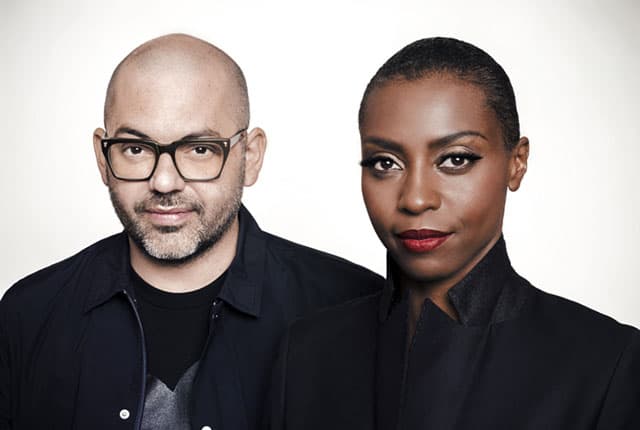
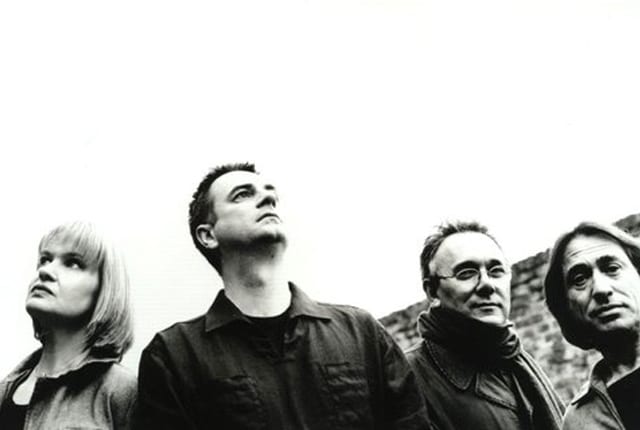
  6. Laika

    by admin

    Taking their name from the first dog in space, British duo Laika have a warm, dreamy sound that brings together a wide variety of styles. Sometimes eerie synth sounds share the spotlight with crisp live percussion and sparkling melodies.

    The group came together in August 1993, after Margaret Fiedler parted company with Moonshake (“It wasn’t really my choice, I was asked to leave the band,” she explains.) Moonshake bassist John Frenett said that he would join Margaret on whatever she did next. She decided to start collaborating with Guy Fixsen, who had been working with the band as the house engineer in the studio Moonshake made their first album in.

    “Rather than writing songs seperately, which was the way we did in Moonshake, we were going to write songs together,” explains Margaret, on the concept behind Laika. “Guy had a lot of ideas from production that couldn’t be hoisted on other bands. It has to be your record.”

    “Well, you can,” interrupts Guy.

    “There are a lot of producers who do that kind of stuff,” added Margaret, “make their own records with the band there in name only.”

    Laika’s lineup is rounded out by percussionist Lou Ciccotelli and drummer Philippe d’Armonville, but the creative core still remains Margaret and Guy.

    “They’ve all got their own other bands where they are the songwriter,” Margaret says. ” I don’t really think democracy works in music. I think you do have to have in each band one or, at the most, two people who are really kind of like… it’s their concept … because otherwise I think it ends up getting really watered down. It needs focus. That’s not a problem, because everybody in the band has their own band.”

    “Sound of the Satellites” is the most recent Laika album, the follow-up to 1995′s “Silver Apples on the Moon.” Though it was only recently released in America, it came out in England over a year ago. The band members don’t really mind the delay, as it allows them to really spend the time promoting it in different parts of the world. Laika toured America with Fiona Apple this past winter and plans on returning soon on their own. They’ve been writing but so far are not doing any new material live.

    “I like the fact that I don’t have a normal lifestyle,” says Margaret, on life as a member of Laika. “I think I’d get bored.”

    “It’s very all or nothing,” explains Guy. “We’re either in a sort of little bubble at home, where we hardly go out at all. We go out to get groceries maybe, go out to get beer occasionally and basically stay in and make music. And the other phase is the touring, where we’re constantly on the go.”

    “We to go out to dinner a lot,” Margaret adds. “That’s the best part. On tour, you do it every day and don’t have to pay for it.”