Chaos Cotrol Digizine

THE LATEST | ALL INTERVIEWS | NEWS BLOG | ABOUT CHAOS CONTROL | CONTACT

  1. Young Gods

    November 7, 1995 by admin

    Switzerland’s The Young Gods have often been cited for taking sampling to new levels, and with good reason. Taking white noise, metal guitar sounds, and other often abrasive samples and using them melodically without verging on sonic overload is no small feat. But The Young Gods pull it off perfectly.

    The group’s most recent LP, “Only Heaven,” was released last year in Interscope. Signed to Play It Again Sam in Europe, the band’s music had previously been licensed through Wax Trax! and Caroline in America. To record “Only Heaven,” the group came to America to work with producer Roli Mosimann in New York. Following the album’s release, the group embarked on a major tour that included dates with Die Krupps.

    The Young Gods is comprised of lead singer/composer Franz Treichler, keyboardist Al Comet and drummer Use Hiestrand. Jaded by spending several years in a more traditional rock band, Treichler originally started The Young Gods as an outlet for his own music. His often mysterious lyrics are sometimes sung in the English language, sometimes in French. Treichler remains the chief songwriter in the group.


  2. Women Of Sodom

    by admin

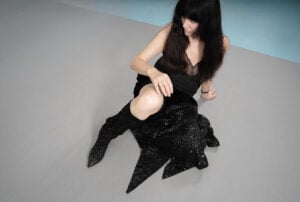
    Boston’s Women of Sodom have become well known for their intense live shows, which have a strong S&M edge and are on the verge of being performance art. On “Boots,” they prove to adapt surprisingly well to the audio-only environment and show they can cut it as a “band.” With several ex-Flail members on the instrumental side, Woman of Sodom have created an extremely enjoyable album that brings together gothic and industrial influences without showing even the remotest signs of copying other bands. The music is extremely dancy in places, and the band manages to pack some pretty interesting sonic experimentation into minimal arrangements. Because the music leaves a lot of breathing space, the highly erotic vocals are never overpowered. The nice thing about “Boots” is that Women of Sodom probably didn’t need to try this hard; their dark, sinister image and lyrics of female domination could probably sell their music on shock value alone. Instead, they’re put together a great album that actually has catchy melodies. If you ever saw the noisy (but still cool) live shows from this band’s previous incarnation, Women of the SS, you’ll know that this is no small feat.

    Curious about Women of Sodom? The following is Chaos Control’s interview with spokeswomen Ilsa.

    I’d usually never ask this question but because your group is so unusual I’m interested in hearing your response; what, in your own words, is The Women of Sodom?

    The original Women of Sodom lived in the infamous biblical city of the same name. These open-minded people pursued sex as an experiment, an adventure, rather than the traditional, pleasure-free “procreation-only” sex of the day. We pay homage to the rites and ideals their city was destroyed for. We embrace and explore strong sexuality, experimentation, homosexuality, equality, and hedonism.

    Since your performances are so visual, did you find it challenging at all doing a CD? Did you take any particular steps to make the music stand up on its own, perhaps using different means to achieve similar audience/listener response?

    It was challenging to take songs created for the visual show and make them work on CD. Xavier and I have been growing visually and musically ever since we started working together about a year ago. What works in a stage show won’t necessarily come across well on CD; therefore, we had to rebuild all of the songs from scratch. We added background vocals to enhance the quality and depth of the songs: bluesy scatting, medieval chanting, and housey jazz melodies. Xavier experimented with a sound-design program and created very new, very fresh sounds. I focused more on raw, growling vocal melodies and sultry spoken word insults rather than typical industrial screaming which has already been done so many times and is so hard on the ear. The booklet is icing on the cake, since it shows that not only are we creative but we’re rather nice to look at too! Now that we have improved the quality of the music, we reversed the process and rebuilt the live show around the new CD — so making a CD helped us grow as a band overall.

    I noticed an “adults only” warning on your web site. What are your feelings about on-line censorship?

    Our Webmaster, Adam (at Drawbridge, Inc.), explained the need for the warning and we trust his judgement. I disagree with censorship of any kind. If parents don’t want their children looking around the web freely, they can just buy one of those programs which hinders the kids from looking at anything with dirty words in it. Personally, I believe that education and freedom for children is much more important to help children grow up well-adjusted. The example a parent sets for a child is far more important than what they’ll see or read on the web.

    Can you explain a bit about the history of the band, and how you evolved from the Sleep Chamber spinoff Women of the SS?

    John definitely got me started in this! I danced for Sleep Chamber a bit and was in some videos so I asked if I could do a live show for his Women of the SS music, which wasn’t a band, just an experimental music project of his. He said sure as long as I did all the work. I enlisted my friends Larisa and Zemya to join the new band. That is how I started out. Zemya moved to California and Larisa and I decided to branch out and work with Xavier and Bob so we could make our own music which would better suit my lyrics, which had absolutely nothing to do with nazism (which I abhor).

    Who are the current members of the group? Are any involved with other projects/jobs that carry over into their work with Women of Sodom?

    Bob and Larisa have left the band and the line-up is currently Xavier (music, guitar, bass), myself (lead vocals, lyrics, ideas, and music), Anneka (vocals, bass, music — she is also the lead singer in the up-and-coming band Splashdown on Castle von Buhler Records), Zina (torture), my sister Krystyna (guitar-playing nun), and Sahar (bellydancer). Our slaves and enema nurses vary.

    None of the band members are strippers or professional dominatrixes. All of the women currently in the band are artists. Bina and I are professional visual artists, Anneka is studying music composition, Krystyna is studying art therapy, and Xavier is a computer engineer. Personally, I find painting to be a bit limiting sometimes as it is not as spontaneous as performance art, so performing live is exhilarating. Having a band chock full of artists lends itself to expression rather than just staging a sex show with no substance.

    Because of the nature of your performances, do you ever have problems booking shows, or do clubs give you strict guidelines regarding how far you can go? How has the general reaction to you been in Boston?

    Because we have such a large draw and receive such good press we have been offered so many shows that we cannot take them all. When we played at the Sextacy Ball in Boston and NYC with Thrill Kill Kult/Lords of Acid they asked us not to spray the audience with the enema water. Other than that the only other club that restricted us is Club BabyHead in RI, who asked us not to give the enema because the police were present. Often club contracts state “no sodomy” or “no blood.” I don’t consider sticking clean water in someone’s butt sodomy — it’s colonic cleansing. In Boston, we have an excellent following. A booking agent is sure to pack a club if we are on the bill. The audience reaction varies from person to person. Some are enthralled, some horrified, but nobody ever seems to be bored. Reaction to the CD (according to our radio tracking which is being done by Triage, NYC) is quite positive across the board, which is encouraging. We get some very interesting comments on our radio tracking reports!

    Have you done any shows outside of the Boston/NY area?

    Yes, we played on Bourbon Street in New Orleans during Mardi Gras, and Rhode Island, and Northampton. Currently we are planning tours to Chicago/Canada, California/Las Vegas, and New Orleans/Texas.

    How has your label been working out, and do you think you’ll ever seek to get Women of Sodom’s music released through a larger record company?

    Our label, PussyKitty Records (the label logo is a kitty coming out of a pussy) is a subsidiary of Castle von Buhler records, although it is a separate corporation. Both labels are distributed by Feedback out of Chicago. We get stacks and stacks of mailorder requests just for PussyKitty everyday. Our CD is currently on the CMJ list of top sales by our distributor and we received a call from Cargo (Canada) saying they want to distribute us as well. We don’t need a major label to make a profit as we already are doing that ourselves; however, a major label would make touring and promotion more affordable. So, we are not against the idea but I would only want to sign with someone who would promote us well since that would get our message across to more kids, so the girls will be more confident and assertive and the boys will give women more respect and equality. We have talked about this since we have been approached by a couple of labels already. We feel that we can keep doing this on our own and be just fine, but it might be cool given the right label to have someone help with management and promotion so we can focus on the music and performance. Castle von Buhler Records feels the same way. It is very empowering (although hard work) to start and maintain your own successful label. So fuck you, big labels. You are nothing!

    I haven’t seen you perform live for a very long time (well over a year) and many of my readers probably haven’t had the chance to see you. How would you describe your shows, and how have they evolved throughout your career?

    We have improved so much since our Women of the SS stage. Boy, did we suck then! We were entertaining and we looked great, but now we have so much more substance and vision. The music is much more important now, although we consistently aim to outdo ourselves as far as being an entertaining performance. Our music is more techno dance rather than industrial gothic now. I like world music and house, so we throw that in, and Xavier is really into sounds. He likes cartoon sounds and I like snakey sounds. We both like melodic hooky pop music. We keep striving for that hooky pop song full of angst and innovation that will capult us into everyone’s dreams and nightmares.

    Do you use live musicians on stage, or backing tapes?

    Both. We have a DAT tape of the computer sounds, samples, and dance beats. All other instruments are played live, such as guitar, bass, vocals, conga drum, castanets, marakas and background vocals.


  3. The Wolfgang Press

    by admin

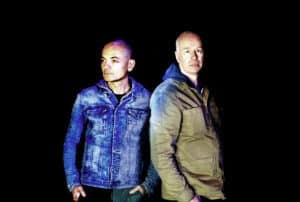
    Now reduced to a duo of Andrew Gray and Michael Allen, The Wolfgang Press have finally returned with a new album, “Funky Little Demons.” The LP was originally slated for a September 1994 release, but even if it had come out then, the band says that it still took longer to finish than anticipated. Keyboardist Mark Cox does appear on the album but left after its completion.

    “There were musical differences, and he decided that he didn’t feel right in the group any more,” explains Allen. “It was just the way we were writing the music really. He wanted to write between the three of us, and that wasn’t really working anymore. And what happened was each of us went away and started the bare bones of the track, and he didn’t feel comfortable with that.”

    In making “Funky Little Demons” The Wolfgang Press strived to write more structured songs than on past albums. This time around, they recorded about twice as much material as they needed, so they were able to go back and just use that material they liked the best. The group has evolved quite a bit since they first signed to 4AD in the early 80′s, and they attribute change to their longevity.

    “I feel confident that we’re mature enough now to carry on, because I feel we’re making better records each time,” says Allen. “I suppose if there comes a time when we feel we’re not progressing in any way , then that’s the time to either stop the group or just stop what we’re doing.”

    One song that didn’t seem to fit in on “Funky Little Demons” ended up being recorded in a very different form – it was recorded with Tom Jones.

    The Wolfgang Press try to keep things interesting by taking different approaches to writing each song. For example, “11 Years” started with drum and guitar and bass was added. “Chains,” on the other band, started with a guitar line and was then loaded up with samples. Although heavy use of sampling makes some tracks difficult to play live (such as “Heavens gate”), the group doesn’t see it as a particularly big problem . The group also likes working with different producers in order to keep their sound fresh.

    Allen has a unique approach to vocals, as he focuses on the way the words themselves sound rather than starting to work on a song with an idea of what it will be about.

    “Mainly, they come after the music,” he explains. “The music is never finished but the bones of the song are there. I listen to it and try and just mess around and make noises to the track. I might have an idea, or a few words, or a title that I want to work with. It’s like a stream of consciousness. I don’t write words outside of music, I don’t sit at home writing words, it has to be with the music.”


  4. Veruca Salt

    by admin

    Having been suddenly raised out of obscurity by the ultra-catchy guitar-pop song “Seether,” Veruca Salt know the power a strong single can have. But their debut album, “American Thighs,” shows that they are by no means one hit wonders.

    The group had its beginnings three years ago when a mutual friend of Louise Post and Nina Gordon thought they would musically compatible and demanded they get together. The two started writing songs and playing out, mostly acoustically, and decided to form a band. They placed an ad for a female rhythm section but ended up with bassist Steve Lack, who responded because he liked the influences listed (such as The Pixies and My Bloody Valentine.) After trying out a few different drummers, the line-up solidified with the addition of Jim Shapiro, Nina’s older brother.

    “He’s mainly a guitarist and a songwriter, but he played a little drums and he’s like ‘I’ll play drums with you guys’,” explains Post. “Little did he know what he would be committing to, but we ended up playing with Jim and we knew that we were a band.”

    After considering such names as “Igloo” and “Power Mountain,” the quartet decided on Veruca Salt (a character from “Charlie and the Chocolate Factory”) and began playing out July 1993. After only three shows, they had attracted the attention of producer Brad Wood and Chicago label Minty Fresh.

    Last January, almost two years to the day Post and Gordon had met, the group began work on “American Thighs,” which was released in September on Minty Fresh/Geffen.

    “We made the record for very little money, in a short time, and I think we thought that it would reach a few people,” says Post. “But this year has just been a roller coaster ride for us, such a crash course in the industry. What does it mean going to a major label? What does it mean to think of music as your career, not just as your art and your love but as a way to make money? I’d say in some ways ways it’s been too fast, but in other ways I can’t imagine it having happened any differently, this is what I know.”

    Shortly after the album’s release, Veruca Salt did some shows opening for Hole, but they only recently went out on a headlining American tour. The group had done a European tour earlier this year, and finds American audiences that still see them as “The ‘Seether’ band.” Post says that because Europe is less of a TV oriented market, there was less of a “Buzz Clip vibe.”

    “We’re really flattered that so many people come,” she says about the US dates. “But I wonder how many people beyond the immediate few in the front have our record, or are there people in the back who just don’t choose to mosh that actually like our songs. It’s interesting to me, I don’t know how much we’re still an object of hype and people want to just come see what’ its all about or if people actually connect with the music and want to experience it live.

    Within the band, song writing and vocal duties are for the most part split between Post and Gordon. Though “Seether” was the single that broke Veruca Salt, Post says that Gordon actually apologized when she brought it to the band because she though it was too much of a pop song.

    “That happens a lot, I’ll be down on one of my songs and she’s like ‘oh no, we’ve got to play that,’ and vice versa,” she explains.

    While “Seether” has led many people to accuse Veruca Salt of sounding like the Breeders, the remainder of “American Thighs” proves otherwise. The songs are highly melodic and range from the bright pop-rock sound of “Victrola” to the dreamy, extremely quiet “Sleeping Where I Want.” Post and Gordon’s voices work well together, and the whole band is tight and extremely focused.

    Since the release of “American Thighs,” Veruca Salt have put out a pink ten inch of “Number One Blind” on Minty Fresh that features non-album tracks. The group also recorded two songs, “Straight” and “She’s a Brain” at a BBC Radio session, and have a track called “Aurora” on the “Tank Girl” soundtrack. The group’s newer material is slightly more aggressive than that on “American Thighs” but is generally pretty consistent with the album. Veruca Salt plan to start recording their next LP in the fall or winter, something they are very eager to do.

    “I love playing these songs, but it’s weird to focus on them so much,” says Post. “We’re definitely ready to move on in different ways, musically, in terms of our thinking, in terms of our identity. We want to just grow.”


  5. Thomas Dolby

    by admin

    Ever since he first emerged in the early 80′s, Thomas Dolby has been a driving force in the progression of electronic music. With now classic songs like “She Blinded Me With Science,” “Europa and the Pirate Twins” and “Hyperactive,” he managed to eliminate the cold edge of electronically produced music and make it work in a pop format. While he continues to make his own music, Dolby’s career has branched out considerably over the years, first with film music and now video game soundtracks. Recently, he also provided the musical score to The Gate to the Minds Eye,” a video of computer animation.

    subjectLinks

    Dolby knew from when he was a teenager that he wanted to work in a creative field, but wasn’t sure at first if he wanted to be a director, actor, writer, or musician.

    “I kind of fell into music because it didn’t require a lot of entry qualifications,” he said. “I was very pleased to find that once I had records out music videos were starting to happen, so I directed some of my own music videos and got to experiment in other areas of expression”

    While the technology wasn’t nearly as advanced as it is today, Dolby didn’t feel limited at the time. He says that people thought electronic music was a novelty, so he felt it was his role to show them its potential.

    ‘I think it’s pretty ironic really. If you could go through my trash bin from the early 80′s, you’d find all those bleeps and blips,” he explains, referring to the early pieces of analog gear that are favorites in creating current techno and ambient music. ” I was desperate really for people not to accuse me of coldness. It was taboo.”

    Even though technology has been a key component in all his music, Dolby still uses the piano as his main songwriting tool. Dolby will wait until he has a strong picture of how a song will sound before using the electronics to make it happen. Otherwise, he finds himself “instantly drawn into that analytical way of thinking” that gets in the way of creativity.

    Dolby has scored the films “Gothic” and “Fever Pitch” in addition to writing songs for “Howard The Duck.” Compared to the other areas he works in, he dislikes film because of the lack of freedom composers usually have.

    “You can spend days writing one little theme for a love scene, and then the love scene has to go so it’s on the cutting room floor,” he explains. “And the studio owns it, so it’s kind of tough. When you’re working on a game, the team is smaller and the budget is smaller, you tend to be left to your own devices more.”

    Though he doesn’t have anything lined up right now, Dolby is interested in doing more film work in the future. With studios negotiating for the movie rights to such games as “Myst” and “Doom,” his experience in the computer field has led to increased interest from film makers.

    “It’s really hard because it looks good on paper but at the end of the day it’s not something you want to be involved in,” says Dolby on choosing film projects. “It makes me appreciate how lucky I am with my records, that I can just have this vision and a year later its in the stores on the shelves. I really appreciate that freedom, which in a movie you just never have.”

    One thing that Dolby does look for in a script is lots of exterior landscape shots, as that’s where the music is noticed the most.

    Dolby got involved with the “Gate to the Mind’s Eye” video after meeting the director at a screening of the series’ last installment . He had always been a fan of artists working in the field of computer animation, and felt that it was possible to tell a story with just images, music, and sound without dialogue.

    “I felt that the tempo of the one that I saw was very MTV,” says Dolby on his approach to the project. “The pace was really like watching a series of videos. I felt that it needed room to breath, and some of the best material we had was long and drawn out.”

    Starting to write music for video games presented Dolby with a challenge, because there weren’t any tools available for creating truly interactive scores. Unlike films, the stories don’t unfold in a concrete, linear fashion, so the music has to be manipulated from within the game. With his company, Head Space, Dolby has worked to create the software necessary for composing interactive sound tracks.

    Dolby’s latest creation was the sound track to the recently released “Cyberia.” Next up is “Double Switch,” a Sega CD game that stars Debbie Harry. Dolby has three other titles in the works, and his company is also starting to develop its own games.

    Game companies are starting to realize the importance of music and bringing in composers earlier in the development process. Dolby says one of the biggest problems with game music in the past is that “everyone has a cousin who can do music” and the game developers weren’t paying enough attention to special considerations the interactive nature brings about.

    “More and more now, most of the game designers know what I do and they tend to come to us a little bit earlier,” explains Dolby. “I think everybody at this point is looking for a competitive edge, and they’re already taking all the short cuts that they can in terms of graphics and they know that maybe I might have a key to give them advantage in the audio. So they tend to come to me earlier in the production process, which is a very helpful thing. If you leave the music until the end, there’s no memory left, no budget left, no time left.”

    Dolby admits that the technology is still limiting when it comes to video and computer games, but each new platform is better than the last. And with better equipment, there is more room for innovative interactive use of music.

    “The thing that interests me is that in electronic music, MIDI is a series on 1′s and O’s. Of you’re skill is as a keyboard player, then you hook up a MIDI keyboard and that’s the controller you actually use to play the notes on,” says Dolby. “Or if could be drum pads, or a wind controller. What’s happening with the games is that if your skill is running around a corridor shooting NAZIs, then in a way I’m turning that skill into a MIDI controller. Instead of a keyboard it’s actions, like opening up a door or loading up a gun or blowing up a few aliens. Technology is empowering non-musical individuals to make music with skills that they have.”

    Right now Dolby is dedicating most of his time to his company, Headspace. In addition to creating music for interactive entertainment, the company develops tools to make that type of composition easier. Dolby doesn’t have any current plans for his own music, but it’s not because he’s turning his back on it.

    “I kind of figure that will always be there, but I feel there’s really an important role for me in all of the stuff that’s going on,” he says. “It’s especially great with Head Space because it’s kind of like forming a band, I can bring on board some of my friends that I think are talented. On some of the projects we work on I write a couple of themes and supervise everything but get one of my friends to do the nuts of bolts work. And that enables them to get a track record, and also means that we can get involved with more projects rather than one at time.”


  6. Dr. Fiorella Terenzi

    by admin

    Music and astrophysics may sound like an odd combination, but bringing the two disciplines together was a natural progression for Dr. Fiorella Terenzi. While completing her doctorate in physics at the University of Milan, Terenzi was also studying musical composition, opera, and piano at the Milano conservatorio di Musica Verdi. In America doing research, Terenzi came up with a way to combine her two areas of expertise by creating music from the signals radio telescopes receive from space.

    Terenzi currently has one album out, “Music From the Galaxies” (Island), and recently released her first CD Rom, “Invisible Universe” (Voyager). The CD Rom features information, images and videos about the universe, as well as Terenzi’s music. Terenzi also appeared on Thomas Dolby’s soundtrack to the “Gate To the Mind’s Eye” video (Dolby returned the favor by reading poetry on “Invisible Universe.”)

    How did you come up with the idea to use information picked up by radio telescopes as the basis for music?

    Dr. Terenzi: Everything started during my doctoral research at the University of California, San Diego, Computer Audio Research Laboratory, where by applying sound synthesis language to radio astronomical data I came up with a technique called Acoustic Astronomy. This experiment focused on the radio emission collected via radio telescopes from a galaxy 180 million light years away and allowed me to listen to galactic radio waves. The purpose of this first experiment was to allow me to explore if sound can be useful for astronomical investigations – to see if sound can reflect chemical, physical and dynamical properties of celestial objects. After the straight scientific research I started to play and compose music with the galactic and other space sounds. But the idea started with my investigations into audification of celestial data.

    Was combining music/entertainment with science/education always a goal of yours, or is it just the product of your interests?

    Dr. Terenzi: It was the product of desperation after 20 years of boring professors, teaching me science in a boring way. You look around and you see only men – no female role models. You are also in a country like Italy much dominated by men and you are a teenager trying to decide what to do with your life. So you turn to movies or TV to look for a role model, and what you see is the work of George Lucas or Steven Speilberg. You hope to find some female role model, maybe someone intelligent, sensual, fun, artistic, musical but yet again you face movies where the main characters are always men. So you can understand how easy it is to get frustrated, or much better super-angry. That’s why I invented a new way of being. A new way of being both as a musician doing radio-astronomical music and as an astrophysicist doing music. So of course it is a goal, but it is a way of being more than a goal. I cannot separate that from who I am.

    Was it difficult figuring out how to create music from it, and can you describe the process?

    Dr. Terenzi: Yes it was. Radio astronomical sounds are extremely complex with an unlimited number of microtonal variations, bleeps, sweeps, noises all mixed up together in what I love to call a “radio galactic symphony”. I usually like to sit at the piano and write down musical elements which I derive from these astronomical sounds. They might be just simple notes, or some hints on tonalities or even chords. Then I use my imagination and my inspiration to write music starting from these elements. Sometimes I also like to use the radio galactic sounds as they are, as a continuous galactic background on top of which I create orchestral music or techno/dance loops and I sing along. Also I love to sample the galaxy in very short samples, so short that when you play the samples via keyboard the galaxy sounds like melodic instruments or a drum, a cosmic drum which I use for more up-tempo pop tracks.

    On average, how much information do you have to go through to get the material for one song?

    Dr. Terenzi: Talking about music, I usually write songs in a way that I never know how it happens. It might be a sound of a half second triggering my imagination and I get out a complete song in half an hour or so. Sometimes I spend days writing and printing music on paper to try to give a melodic feeling to these radio data, but most of the time music comes to me based on rhythms. To me drums, percussion are the heart of my music and the way I like to write. Starting from the drums.

    What are the scientific benefits to turning it into sound rather than images?

    Dr. Terenzi: Sounds may reflect information that is otherwise hidden in the visual investigation. For instance signals at two frequencies that are very close together, perhaps associated with a binary star system, are very difficult to distinguish in a visual representation such as a false-color picture or diagram, but two sounds at very similar frequencies create “beats”, an easily heard pulsing sound. Beats are well known in the acoustic domain and very easily detectable.

    Are you planning to do more albums?

    Dr. Terenzi: Yes. Many. I was recently in studio for A&M with two producers – Jeff Smith and Peter Lord, who did the first two Paula Abdul albums. We worked on two tracks – a cross between Enigma and Madonna with some Pink Floyd and funky grooves. “Extension of You” and “Supernova Amore”. I plan to be back in studio as soon as I return from a short tour in Europe, at the end of February. For me, music is the way I want to teach science and have people dancing to the beat of stars. I want them to experience the cosmos and the universe with all of their feeling and emotion, and nothing can convey that better than music.

    What was the motivation for doing the “Invisible Universe” CD Rom?

    Dr. Terenzi: With “Music from The Galaxies” I worked on the inaudible universe, now I wanted to work on the invisible universe around us. A universe not detectable with our eyes, made by infrared, ultraviolet, x-ray and gamma radiation. Both the in-audible and the invisible universe are different representations of the same phenomena which are the cosmos around us. I believe that only by transcending the limits of our vision might we perceive a more global image of what surrounds us.

    Was the music created especially for the CD ROM?

    Dr. Terenzi: Some of the tracks were done in Italy, inspired by my vision of the Italian night sky. Others were composed for and played during my planetarium and laserium concerts at places like Morrison Planetarium, Griffith Observatory, Santa Monica College, Fort Worth music festival and so on. “Comets” was previously used for a promotional piece for Polaroid in which I was also the on-screen talent.

    Were there any things you would have liked to have done with “Invisible Universe” that you were unable to because of technical limitations?

    Dr. Terenzi: For me already to be able to fit everything like videos, musical clips, guided tours, poetry, art work into a CD is something that I see as a landmark in the way you can do music, communicate, educate. Technical limitations – of course. They will be solved in the near future. But the most important point is the great possibility we have today to create something new. In the future we will be able to fit more music at “CD quality”, have longer and full-screen video clips, but again the most important thing is to be able to create something new in the way you present astronomy, biology, or even music.

    You worked with Thomas Dolby before – how did you meet up with him?

    Dr. Terenzi: I met Thomas while I was performing at the Digital-Art Human Be-In in San Francisco and immediately we felt the same background in terms of music, technology, and vision. One week later we were in studio to create the two tunes you know – Quantum Mechanic and NEO. The way we composed and worked together was very natural and I respect and love a lot the work of Thomas. Besides being a great musician and a visionary, he is also a great producer. There are so many other ideas Thomas and I could pursue, both in terms of music, multimedia titles, games, and I look forward to working with Thomas again soon in the future.

    Thomas Dolby is very interested in giving users of interactive media the power to manipulate the music and sounds. Do you think you’d ever want to do a CD Rom that would allow people to play with and manipulate some of the sounds you’ve created from the radio telescope data?

    Dr. Terenzi: Oh yeah, definitely I want to do something like that. I want to have people be able to manipulate my radio-astronomical sound. Actually one of my future aims is to be able to turn my first release “Music from the Galaxies” (Island) into public domain, to give back to people what they already own but haven’t had access to.