Chaos Cotrol Digizine

THE LATEST | ALL INTERVIEWS | NEWS BLOG | ABOUT CHAOS CONTROL | CONTACT

  1. Underworld

    November 7, 1994 by admin

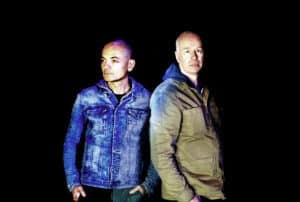
    One of the most surprising music events of recent years has been the rebirth of Underworld. There wasn’t anything wrong with their two late 80′s albums on Sire, but their synth/rock sound was already starting to sound a bit dated. Despite the classic “Doot-Doot” single from their previous incarnation (Freur), the group didn’t seem like the type to revolutionize music. But with the addition of DJ Darren Emerson to the line-up and a major overhaul in their sound, members Karl Hyde and Rick Smith have done just that.

    Their latest album, “dubnobasswithmyheadman,” truly bridges the gap between rock and dance music. It has all the sonic experimentation that the techno and ambient revolution has led us to expect, flawlessly combined with guitars and vocals. Underworld haven’t just stepped up the beats and electronic noises in order to sound modern, they have completely re-evaluated their style based on a love for dance music.

    The following is an interview with with Hyde.

    How does it feel to be on an indie label after spending time on a major?

    It’s the early days. What happened back here basically is that we’re on a brilliant indie label called Junior Boy’s Own. And because it’s a small label and it’s so independent we can move very quickly. We can move at the pace that is natural, and we collaborate together. It’s more of a collaboration than fitting in with corporate schedules. It’s less corporate, and really that’s the philosophy with going with independent labels. We don’t really fit in with corporate structures.

    How did Darren come to join the band?

    It was Rick’s brother-in-law who goes to a lot of clubs and raves. Rick just asked him, like who do you know that’s young and exciting at the moment. There was this young kid who played in the local pub and he’d heard him at a couple of parties. And Darren lived locally, he lives just down the road.

    What effect has he had on the way the band works?

    It’s different now in as much as we don’t rely on the 80′s way of radio and television and the regular kind of routes. So therefore we don’t have to change our music and change the things that we make to fit in with scheduling schemes. It’s a direct outlet because he’s playing all the time. So the music that we make and we made initially was for him to play in his set at the clubs. We still do that, we still make music for him to play in his set. So our music goes directly to an audience and we get a direct feedback and it doesn’t have to be changed in any way to accommodate someone else’s ideas of what music should be. Our music is very direct now and goes to an audience which votes with its feet. And that is so exciting, to make something in the studio and be able to get it played at a club that night immediately without it having to go to a committee.

    Did you ever imagine you music evolving in this direction?

    No, but there again we’ve never had any idea in all the years we’ve been together. We just try and stay as open as possible. That was beginning to become impossible when we had the first two records with Underworld. There were too many people to accommodate and too much of a structure. Now we’ve kind of gone back to what we originally intended when we had our first band together. And that was to make the kind of music we wanted to make, at home when we became inspired to make it.

    Since the band is quite a bit different now, did you consider changing the name?

    Yeah, a few people said that, but we couldn’t think why. Because there was nothing wrong with the name and we certainly weren’t ashamed of our past. There’s no reason to disassociate ourselves from the work that we’d done. Besides that, logically there were a lot of people what knew about us and we’d spent a long time communicating with them. So it seemed logical to keep the name.

    What effect do you think your time on a major had on the band?

    The thing one finds almost without exception is that when one signs a record deal, the very people that have been saying they like what you do soon turn around and ask you to alter it. And that just becomes an epidemic. If you’re not careful then fairly soon, through a committee sensibility, a record label is going to have milked you of your creativity and originality and you’ve become worthless with them and yet discarded. Which is understandable. So I would say without question our two experiences of having major record deals in the past have resulted in completely losing direction because of so many people being involved in the chain. Where as this is like we make a record and it goes directly to the public, and if they don’t like it we’ve learned. And if they do like it we’ve learned, but it’s just great.”

    Did you have lots of large labels trying to sign you due to the recent success?

    Oh yes, that happened earlier this year. I think all of them did!

    Are you afraid at all of people saying that you are just jumping on the dance bandwagon?

    Not at all. The point was that we needed to make the music eventually that we were inspired to make. If anyone listened to the tapes we were making in 1982, whenever we were between records and were making music in our studio at home, this is the music we were making. When we originally started, during any interviews we were doing then we were saying our influences were Kraftwerk and dub music. But there was no place for it to go in those days, there was no house music. Even though there was a formulative scene in the States, there was nothing here until 86 or 87. There were a lot of diversions trying to find that place, and when it eventually happened it became ‘my god, home!.’ And you could see it on the horizon. There’s home, let’s go home!

    What are your live shows like?

    We do everything live. It’s just the three of us and it’s completely improvised so it changes every night. We tend to like to do no more than three shows in a row, because even with being so improvised after three shows in a row the improvisation starts to get familiar. The mixing board is on stage, that’s an instrument. We just plug in through the record deck so we can cut between acid tapes that we’ve prepared and chop the two things together. For us, it’s DJ culture meets what Rick and I have learned in being in bands and fusing the two things together. We always thought that DJ culture was exciting but then we were able to bring things in from our experience and make it a totally live and improvised experience.

    Do you ever have problems adapting your studio work to the live setting?

    Absolutely not. The two things are free to be what they want to be. What we do live is a dance experience, where we make music for dance and for party. If anything, the problem we encounter is that we’re not too fond of being put into rock venues or on stages, even through people say we’re very visual and that’s great and part of our palate. We are there as part of a total experience, so the kinds of places we prefer to play are much more of a party atmosphere, a rave type thing. If we’re playing in festivals, we prefer to play in the enclosures that are dedicated to dance, just because the vibe is more understanding to what we are doing.”

    Will you ever play any of the old material, possibly re-interpreted, at the live shows?

    No, that’s happily committed to memory. They were good the way they we’re and they don’t lend themselves as vehicles for the way were are expressing ourselves now. I would rather leave them intact the way they were.

    Since you are also involved in design work, are visuals a big part of Underworld shows?

    Our philosophy when we formed this version of Underworld was the three of us would be able to put the equipment into the back of a small van and do a gig just like that. The first three shows were us literally playing from the DJ booth, with no lights, completely invisible. We’ve continued with that philosophy pretty much intact, but we carry video tapes with us, which is the work of our partners. And if people can provide us with a couple of projectors and some screens, well great. And if there’s some lighting people there that would like to have some fun, great. We’re into the idea of jamming with people, turning up and saying ‘do you like to do lights? Well that’s great then. Just remember that we’re not a rock band so light the crowd more than us. Do something you’ve always wanted to do. It’s your birthday, do what you want!’ It’s nice for us not to know that there are any light cues or that anything is going to happen. It’s great to be inspired by great ideas and we’ve been very lucky so far. We’ve met some great, really talented people who when you say do what you want to do get all fired up and inspired.

    How do the three of you tend to work together?

    It’s very amorphous. Darren’s DJing all the time, so he’s bringing in his vibe of being in clubs most nights of the week. Rick is pretty much in the studio all the time, his instrument is the studio. I’m out collecting images, writing words, bringing back ideas. And then the three of us will just come together and jam. Sometimes the three of us, sometime two of us. A thing is never finished until it is released, and even then we might add to it or change it in some way. There are several things we’ve put out that have had the same starting point and we just keep recording every week, recording more things and putting them into the library. Who’s to say what a contribution is. It could be just someone going ‘that’s great, I think it’s finished, we should put it out. Or it could be someone spending weeks coming up with new ideas. It’s like everything in between.

    Did you have any trouble selecting which tracks would go on the “dubnobasswithmyheadman” album?

    Yes, we did. It was a bit of a dilemma for us because putting out tracks specifically for the clubs was easy. We could test things out in the clubs and get a reaction and decide if we wanted to change anything. What we did was bootlegged the album, we put together an initial running order for an album and gave it to our friends and just said pass it around. We let is circulate among our group of friends for about a month and just got a vibe from it, and then from that we made changes.

    How long does it usually take to create a track?

    Somethings can come together very fast, like ‘Cowgirl’ or something like ‘Skyscraper was working on and off for months. Sometimes we’ll get in the studio and write something really fast, jam it, and you re-mix it several times and realize that the original one was it. Other times you finish something and edit it to get it the way we want.

    Why did you choose Wax Trax!/TVT as your US label?

    We asked around a lot. Amongst the people who were saying the right things, they were the only company who was completely independent. We felt that of the others that we liked, there were often too many ties to other labels and we’d been in that situation before, of being in that chain. We thought we just couldn’t do that again. We need to make music and release it. They were just saying the right things and we thought let’s go with it. All the people that we respected always included them on any list that they we advising, so it just kind of pointed in that direction. They were very open for our ideas so we’re really happy to see how it goes.

    Are you planning on touring America?

    It would be nice to. Again, it’s going to depend on something coming up that’s going to be interesting. Things have been offered, but they tend to be kind of standard ideas, touring for six weeks or something like that as a package. We’ve been talking to people and are trying to get a sense of who’s doing something interesting, events and parties and things that aren’t rock oriented. I would depend on that really. If anybody knows of some really good organizers that are doing interesting events in America we definitely want to hear about it. Touring with a bunch of DJs is always good fun. We’re doing that here in England in October and it’s great, a really good vibe.”


  2. The Other Two

    by admin

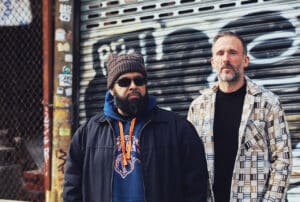
    With New Order’s Bernard Sumner in Electronic and Peter Hook in Revenge, it was only natural for Gillian Gilbert and Stephen Morris to also do a side project. Released under the name The Other Two, their “The Other Two and You” album is probably the strongest of all the New Order side projects. Unfortunately, the collapse of Factory Records, the loss of the cover art and other unforeseen delays made it come out two years late.

    Now, the album has finally been released by Warner Bros., and the group feels relieved to finally get it out.

    “It was like, ‘for god’s sake, let’s get this thing out so that we can get on to some new stuff,’” says Morris. “In the intervening two years, we’d gotten nearly enough stuff to do another album. It was really a matter of ‘please, when can we get it out.’”

    With Hook and Sumner off on their other projects, Gilbert and Morris had spent their time creating soundtrack music for television. Most of it was for British programs, though they did re-work some music for “America’s Most Wanted” as a favor to a director they knew. The soundtrack work led them to start up The Other Two.

    “We were quite happy doing that [soundtrack work], but like anything, really, you get a bit fed up with it and it’s not really an ends in itself because nobody buys the record, we’re on TV for like 30 seconds for something,” says Morris. “So we thought we’ve got all this stuff we’d written for television, let’s turn it into an album. But we didn’t sit down and say ‘let’s write an album.”

    The first Other Two single, “Tasty Fish,” came out in Europe in 1991 and was the band’s only release until the album came out in Britain just before Christmas. The album had been previously scheduled for release twice, most recently in early 1993.

    Within the band, Morris handles the computers and programming, as he says that “Gillian has the innate ability to make any computer running a sequence program crash, it’s uncanny.” Gilbert comes up with ideas on a four-track set up and then the two get together to fit the pieces together.

    The Other Two have been recording in their home studio with Morris doing most of the engineering, though in the future they hope to work in outside studios with others behind the board. Gilbert says that this will give them more time to work together and focus in on the music itself. But keeping things simple has come as a relief to the band after spending so much time working within New Order.

    “In New Order, there’s four people so everything’s got to be a compromise,” says Morris.”Bernard writes his own vocal lines and quite a lot of the music, so really you’re waiting for him most of time. What is kind of a fun thing about the Other Two is that it’s just us two. With New Order you go on tour and there’s hundreds of people involved with it and little simple things seem to get unnecessarily complicated.”

    When they started working on the Other Two material, they had intended to bring in someone else for vocals. The duo couldn’t figure out what type of singer they wanted and found themselves with a bunch of completed tracks in need of vocals, so Gilbert decided to fill take on the task herself.

    “I never wanted to be a singer, it was just purely by accident, really,” she says. “Stephen Hague had encouraged me to take singing lessons, but I don’t think I’ve ever sung in front of any more than two people! It’s going to be a bit strange. When we did the New Order tour, I thought ‘god, I could never do what Bernard was doing.’ So I don’t know what gigging will be like.”

    Gillian and Morris have been writing material all along and would ideally like to have another album out within the year. The group is at the stage now to start adding lyrics to the new material, but the delay in the release of “The Other Two And You” has been holding them back.

    “It’s hard writing anything new, because we just wanted to see how well this one would do and how people like it,” says Gilbert. “It keeps you going to have feedback from other people, so we can’t really get it out of the way until it’s been out. When it’s been out and we’ve got some singles off of it we can get back into the other lot.”

    Gilbert and Morris have yet to play out as The Other Two but they hope to do so this year. While Gilbert is nervous about singing live, the group is eager to perform some of the new material. Nothing is firm yet, but the group has started thinking about how they will present themselves live.

    “It’s really a bit difficult deciding how to do it, whether you should have a band or just be two people,” says Morris. “I’d like to do it a bit different, with oil lamps and computer projection, something visually interesting.”


  3. The Orb

    by admin

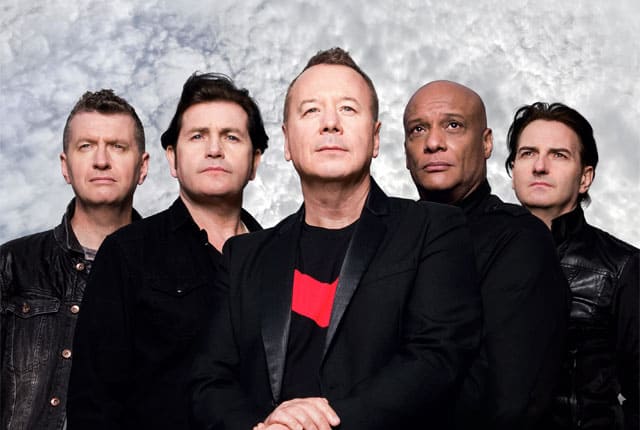
    The Orb has never been known for being normal, so it comes as no surprise that they have released a double live album, something virtually unheard of for an electronic band. “Live 93″ brings together tracks recorded from three separate dates last year, and the often radically different interpretations of the songs makes it essential for any Orb fan’s collections.

    Leader Dr. Alex Paterson calls the LP “a stop gap, really,” as the group mainly wanted to get something out and was being held back by legal hassles with their record company. The Orb felt that Big Life wasn’t treating them fairly, so they decided to take them to court in an effort to get off the label. Ultimately, they settled out of court, but the whole incident lasted from October 1992 to November 1993.

    “It was literally two weeks before the album was actually released that we sorted the whole thing out with the live album,” says Paterson. “We could have been put in a position of releasing an album without signing a record contract or signing away from a record contract. But we were quite prepared to just go ahead and break all the rules, because they seemed to be able to break them anyway and get away with it.”

    Paterson says that since Big Life had top ten hits with re-releases of “Perpetual Dawn” and “Little Fluffy Clouds,” it looked like they would re-release “The Orb’s Adventures Beyond The Ultraworld” and put out a “greatest hits” compilation. The Orb are strongly against that, so they see “Live 93″ as a way to “just sort of bury the past in a nice way, as opposed to letting them take control of the past and put out all these re-issues.”

    Another major problem The Orb had with their old label was a lack of support for an American tour planned for early last year. All the shows were ultimately canceled.

    “It got to the point where they were telling us that our records were selling 100,000 copies and getting a gold disk, but ‘sorry you can’t tour because there’s no money’,” says Paterson.

    The group made up for this by doing a short, five-date tour in the late fall. Paterson says that with all the US fans have been put through, from “The Orb’s Adventures Beyond The Ultraworld” being watered down to a single album to the cancellation of the last tour, “to get a reaction like we did in October was brilliant!”

    For the live shows, the Orb added an additional bassist and drummer (ex-Killing Joke member Paul Fergusson recently joined to take on that role). There are various keyboards, turntables and effects on stage, and all the sequences come of three ADATs running though a 24-track mixing desk.

    “There’s four of use on stage and we can basically re-arrange the whole multitrack, so we get a live mix every night,” says Paterson on the set-up. “It’s quite bizarre, really, but it works.”

    According to Paterson, there were several reason for culling the material for the album from several different shows.

    “We were under lot of pressure from the management to release the Glastonbury set, but we didn’t want to fall into the syndrome of putting out a Glastonbury album,” explains Paterson. “So we decided to do an Orb live album and take some stuff from the Glastonbury set, take some stuff from a really small club in Tokyo and then from the Copenhagen gig, because that one is very special to us. It’s nice to put that on the album so people will always remember it, and those who weren’t there, we can always tell about it.”

    That legendary Copenhagen gig took place on a small island, with the Orb doing a set at sunset and one at sunrise. The Orb played on a stage in the harbor that Paterson describes as a “massive ghetoblaster on water” in front of 4,500 fans. Eight days of preparation were needed to set everything up.

    The island contained an old fortress, where Paterson says Napoleon had lost use of his arm. According to Paterson, Jean-Michael Jarre had wanted to do a show on the same island but was refused permission.

    “The let us play there because they thought we could exorcise all the ghosts from it,” says Paterson.

    Though he refuses to give any details, Paterson says that The Orb has begun working on doing similarly special shows in other parts of the world. He says that there will definitely be something big in America in the future, as doing unusual performances that people will be willing to travel to beats trying to go everywhere with a traditional show.

    The Orb are currently working on a new album, which may be finished by the end of March. Paterson says it will probably take a little longer, as the group has just put the finishing touches on their own studio. The LP will feature more live instruments, and have a slightly different sound than the Orb’s past releases.

    “I think we’re growing up a bit,” says Paterson. “The third album is going to be moodier, after our experience of the last year and a half. It’s quite bizarre.”


  4. Sven Vath

    by admin

    With “Accident In Paradise,” German musician/DJ Sven Vath truly breaks down the barriers in electronic music. The instrumental music of the LP brings together elements of techno with soundtrack music, and places equal emphasis on melody as sonic experimentation. As a result, Vath’s album will appeal equally to both rave kids and the older crowd that has propelled Enigma and Deep Forest to success.

    Vath started off his music career in the mid 80′s with a project called Organization For Fun. That band mixed elements of early House, New Beat and spoken vocals from Vath. They became pop stars in Europe but split after two albums when Vath wanted to do his own thing (the other members went on to form Snap).

    “I was kind of a marionette and didn’t feel so comfortable in that position and said I wanted to do my own stuff,” he says. “So then I started my label EyeQ.”

    Vath started up another label, Harthouse, two and a half years ago. That label has gained great acclaim in both Europe and America due to the success of such acts as Spice Lab.

    “It’s my own baby, my little playground where I do what I want to sign and experimental stuff,” says Vath.

    In addition Vath has the third label, Recycle or Die, which is a pure ambient label that puts out limited edition CDs.

    Vath has been DJing for 12 years and has his own club in Frankfurt, The Omen Club. Though he has spun a variety of styles, he is now focusing on trance and tribal techno and plays it every Friday at his club. Vath says that because The Omen Club is the only place that will play that style for the whole night, people have been coming from all over Germany to attend.

    “It’s kind of a techno mecca,” he says.

    When he DJs, Vath goes all out and does 16 hour sets. He sees DJing as a performance, as he doesn’t ever play his own music live.

    “For me, it’s kind of a meditation into trance,” Vath explains. “I’m very into my music when I’m doing this and for the people here in Germany and the people of Europe, we always create a special vibe together. The people realize that I’m not just coming to pick up my money or something, that I’m really totally into the music. I’m on a mission!”" Sometime next year, Vath wants to tour with a big multimedia event that will combine his music with the work of other artists. It will be highly theatrical, spanning the entire evening. “It will be a spiritual evening with many different things going on, this is the way I see my live performance in the future.”

    Vath’s music seems ideally suited to work as a soundtrack for stage, film, or other visual media. He acknowledges this and says that over the three month period “Accident In Paradise” took to make he was constantly getting visual ideas for the music.

    “I always see a movie in my head when I’m doing my music,” explains Vath. “It’s like painting a picture with a lot of fantasy involved and always a story, not just a song, I have stories to tell and fairy tales. This is the way I see my music.”

    Vath’s music has been labeled “Ambient,” even though it is quite a bit different from much of the other music given that name. Vath feels the term is appropriate for him, though questions much of the other “ambient” music.

    “I see now this big ambient flood in England, and everyone’s putting just one tone with a little effects and maybe a little bird singing, and this is an ambient album,” he says, laughing.”I see for myself the taste of electronic mind music to be more classical. I think to produce ambient music you have to be in this special mood for the music. The stores with every record stamped with ‘ambient’ have nothing to do with that!”

    Unlike many other techno musicians, Vath does not use his own label to release his music under many different names. He does have one side project, The Ascent of Nature, but prefers not to spread himself too thin musically. He does do remixes for the other artists, but is very selective and will only do tracks that he likes.

    Vath is currently at work on his second solo album, which will be out in the fall. The format of the LP will be three characters, all part of Vath, represented by three songs each. Vath isn’t saying much about the upcoming project, though he explains that “it’s going to be a journey in sound definitely.”


  5. Sister Machine Gun

    by admin

    “We’re cursed, everyone who joins the band, including me, loses their job, their girlfriend, wherever they live,” proclaims Sister Machine Gun’s Chris Randall. “For some reason it’s happened to everybody. And every time somebody wants to play with us live I warn them that they’re going to lose their house, their job and their girlfriend.”

    The curse holds true for his musical partner, Chris Kelly, who saw his other band (Virus 23) dissolve when he joined Sister Machine Gun. But with a well-received new album, “The Torture Technique,” and a successful tour with KMFDM, the future is looking bright for their latest musical endeavor.

    Randall comes from a background of being a roadie, having toured with such acts as Foetus, KMFDM, and Jesus and Mary Chain. He had put together a Sister Machine Gun demo to get live shows and attracted the attention of KMFDM and Die Warzau’s Jim Marcus.

    “They got together a good Sister Machine Gun demo that they gave to Wax Trax, and I signed on the dotted line a week later,” explains Randall. “So I never actually went sending them a demo or anything. I got really lucky, it just kind of happened.”

    Kelly, who had been working as a roadie for Sister Machine Gun, was then promoted to being a member of the band. Not seeing the need for additional musicians, Randall sees the studio version of Sister Machine Gun remaining as a duo.

    Currently, Final Cut guitarist Greg Lucus and drummer Scott Churilla round out the live line-up. Churilla was discovered by Randall playing in a cover band at an Indiana Bar.

    Sister Machine Gun’s music is created entirely in the studio. The duo will just book time and improvise in the studio, and then Randall will take a cassette of the recording to come up with the lyrics.

    When asked if this causes a problem preparing for the live shows, Randall responds, “yeah, because I never know the words to the songs. It’s not like we had them beforehand. Our live sound is completely different from the record because of the fact that it’s not written as a band. What I do is just go back and get the 24 track tapes out and make a backing tape, which has some kind of similarity to what’s on the album, and the others just play over the top. So the tape will have bass and difficult keyboard parts and nonsense like that and we just go and do normal rock and roll over the top.”

    Sister Machine Gun use a Mini Disc instead of the usual DAT to supply pre-recorded backing tracks for the live shows. Using Mini Disc gives them the ability to instantly select any track and alter the set list at will. The group has done some shows completely live, using a bass player, but Randall wasn’t satisfied by the sound and for the time being will continue using the Mini Disc.

    Sister Machine Gun will soon be heading to Japan for a tour with KMFDM and will start work on a new album in September. Recording will take place in January, for a release next fall. The group has now gotten to the point where the business side of things is getting in the way of making music, so they have hired a magazine (“we’re a really band now!,” proclaims Randall.”)


  6. Single Gun Theory

    by admin

    Though Australia is not normally thought of as a hotbed for electronic music, Sydney’s Single Gun Theory have nevertheless proven be one of the most creative bands in the genre. The group’s music is highly structured and song-oriented, while also being very experimental in terms of the sounds used. Their latest album, “Flow, River of My Soul” (NETTWERK) is their most accessible to date, though it still has the distinctive Single Gun Theory sound.

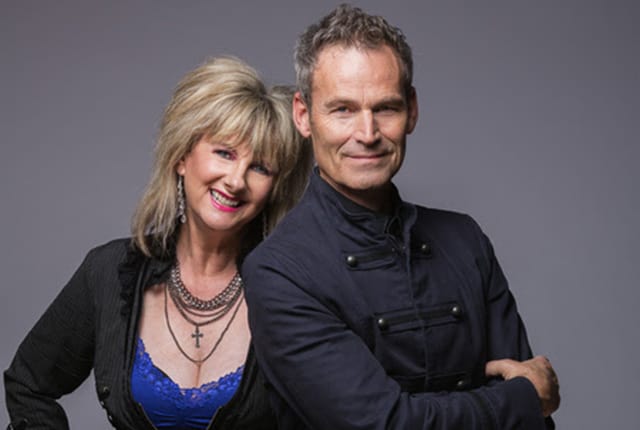
    Single Gun Theory is a trio of Kath Power, Pete Rivett-Carnac and Jacqui Hunt. Pete and Kath are responsible for the mostly electronic music, while Jacqui handles vocals. Although they compose entirely on computer, Single Gun Theory are far from synthetic sounding, thanks to the organic sounds and samples and Jacqui’s powerful vocals.

    The group recently finished their first American tour, opening for NETTWERK label mate Sarah McLachlan. The following is an interview with Pete conducted over the internet.

    Why was there such a long gap between albums?

    We’re really not very prolific songwriters; well, I’ll rephrase that. We tend to write a lot, but also throw a lot away. Also, like everyone else, we have lives to live. We work, we fall in love, we break up, we move house, we travel, we write music. For a start, we all have full-time day jobs. I’m a computer programmer, Kath’s a psychologist and Jacq’s a fashion designer…so there’s at least 35 hours gone every week. Of course, if we sell buckets of records we won’t have to do this and we’ll be able to release an album every 18 months!

    Were you writing new material all along or did you write the new LP in one block of time?

    Well, we tend to write fairly consistently. We began writing the material on this album back in October 1991, but it really morphed a lot along the way. It tends to come in bursts. I wrote a lot of stuff between October 91 and December 92, and then…nothing much until October 93. Then I just went for it. It really depends on what’s happening in your life at the time, and between late-92 and October 93, I had a pretty depressing time. Then In October 93 I fell totally in love with someone, and she provided an impetus/catalyst to write again. I purged a lot of stuff from my psyche at that time, and 70% of the album just flowed from that point.

    When/where was the new LP recorded?

    Most of it was recorded in Vancouver in February and March this year, at Nettwerk’s studio “Slack” in West 3rd Avenue (K.D. Lang’s old demo studio). It’s a pretty run-down dive, but it’s got some great gear; we recorded this album on 24-track digital, using Eventide harmonisers, Lexicon reverbs, Drawmer compressors, etc. – really nice stuff. Unfortunately, we had some problems clearing samples – some were just rejected outright – and so a couple of the tracks had to be remixed at my home studio without the offending samples (the opening track, “Transmission”, and another one, “Phenomena”).

    Did you have any specific goals in mind when you went into making it?

    No, we just do what we do. We really don’t know what’s going to happen…we just write and play around and keep the stuff we like.

    The last LP had a very distinct sound, due in part to the samples you collected. Are there any particular sources of sounds that figure prominently on the new LP?

    Well – to me anyway – it’s really just more of the same, but possibly a bit more “mature” (which sounds incredibly boring and like, “these guys have lost it”, but …I like it!). We seem to be getting mellower with each album; this one is even easier on the ears than the last one – but I think it’s good. To me, this album, while being the least abrasive, has the most to say…although a lot of the messages are cryptic and encoded. There are a lot of references back to the last album too, which I really just put in to see if anyone would notice…and now I’ve gone and blown it by telling you! Hmmm, oh well.

    Anyway, “Flow, River of My Soul” contains a lot of the usual kind of single gun trademarks: female arabic and Indian vocal samples, a few birds, whales and sirens here and there, lots of spoken word samples…you know the kind of thing.

    You just completed your first US tour. How did it compare to playing back in Australia?

    When we play live in Australia, we have up to 10 or 12 people on stage – Indian dancers, Thai performers, sword-swallowers, fire-eaters, etc. – and live video. But that’s when we play here! Unfortunately, in North America we can only afford to bring ourselves and a percussionist and dancer (and no video). Nevertheless, I think it’s a show worth seeing.

    What type of instrumentation do you use for your live shows? What type of instrumentation do you use for your live shows?

    Because our music is created by layering samples in a home studio environment, it’s very difficult to recreate it live without massive banks of samplers and lots of real musicians. So…sorry, but it’s true, we have to use DAT backing tapes. Just warning you in advance! But having said that, we try to vary the arrangements as much as possible; this is especially true of the new songs on “Flow”. Also, we have a live percussionist which adds to the overall effect.

    Is it difficult adapting your music for live shows?

    Depends on the song. As I said, we try to provide new arrangements when we play live. The other bonus about our live shows is that you get to hear the songs which we’re not allowed to release! (because the samples weren’t cleared etc.).

    Do you still perform material off the first album?

    Last time we played live we did, but we’re not going to this time; it’ll just be a 50/50 mix of the new album and the last album. We noticed that most people just want to hear the newer stuff, although we’d like to do a couple of tracks off the first record (especially “Exorcise this wasteland” and “Open the skies”).

    Are you pressured by the label at all in terms of sound or direction?

    No, not at ALL. Nettwerk’s great that way. We have 100% control. Hey, they’re lovely people too!