Chaos Cotrol Digizine

THE LATEST | ALL INTERVIEWS | NEWS BLOG | ABOUT CHAOS CONTROL | CONTACT

  1. ZIA

    November 7, 1993 by admin

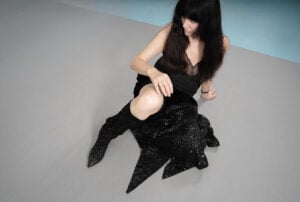
    With virtually every major industrial band somehow interconnected with one another through side projects, it was only natural for the burgeoning electronic scene in Boston to also take on this incestuous nature. In Boston, Elaine Walker has proven to be one of those highly prolific individuals involved in several projects at the same time. In addition to being in D.D.T. and Sleep Chamber, Walker has her own project, ZIA.

    ZIA is not actually new, but it was put on the back burner when Walker got involved with D.D.T. Once D.D.T. got established, Walker began playing out as ZIA and released a cassette. To flesh out the project into a live band, Walker is assisted by D.D.T. bandmate Lisa Sirois and You Shriek’s Marq Free.

    ZIA’s music tends to be very fast and aggressive, and Walker shifts between distorted yells and more traditional singing. Walker does occasionally break out of this mold, most notably on “Stick Men,” a slow, haunting song with powerful vocals. Like most of Walker’s music, “Stick Men” is written entirely in microtuning, and the technique is particlaulry effective in the song. Walker admits that “Stick Men” does not really fit in with the rest of ZIA’s material, but she says this is the type of music she wants to explore in the future.

    “I didn’t even really have the notion that what I wanted to in my life was be a rock star and get a band together,” says Walker. “What I was serious about when I first graduated, and still now, is to just explore and research microtonality”

    Microtonal composition breaks away from the standard 12-tone piano tuning. Walker uses 19 note per octave tuning, as well as the octave-less Pierce Scale. Walker was first exposed to it at Berklee School of Music and says it has changed the way she looks at music. “Ever since I was in first grade, I remember asking my mom ‘what about the notes in between?’,” she says.”So I’ve always known there were other notes, but I was so young I hadn’t even explored this [12 tone] tuning. Well know I have and I’m sick of it.”

    “It’s a beautiful tuning, and it’s worked for hundred of years,” says Walker of the traditional tuning system. “I still think it’s a great tuning, but my god, we’ve been using it for so long, and isn’t anyone getting sick of it? Doesn’t anyone really think about that?”

    But since keyboards and sequencers were designed to play the 12-tone system, traditional musical theory and technique must be thrown out the window. For instance, the note displayed on the computer screen does not necessarily correspond with what it’s making a micro-tuned synthesizer play, so much of the composition must be done by ear.

    “It can be kind of confusing to play,” says Walker. “I really hate the fact that keyboards are this hardware thing that always stays the same. I can’t wait until the day that there’s a really good controller that doesn’t just conform to one tuning.”

    While many electronic bands have racks and racks of gear, ZIA’s music is created on a relatively small set up. Walker uses a Wavestation keyboard, a Roland D-110 and Alesis ESQ-M. “That’s my favorite thing,” says Walker of the ESQ-M. “It’s so archaic, but I love it.”

    Sampling is not a big part of the ZIA sound, as Walker prefers to just program new sounds on the synths. But in the live shows, Sirois plays samples using another piece of “archaic” equipment – the Ensoniq Mirage.

    “I think that’s hilarious because it’s this 8-bit horrible sampler and we all love it because it sounds garbley,” says Walker. “That’s our signature sound in D.D.T. We don’t even have a crystal clear, 16-bit sampler.”

    Although much of ZIA’s music doesn’t really make use of it, Walker has a great voice, which is showcased best on the song “Stick Men.” Though she majored in music synthesis, all Berklee students are required to have a principal instrument they would train in, and Walker choose vocals.

    Walker’s involvement with Sleep Chamber came about when she appeared in their “Synthetic Woman” video. Walker had been working with visual artist Norm Francoeur on her previous project, Blue Cartoon, and Francoeur was working with Sleep Chamber. She hadn’t actually heard of the band at the time. “It was funny. John Zewizz thought ‘oh, another fan that wants to be in my video’ and Norm was like ‘no, she’s a musician that I’ve worked with, she has a project Blue Cartoon.’”

    At one time, there was talk of Zewizz managing Walker, but that never happened. The two did start writing together, and Walker is responsible for most of the music on the new Sleep Chamber LP, Siamese Succubi. Walker composed all of the keyboard and percussion parts, and then Zewizz took it into the studio to add guitar, saxophone and other instruments on top.

    Originally from New Mexico, Walker’s first band, Blue Cartoon, was an outfit with more of a Berlin/New Order sound. While Walker was into this kind of music, she also listened to hardcore and even played synthesizer for a hardcore band at one point. Upon moving to Boston and going to clubs, Walker discovered bands like Front Line Assembly and Skinny Puppy and realized that these two styles could be brought together.

    Walker took the name ZIA from the New Mexico state symbol, which is a Navaho Indian sun symbol. She first started up ZIA when she graduated from Berklee in 1991. Walker had all the music arranged and recorded on digitally and was looking for musicians to make up a live band, preferably to take on the role that she handles in D.D.T. – triggering melodic notes with drumsticks. But it proved difficult finding a drummer who thought about playing notes, or finding a keyboardist who would use sticks. Ultimately, Walker got to know Sirois and D.D.T. vocalist Noel McKenna and joined that band, putting ZIA on the backburner.

    D.D.T. are known for their strong live shows, due to both their success in adapting the music to the live setting and the interesting visuals. The group uses elaborate props built for them by Francoeur as well as futuristic outfits and effects to add excitement to the concerts. Videos often are running on stage, and Walker says that watching them has prompted her to become a vegetarian.

    ‘They’re pretty gory – little white bunny rabbits with their skin getting peeled off, animals being tested and chickens, which get the least respect of any animal in the world, besides maybe cockroaches get a little less respect,” she says. “I realized, what the heck. I thought I was almost a vegetarian, but I ate chicken. I just couldn’t stand it anymore.”

    Walker said that joining D.D.T. taught her a lot about the music business and made her feel more comfortable with her life in general. But Walker wanted to do more and eventually got the chance. “Finally Lisa and a couple of other friends from other bands got excited about the ZIA thing and they could tell I was getting frustrated because I had kind of left my solo thing behind,” she explains.

    Right now, Walker is responsible for all of ZIA’a music. While she has no desire to collaborate with anyone on the melodic aspect of songwriting, she would like to eventually get people to help come up with the drum patterns samples and sound programming.

    “To tell the truth, I wish you didn’t even have to hear music. I wish it could be like telepathy, sensing the pitches somehow,” says Walker. “All I really want to do it compose the different arrangements and figure out the pitches and harmonic movements, and it would be nice to work with a great percussionist and a great sound designer. I would rather deal with music in a more mathematical way as virtual pitches, although I realize that the pitch and actual sound or timbre interact in many ways.”

    One thing Walker would like to pursue in the future is film scoring. She has already done one local project, Steve Bennett’s “Free Soul.” The film is set in a not-too-distant future where phones have commercials instead of dial tones and every room has a TV set constantly bombarding its inhabitants with images. Someone had recommended that Bennett use D.D.T. for the soundtrack, but Walker stuck in a ZIA tape with the samples and the film maker ended up asking her to score the whole film.


  2. Xorcist

    by admin

    With a growing number of American industrial bands making guitars figure prominently in their music, Xorcist’s sound comes as a nice change. The solo project of Bat, who also runs the CyberDen BBS, Xorcist creates highly structured, entirely electronic, “cyberindustrial” dance music. The songs are highly aggressive and manage to avoid repetition without adopting traditional musical techniques. Xorcist currently has an album out, “Damned Souls,” as well as an ep, “Bitches.” The CD version of the latter also includes “Smells Like Teen Spirit,” a cover of the Nirvana song that Bat did for the Re-Constriction “Shut Up Kitty” compilation. Bat recently completed the second Xocist album, “Phantoms”, and took the time to do the following interview by e-mail.

    What made you start recording as Xorcist and what type of musical background (influences/experience) did you come from?

    What made me start recording was the desire to merely get my music out there. I wasn’t too concerned how many people would think it sucked or was great, but was more interested in creating something from scratch. Taking it to completion without any outside help. Xorcist is pretty much just myself, not because I don’t want to work with anyone else, but because if you want something done right, you better do it yourself.

    Influences range from that dark period of time known as ‘New Wave’ to classical to punk to soundtracks to … it’s all over the place. I was even at the 2nd US Festival… and NOT on New Wave day.. Heavy Metal day… another dark page from Xorcist’s past.

    Experience has drawn from just that. Hanging out and talking, working with people in the field, be it keyboard techs, performers, sound designers, etc.

    How many releases have you had?

    Official? 2.5 – Damned Souls CD, Bitches EP and the Bitches CD w/Smells. Unofficial? (Demo tapes, compilations, etc.) Somewhere around 15-20.

    This style of music doesn’t seem radio-friendly enough to become mainstream, but then again noisy indie guitar rock didn’t seem like it would either but has. Do you see aggressive electronic music as something that will come up from the underground in a big way? Do you even want it to?

    Every dog has its day. People are getting bored to death of the grunge/rap thang and this kind of music always pokes its head out once in a while only to be replaced by another form of ‘alternative’ rap or grunge… I think it’s going to have to be a situation where a station just has to play it, for a few hours a day here and there. But before some major FM station does this, LA will have to look a lot more like Blade Runner.

    What made you cover “Smells Like Teen Spirit”?

    It was suggested to me at approximately the same time I was thinking of actually covering it. The ‘spirit’ aspect had a natural Xorcist ring to it, and I already had samples for it from 6 months ago during a sample-fest… so when Chase from Cargo suggested it, that got me off my ass to record it.

    Do you play live at all? If so, is it a problem adapting the music to the live setting?

    I did play quite a few shows. Toured from S.F. to San Diego and back twice. It’s a blast. But Xorcist shows are technically taxing as well as physically. Adapting the stage to the correct environment has always been my motto… but each show has been different in a way… The place is usually a mess by the time the show is over… things like broken bits of statuettes, smashed keyboards, burnt bible pages, cylume light paint… etc…

    Regarding your live show, do you use other musicians? What type of instrumentation do you use and how do you deal with the sequences (live or DAT)?

    The first Xorcist show(s) were just myself on stage with my entire studio with drum pads, 5 keyboards, and an Atari ST… It was live sequencing and playing nightmare complete with head mike…

    From there, I had other musicians help out, giving them parts to play that I would drop out of the arrangement and if they ended up improvising a bit, that was cool as it gave things it’s live feel. The last show equipment wise, consisted of 3 members.

    Luz Sid: EPS + Juno 106 both live

    Mr. Meanor: EPS live. 2 Drum pads to central PM-16 & a cymbal.

    Bat: EPS + ??? (could be a SY-22, DSS-1, whatever I feel like draggin) live.

    4 Drum pads linked to central PM-16.

    Rhythm Stick linked to PM-16 Midi In

    PM-16 MIDI out routed to THRU

    PM-16 THRU routed to Bat’s EPS for live triggering of sounds

    PM-16 MIDI THRU Split to Atari ST which was programmed to display graphic images depending on the instrument triggered. (Video Drums)

    DAT : Yes, this beasty provides the backing tracks. About 40-60% of the material. It’s more reliable then a sequencer.

    Spoken word samples seem to play a big part in your music. Do you have any favorite sources? When in the song writing process do you select the samples? Do you ever actually write around them?

    Samples are/were a big part of some songs, yes. Sometimes, I’ll come across samples that sound either so intense or so silly that they must be used. I usually find the sample first and stock up so to say. 50% of the samples are just pulled because of their content, and then others are pulled as they inspire. Writing around samples is kinda a given, I think. It sounds pretty weird to just plop samples randomly into a song with no real meaning…

    Do you tend to dedicate equal time to Xorcist and CyberDen?

    Yes, but usually not at the same time. Right now, CyberDen is the main focus as it needs to be really stabilized, although I’ll take 24 hour breaks to work on new Xorcist material, such as the new stuff for Phantoms I am working on now which should be done this week.

    Do you see advances in the “information superhighway” making traditional music distribution obsolete? If so, will this have a positive or negative effect on the artists?

    Not while we’re alive. It’s gonna be 100 years before we’re really going to be able to easily, inexpensively and with little hassle, be able to log onto a network, stick a disc into a drive and tape a few buttons to then be presented with a band’s latest CD 5 minutes later. The technology to do that is too expensive right now. Sure, it can be done, but not for the consumer Joe… Anyways, where would we be able to hang out if not at the local record store?

    What is your full name?

    Peter Stone, but I adopted the name Bat after doing a show with another band who also had a singer who went by a name that was often truncated to “X” – Since people knew me as Xorcist, (Also X), it got real confusing that night. Hence, Bat was assigned to me because of my love for the creatures.

    How did you go about getting signed?

    I spent hundreds of dollars making my own demo tapes, duping them, printing and meticulously cutting out my own tape inserts, etc…. and sent them everywhere. I finally got a call back from a legitimate person, Don Blanchard, who ironically had found my tape at the bottom of his backpack 2 months after I gave it to him. He told me he was interested in starting a label and wanted to use Xorcist as its first release. The rest is history.

    Also, the reason I say legitimate is because there were a lot of shit heads out there who didn’t have a clue… be careful out there.


  3. Utah Saints

    by admin

    With the thousands of limited-run dance singles being put out by new bands, the chances of them leading anywhere are small. But every once and a while, a band will stumble upon a hit and find themselves propelled to stardom. Then, of course, chances are they’ll never follow it up and be doomed to becoming one-hit wonders. But The Utah Saints have managed to avoid this trap, and on their new self-titled LP, the group shows that there is much more to them than their hit singles.

    The Utah Saints had their beginnings about two years ago when Jez Willis and Tim Garbutt got together and recorded “What Can You Do For Me.” Garbutt had come from a DJing background, while Willis had previous band experience before also becoming a DJ. Both were DJing at the same club in Leeds, England, when they started going to each others nights and decided to make a record together.

    The duo pressed up a thousand copies of their single at first, planning to only sell one or two thousand total. But much to their surprise, the single sold 175,000 copies within three months.

    As a follow-up, The Utah Saints released “Something Good,” a techno-oriented track that features the voice of Kate Bush. The fact that Bush let them use the sample, taken from “Cloudbusting”, was another big surprise.

    “She’s never allowed anybody to release something with a sample of her work on it before, so she either liked it or we got lucky,” says Willis.

    As an example of how careful Bush can be about who uses her work, Garbutt explained that a filmmaker wanted to use “Something Good” as part of the soundtrack to a movie. As Bush takes partial songwriting credit for the song due to the use of her voice, the idea has to be cleared through her. The singer requested to see the script before making a decision. “She cares a lot about her work,” says Garbutt

    In putting together a video for the song, The Utah Saints did something unusual and went so far as to use footage from the original “Cloudbusting” clip. Of course, Bush had to approve it and did request some changes, but the group feels it was worth the trouble. The Utah Saints even went so far as to try to locate the machine from the video to take on the road with them, but the group heard that it was now in Bush’s house and felt asking to use it would be pushing it a bit.

    So far, the Utah Saints have never had the problem of not being able to get clearance for a sample used in one of their songs. Garbutt says that as DJs, they have a pretty good idea of what things are likely to get cleared and what to stay away from. Though many of the samples they use are recognizable, the group never samples something that is the essence of a song to call their own.

    “There’s a market for that, obviously MC Hammer is a lot bigger than us,” explains Willis. “But it’s just not the way we work.”

    With their sudden success, The Utah Saints were forced to move quickly. Their American record label, London, wanted an album, so the duo worked furiously in the studio to get one done. “We are happy with it,” says Willis. “The situation with the band is that we’re evolving all the time. And we’ve had to evolve at a very rapid pace.”

    The group says that there was nothing too deep in the choosing of their name. The idea of using the word “Utah” came to the group when watching the film “Raising Arizona.” They heard it in the last line and thought that the word was a “quite a satisfying word and it’s underused.”

    In looking for a name, Garbutt and Willis were looking for something that was not used before and didn’t come along with any preconceived notions of what a band with the name would be like. They also wanted something that would look good on a T-shirt and stage backdrop, and “Utah Saints” fit the bill on all accounts.

    Because they are an entirely electronic band, the Utah Saints have a harder time adapting to the live setting than traditional bands. The group uses DATs for the backing parts, to avoid the hassle of bringing along a computer and adds three additional musicians. But the nature of the group’s songs presents an additional problem.

    “When we play live, there are five males on stage and a lot of female vocals flying around,” explains Willis.

    The group toyed with the idea of bringing in someone to either mime the vocals or sing but ultimately decided against it. “You have to get a balance,” says Garbutt. “If we were trying to do 100% of it live, it would be so much work. We’d have to have quite a few more people on stage and everyone would have to concentrate so hard It’s like would it be so exiting to watch? You have to get the balance right and try to put a show into it as well.”

    One thing that the group tries to do is let the audience know what is going on. For example, if a song has a guitar sound but there are no actual guitars on stage, Willis will hit his strap-on keyboard between songs to show the audience that the sound is coming from him.

    Though the Utah Saints’ music is primarily instrumental, Willis does sing on a few of the songs. The group says that it just does whatever it takes to finish a piece of music, whether it be sung vocals or samples.

    “The one thing I hope we never do is decide that we have to stick to a given formula,” explains Willis. “On the other hand, I think that we’ll always have a Utah sound, so that people can recognize the records as a Utah Saints record. But we’re not going to pin ourselves down and say ‘right, we’ve got to do another “Something Good” or we’ve got to do another “What Can You Do For Me”,’ that would be the end of the band.”

    The fact that Willis comes from a rock background and Garbutt from dance allows the band to keep constant check that the music doesn’t lean too much in either direction. Being a new band whose rise to success has been very quick, The Utah Saints are not looking too far ahead into their future and are just taking things as they come. The group jokes that should it all end and they be dropped by their label, they can always come back and use another state’s name before the word “Saints.”

    “It’s kind of daunting. We’re taking big risks because instead of developing for a couple of years and then getting the corporate push, we’re developing in public,” explains Willis. “So we’re always trying out things and most of the time it seems to work.”


  4. Ultramarine

    by admin

    On their latest album, “United Kingdoms,” Ultramarine truly bridges the gap between two musical generations. The group has always been known for creating a sound that combines very synthetic electronic sounds with traditional instrumentation and elements of jazz, folk and progressive rock music.

    But this time out, the group has collaborated with one of the legends of the later genre — Robert Wyatt. The former Soft Machine drummer/vocalist shows up singing on two tracks of the otherwise instrumental album.

    Ultramarine is a duo of Paul Hammond and Ian Cooper who hail from Essex, England. Friends since they were 14, they were originally part of A Primary Industry before starting up in 1988. The group’s first release was 1989′s “Wyndlam Lewis,” a project that used the spoken words from 1940 recordings of the artist/satirist of the same name.

    A year later, Ultramarine released their first proper album, “Folk.” At that time, the group was a quartet and the paring down of the line-up led to them using more samplers on the follow-up, “Every Man And Woman Is a Star.” For the new LP, the group continued to use the technology but also made more extensive use of session players.

    “We kind of get the basis for a track together on the sampler, and what we did for this album is we got a few people in to play live stuff and worked a lot of live stuff around the framework that we had,” explains Cooper, adding that much of the session playing was then sampled and manipulated to create the final recording.

    Though the bulk of their music does not have vocals, Ultramarine see themselves as creating “songs,” as opposed to instrumental pieces. The group uses verse-chorus structure and says that they are influenced more by singer/songwriters than other forms of music. This is particularly evident on the new album, as the music is very tight and focused.

    One track on “Every Man and Woman Is A Star” contained vocals, which were supplied by a friend of the band. For the new album, Ultramarine got the chance to have an idol of their handle the vocal duties.

    “Unfortunately, it’s not a very glamorous rock-and-roll story, it’s very simple really,” explains Cooper on the collaboration with Wyatt. “Rough Trade released ‘Every Man and Woman is a Star in the UK and Robert records for Rough Trade, so when we were thinking about a new batch of stuff, Rob was a great hero of ours and we thought, yeah we,’ll have a word with him and see if he’s up for it.”

    Ultramarine and Wyatt exchanged tapes and idea for a while and then they spent two days in the studio together. The end results were the tracks “Kingdom” and “Happyland.” Cooper and Hammond say that it was inspiring to get to work with Wyatt and that “he really put a lot into” the collaboration.

    Although “Kingdom” has been part of the live set as an instrumental, Ultramarine have no plans on bringing along someone to sing on the few songs that have vocals. “Kingdom” is not going to be a big part of the live set now that it has been recorded in a different form, and “Happy Land” will never be performed as an instrumental, the band says.

    “I think the only time we’d do that would be if whoever sang the original version would be willing to play live with us,” explains Paul “Unfortunately, that doesn’t arise with Robert Wyatt because he doesn’t want to play live again. He’s very limited obviously because of his disability. It’s a great shame, I’d like to see him live with us or without us but it’s not going to happen, I don’t think, so we just have to put that out of our heads.”

    Last year, Ultramarine traveled around the country as part of the Communion tour, and they just went on the road with Bjork. The group performs as a five-piece so that many of the parts can be played live. A new addition to the live band is a member who plays many of the melody lines on the flute and other wind instruments. Ultramarine run all the sequencers live off of floppy disk and have an on-stage, 16-channel mixing console so that every element can be affected live.

    “It’s quite a complex thing to get to transfer across,” says Hammond. “It’s quite complex musically what we do, there’s a lot of different elements in there. We really had to go through each song in depth and work out what was going to work live and what wasn’t.”


  5. The Orb

    by admin

    Probably the most interesting strain of dance music to emerge in recent years has been ambient sound of The Orb. Who would have thought that long, slow tracks fusing natural sounds with classic analogue synths but virtually no drums would appeal to the club crowd? But Britain’s The Orb have proved that this can work. Their latest LP, “UFOrb” is a collection of atmospheric electronic tracks that virtually always exceed 10 minutes in running time.

    Dr. Alex Paterson started up The Orb in 1988 with Jimi Cauty, who later went on to The KLF. Paterson had been working in the music industry before this, starting out as a roadie for Killing Joke before getting involved with A&R work. Influenced heavily by New York’s KISS FM, Paterson started getting into dance music and set up a label with Youth. His own project evolved out of this, and Paterson took the name The Orb “because it’s very round.

    In October of that year, the group released its first single, the four track “Kiss EP”. This was followed in Spring of 1989 by the ground breaking “A Huge Evergrowing Pulsating Brain The Rules From the Centre of the Ultraworld,” a track that Paterson cites as The Orb’s best ever.

    “It was breaking ground where no one had actually done anything,” he explains. “Listening to dance music with the drums all the time all the time, and then suddenly all the drums disappear and you’re left with this hypnotic eight bar loop which we then deliberately sampled in waves and bird sounds.”

    Cauty left the band in 1990 when the KLF began to take off. That project was signed to Rough Trade, who wanted everything Cauty worked on to go to the label (The Orb was already signed to WAU!). To take his place, Thrash, a mix engineer who worked with The Orb on “Little Fluffy Clouds” was made a full time member.

    In putting together the ambient soundscapes of UFOrb, the group used a wide variety of sources. For example, many sounds came from Paterson’s travels to Morocco, the Philippines, and Nepal. Peterson says that while in Morocco he had a hidden microphone that he used to capture the sound of his surroundings. Another of Paterson’s favorite sources of sound were NASA outer space sounds.

    “They made a record out of the sounds, it’s appalling, it’s like a Vangelis type 1812 Overture gone horribly wrong,” he explains. “That’s NASA for you.”

    Space and science fictional influences figure prominently in The Orb’s work, particularly in the song titles and visuals. Paterson attributes this to watching too much “Thunderbirds”, “Land Of The Giants” and “Lost In Space” as a child. “Lost In Space is pretty good, really,” he says, jokingly adding that “it should be the next album.”

    On the surface, “UFOrb” sounds a great deal more ambient than the group’s debut, Adventures Beyond the Ultraworld. But Paterson says this is only the case with the US release. Originally, “Adventures Beyond the Ultraworld” was a double album, but Paterson was told that the ten tracks must be cut down to five minutes each in order to fit them on a single disk.

    “I said no way, so we ditched a whole side of ambience,” explains Paterson. “And you’ve got a really, really drumy version of ‘Star 67′ and a pop version of ‘Perpetual Dawn’. I was really pissed off, and it’s been my cross to bear ever since with the American public, and I’m sorry, it’s not my fault.”

    This wasn’t the only record action that came an an annoyance to Paterson. A remix cd of “Blue Room” was given away free with the initial pressing of the new LP, and this was done without the group’s permission. To top it off, this bonus disc included “Assassin,” a track that had proved to be a top 20 hit in Britain.

    “To me, it’s just complete and utter ludicrousy,” says Paterson. “We spent untold amount of months on the record and are very proud of it, not to be given away as a freebie for an album. It’s not even meant for that album, it’s meant to be on the third album.”

    For the “Blue Room” single, The Orb did a 40 minute remix. Previously, British regulations prevented any single exceeding 20 minutes from entering the charts. This of course just led to fans buying the imports from Europe and America. So the British regulation was adjusted up to 40 minutes in 1989, and The Orb felt obliged to take advantage of it. But the group didn’t just rush into it for a sake of making a 40 minute song; the track evolved over the course of several months.

    The Orb were meant to embark on their second North American tour in March, but it was called of due to legal problems. Next up for Paterson and Thrash is work on the next Robert Fripp album with Brian Eno.


  6. Sunscreem

    by admin

    Sunscreem have become known as one of the strongest live dance acts, thanks to the heavy gigging they’ve done around their native England. But this past summer, they put their performance skills to the test by doing four American dates with New Order. It’s a big jump from clubs to large seated venues, but Sunscreem managed to pull it off impressively. After the band’s performance at Great Woods, which was the last date on the tour, members Lucia Holm and Paul Carnell took the time to discuss what Sunscreem is all about.

    “It’s been a really pleasant surprise, because we thought that maybe everyone would just sit in their seats,” explains Paul. “But every night we’ve gotten a great reception, particularly last night [at the Meadowlands] which was a big arena with everyone standing. That was like ‘wow’”

    “We didn’t think it was quite possible that we’d come over supporting a band like New Order and getting up in an arena,” says Lucia, adding how it is strange seeing 40 year olds in the audience.

    Sunsreem’s line-up is rounded out by Darren Woodford (guitar) Rob Fricker (bass) and Sean Wright (drums). In concert, they are very much a “live” band, with the instruments working with the sequencers to back up Lucia’s vocals. But even though they don’t completely rely on it, the electronics can cause problems, like tonight when Rob’s keyboard somehow got routed to the drum machine and a bunch of sound modules were not coming through.

    “Tonight we had a little bit of a problem with MIDI. It’s the first time we’ve ever had to stop a show, it was just so bad,” says Lucia.

    But when the problems occurred, the band’s DJ took over by spinning some rave music. Sunscreem come from a background of playing events that featured a mix of both DJs and live acts on the bill. Eventually, the group would like to take this kind of event on the road in America, as the Shamen and a few other acts have done.

    Sunscreem formed in 1990 when the members started going out to clubs and experiencing the changes that were going on in dance music.

    “It was bizarre, we were just sort of messing around with the idea of trying to mix DJs with guitar,” says Paul. “It wasn’t really planned because Darren, the guitarist, is also a studio engineer who left school at 14 and went to work in the studios, and built a studio. So the three of us were really just enthusiasts messing around. When the whole acid house thing hit we were really intrigued, because we were into sequencers and stuff. We felt a bit like ‘at last our music is here’ because we’d been doing that for years.”

    As the group started seeing how the acts did PAs to promote their music, they realized that they could do something different. “It is a response,” explains Lucia. “We’re not good at miming; we find it uncomfortable. It’s so much more of a buzz when you know what you’re doing is actually making the sound”

    Live, the group mixes everything on stage, feeding only left and right channels to the PA, so they are able to keep total control of their music and make it consistent from night to night. The group uses sequencers mainly to control all the MIDI gear; changing the sounds and keyboard splits for each song automatically. Of course, they are also responsible for taking over the mind- numbingly repetitive synth parts no one would ever want to actually play, for as Paul says, “That’s what they’re there for!”

    Once they started playing out, Sunscreem soon attracted label interest, as they were spotted by EMI after only five gigs. They ended up signing with Sony in early 1991, after about a dozen shows. Sunscreem quickly learned about what life was like on a major label, though they have been fairly lucky in terms of getting things their way.

    “We really kind of like carried on with what we intended to do, play clubs and raves, though the record company wasn’t quite so impressed with that because they wanted us to make records,” says Paul. “We said no, it’s got to stick to what we were doing”

    But there have been some record companies’ actions that the band does not approve of. One was the decision by Columbia Records in America to put a photo on the cover of the debut album, “O3.”

    “I don’t particularly see why music has to have a face attached to it,” says Paul. “I mean we’re lucky Lucia is a nice face, great, but one of the interesting things about club music is that it’s taken away all the marketing, all the labels, all the packaging. If you like it you’re like ‘oh, this is good’ it’s as simple as that. So I think the anonymity that people have criticized about techno is actually a good thing”

    “Oh yes, I’m dead against that,” agrees Lucia having the band’s photo on the cover, adding that it is good to get live photos of the bands in magazines but not to put their faces on sleeves.

    Another problem that came from getting signed was being forced to use producers, as the band says that it slowed down the recording process considerably. Most of “O3″ is comprised of material they had been crafting in their live shows, so they were capable of recording the songs quickly in their own studio. The label, however, insisted that they not produce themselves.

    As a band that emerged out of the rave scene, Sunscreem don’t like the way it has become blown out of proportion. They refer to “rave” as a “four letter word” and are happy to see it going back underground.

    “It’s got much smaller,” say Lucia. “The big raves are too commercialized, no one cares really what happens. they’re not as exciting as they used to be. I tend to go to small clubs.”

    Paul adds that “it’s not as if people are turning off the music,” explaining that the idealistic feeling that was evident when acid house first hit has died down and people are generally going out less now. There is also an interesting new law in Britain that makes raving even more difficult.

    “They had passed a law to stop gatherings of more than 500 people without a license, and then they got quite extreme, I think passing something to stop the gathering of more than 5 people with intent to have a party, ” says Paul.